In Pursuit of Beetle Happiness: Part 2
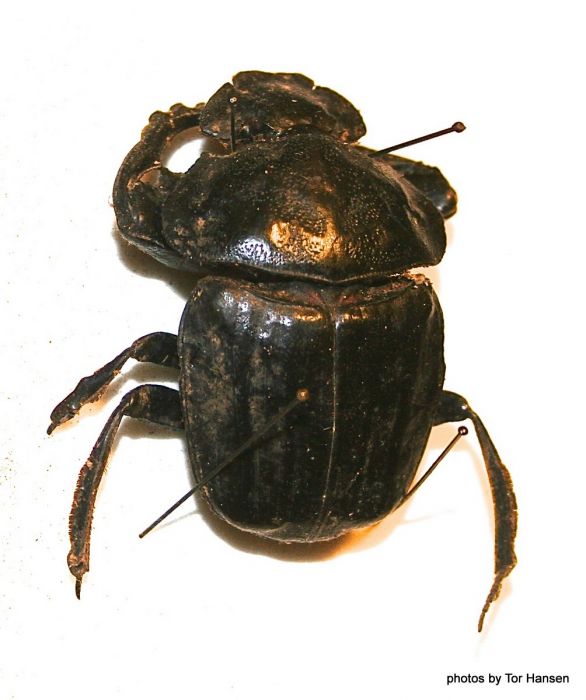
A sacred scarab of Egypt. Interfering with beetles pulling a dung ball across the desert sands may have aroused the anger of the gods in Egyptian superstition and ancient folklore. Thus the beetle is not pierced but rather held in position by the pins.
This is the second in a three-part series on beneficial and invasive beetles. See Part 1 here and Part 3 here.
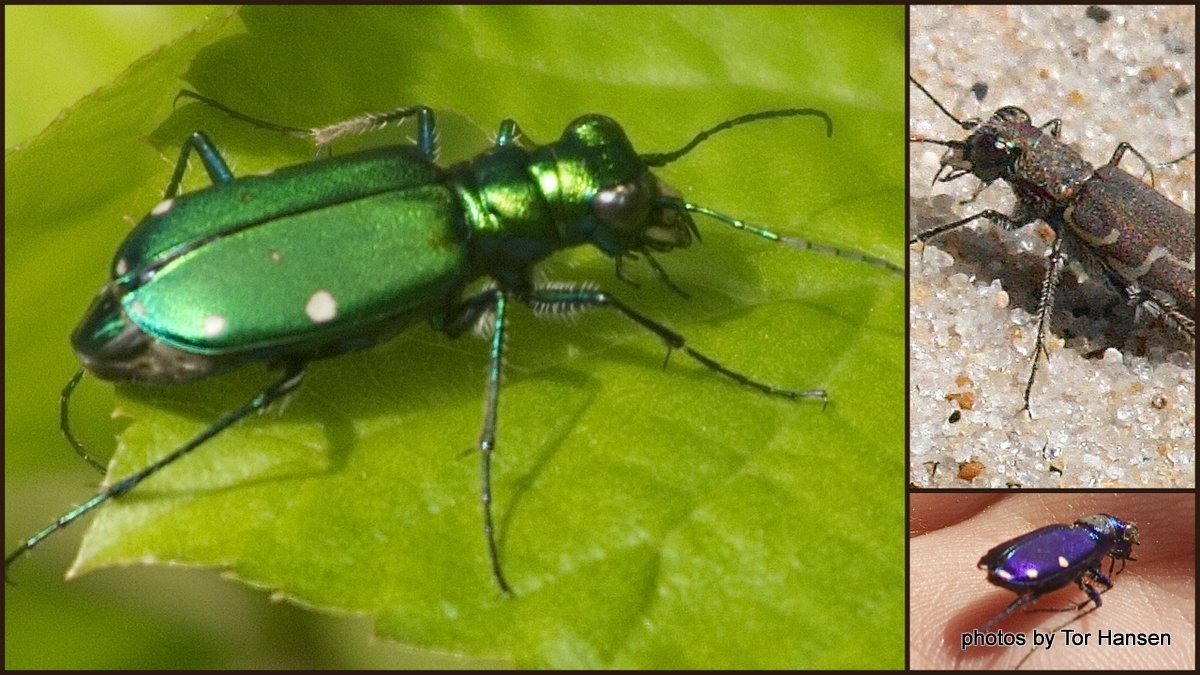
One spring day in Truro, Cape Cod, in the late 1980s, I looked with remorse over the sand dune between my residence and Cape Cod Bay. The 60-foot dunes here are cloaked in Rosa rugosa and beach plum, and many green leaves still budding with declining white blossoms showed devastating defoliation by a rampant lasiocampid invasion. The silken tents house scores of growing beautiful blue-spotted larvae that can quickly defoliate beach plum and black cherry. They were so numerous, but no birds were helping themselves on these nimble tent worms, despite prayers to bring relief.
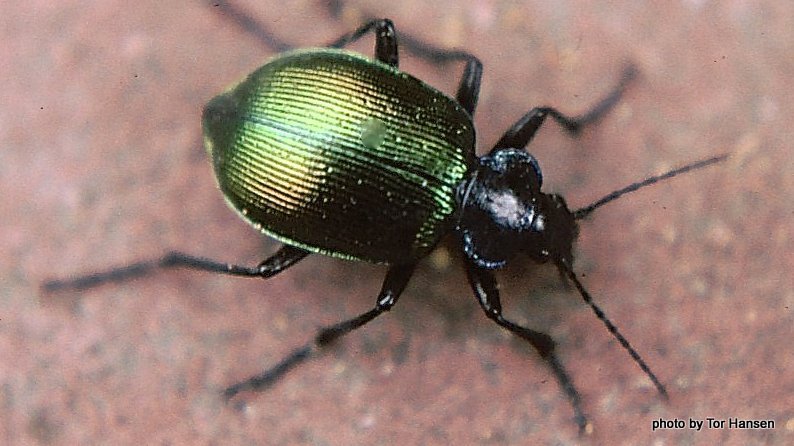
I scanned the sandy soil around me following the line where house foundation meets the sand. Low and behold something shiny on six long thin legs sparkled while inspecting the stones as it scurried along. This bio-gem turned out to be Malacosoma scrutator, the caterpillar hunter. Actually native to the New World, it is living up to its common name, as a vivacious predator on larval insects, including web worms. A related species, C. sayi, prefers to dine on gypsy moths!
However, today it is hard to find, and as real estate landscaping replaces natural heath and dune vegetation, its numbers may be perilously low. When you find it, let it thrive, for we do need these beautiful hunters to be active in the food chain. Take great care if you must handle one, because you may shriek when bitten by those sharp chitinous jaws! Let it be like a sentry posted to consume some of the myriad pest caterpillars.
The most obvious beetle in the milkweed patch is the rosy red milkweed beetle (Tetraopes tetraophthalumus), surprisingly hard to find in any beetle/insect book. Go Google. Occupying a restricted niche, it is found almost exclusively foraging on milkweed leaves and blossoms. Eggs are laid on leaves, and larvae burrow into stems and roots. The exoskeleton of this unmistakable and comical beetle bears warning colors of red-orange with bold black spots, which likely indicate its distasteful tissues.
On the head of this most conspicuous beetle, look for four eyes with curling segmented antennae originating between. One may think its dramatic colors would announce a giveaway to incoming predators, but likely instinct has registered deep within the sensory network in predators to cause a behavior of avoidance instead of attraction. In its warning colors, this beetle exhibits aposematic behavior, in essence, "aposing" the senses.
Indeed astonishing is the workaholic sacred scarab of Egypt, a most resourceful dung beetle that will share desert habitat with quadrupeds like horses, camels, and oryx antelopes that follow the flora. Why so sacred? These tumblebugs will utilize the dung of indigenous antelopes and benefit from man's beasts of burden, indeed cultivating a manure that helps to fertilize the desert sands, even helping prepare a desert oasis! A certain case of symbiosis -- the work of both benefiting each creature. Deploying amazing strength and determination, the tumblebug that will roll a giant-size ball of mammalian dung across great distances of sandy Sahara desert to its preferred den, where it will pull it underground, lay its eggs on it, and bury it, so to nourish its growing larvae.
For all that work hauling the large dung ball uphill and down, we can hope the scarab can select a suitable burrow for the subterranean larva, where they can grow and pupate into a dormant pre-beetle, soon to emerge under a minimal vertical column of sand driven steep by the nomadic Sahara winds. The buried dung itself, what is leftover, can fertilize and help create soil out of sand from which may spring a flower. As over-hunted African and Arabian oryx antelopes become more scarce, these exceptional scarabs may suffer as much as the dung diminishes.
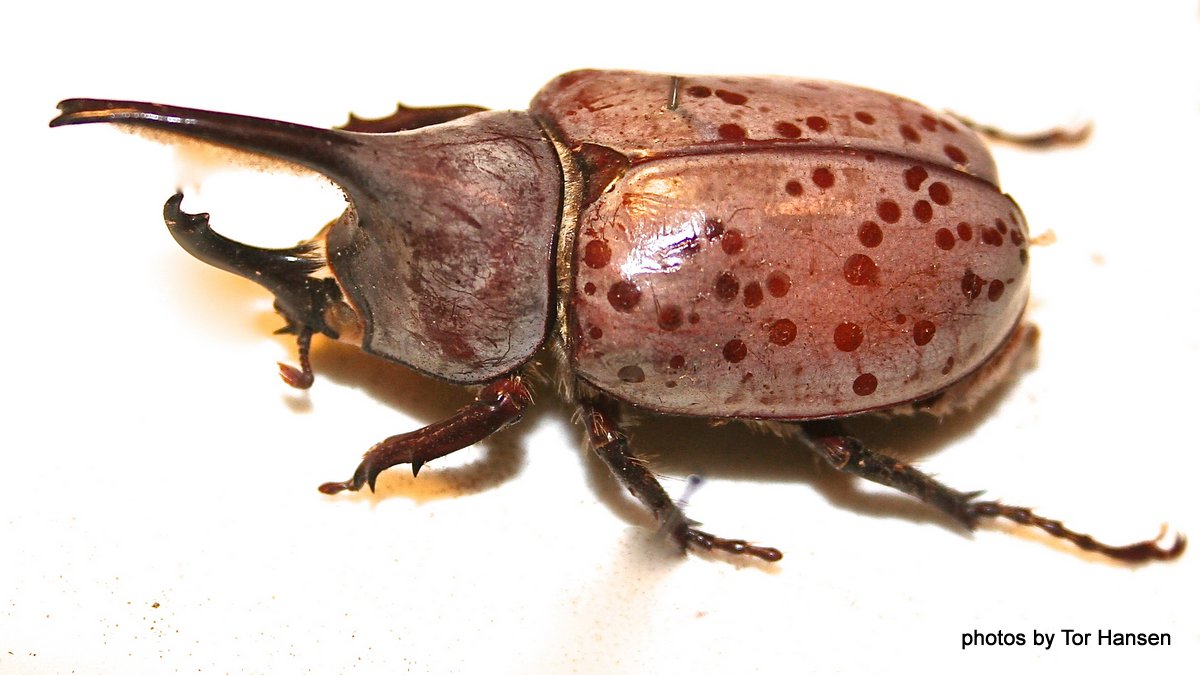
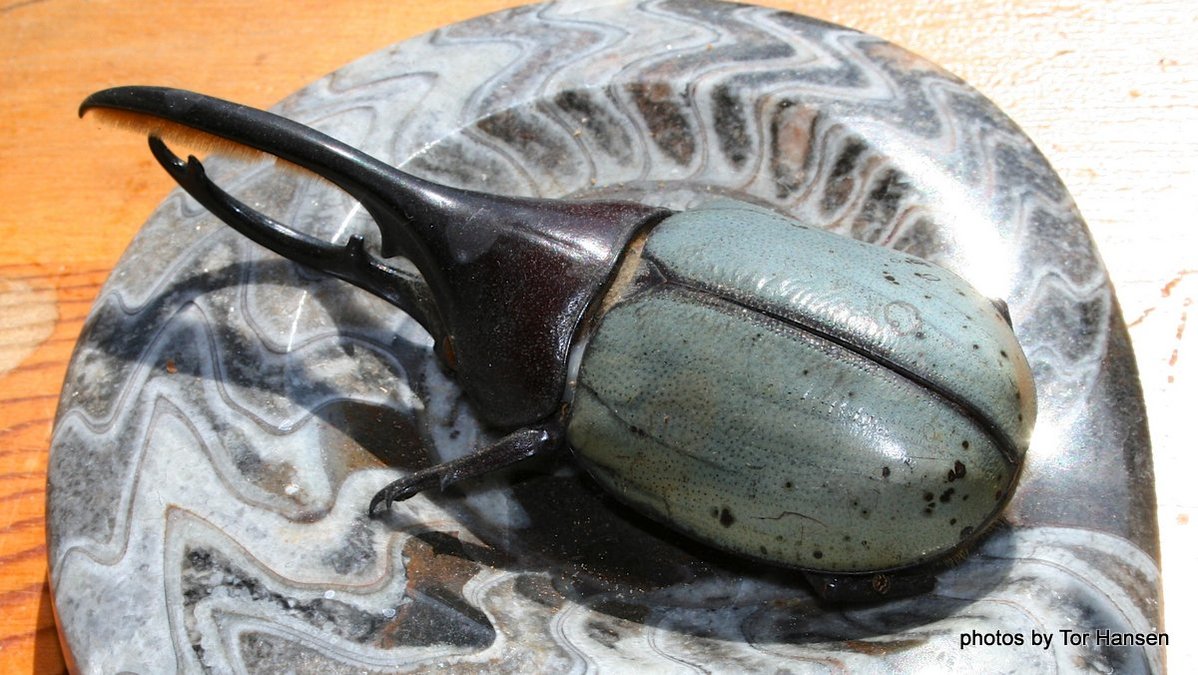
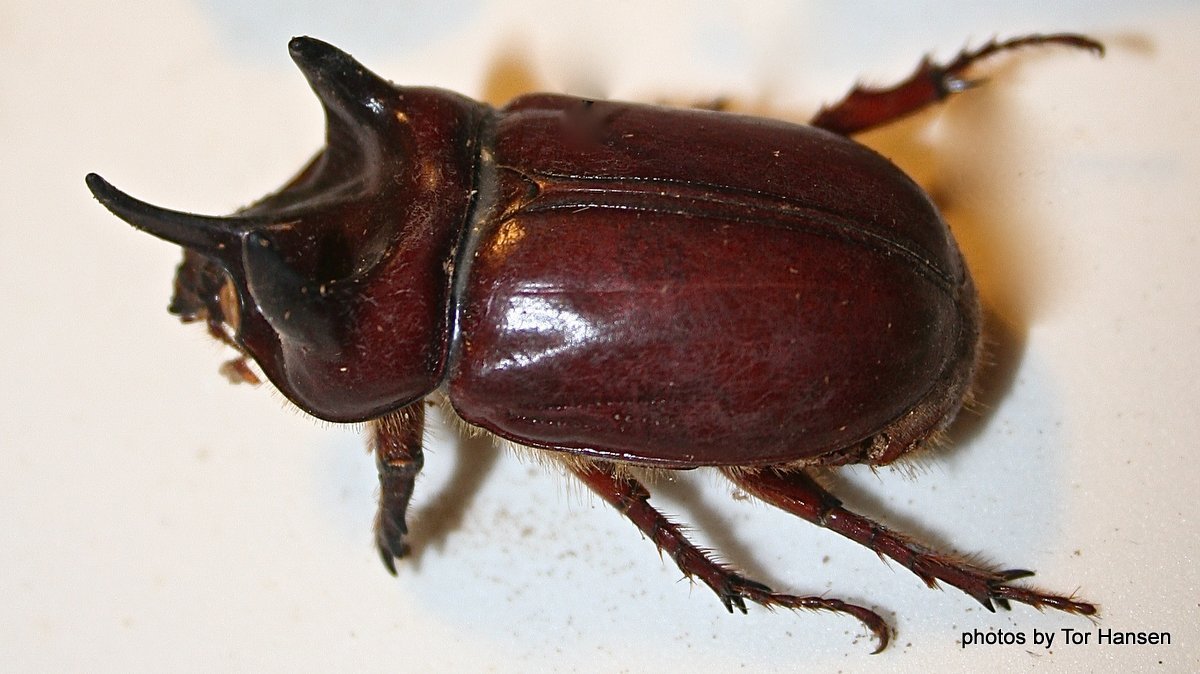
A Rhinoceros scarab. These beetles inhabit scrub oak and juniper in higher elevations in the Southwest.
A story has it that the Ka, or Kepri as a beetle, flies into the tomb and asks the deceased pharaoh's soul, before it departs, to grab hold of its long legs, and then the scarab flies out to carry pharaoh into the afterlife. No doubt these beliefs contributed to much laughter and glee around the family fireside bright and as bedtime stories through the ancient days and nights.
Speaking of sturdy scarabs, yet another armored personnel carrier trundles across the dusty trail. Widespread across Cape Cod and likely a frequent resident here in our Berkshires is the ox beetle, despite its stocky build can crawl across the weedy ground, barreling along a bridle path to avoid getting crushed under hoof or human feet. Among the largest beetles in the U.S. is the scarab Strategus aloes, prized as a recyclist, is found in decaying wood, another reason to leave old decaying trees in the wild and in the yard as well. Larvae may live a year inside decaying wood or compost heaps. Males carry large horns on the thorax; females less prominent horns. They are highly polished in exquisite "lacquered" mahogany reddish brown.
More elaborately horned rhinoceros scarabs thrive in the South and Southwest.
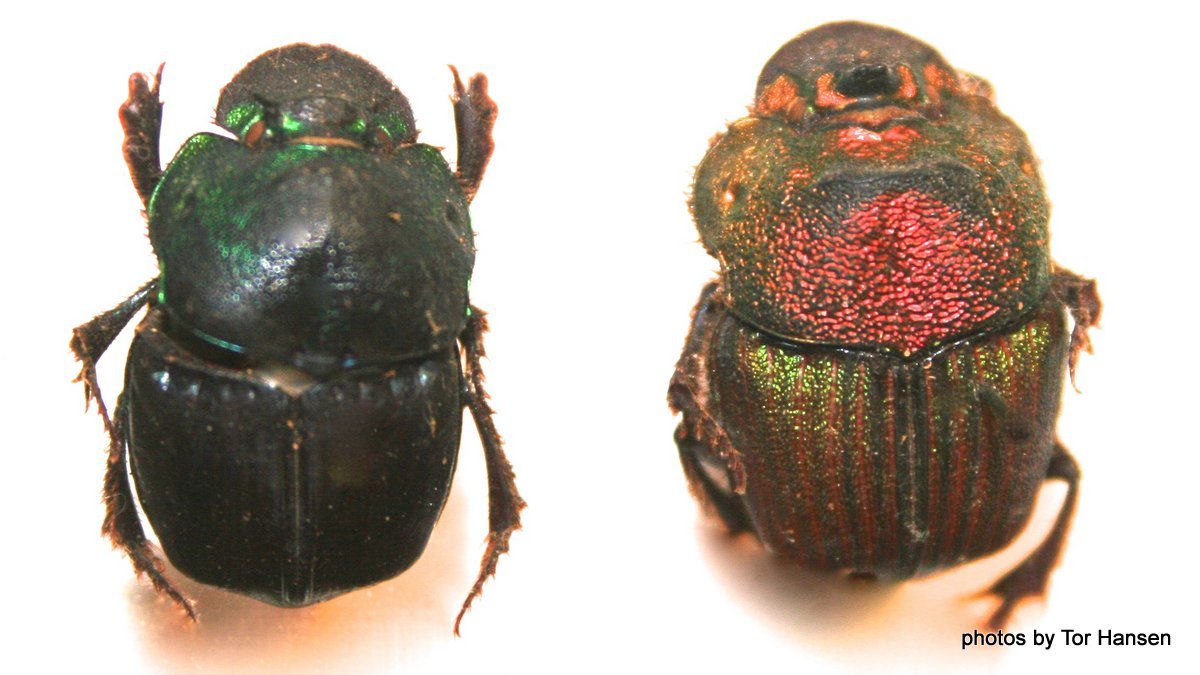
As far as a kicker of beautiful beetles concerns us, the tour of duty for survival of this most amazing scarab is, similar to its Egyptian counterpart the sacred scarab, yet different. Our North American genus Phanaeus vindex, is also a dung beetle lodged inside and feeding upon cow dung. When dug out of a bear patty of Berkshire origin, or Arizona cattle patty, you have an incredible armored stocky scarab with a stout rhinoceros-like horn, dazzling in kaleidoscopic colors. The female varies with softer greenish hues with less exaggerated horns. One can marvel at how such a beautiful beetle can arise from a larva inhabiting such a contrasting food source. Surely the courtship ritual must exist outside the odiferous larval source of nourishment.
Feel free to wander back in geological time to guess at the origins of such fecal dependent beetles, likely to have evolved with the larger mammals like early horses, camels, bison, and giant ground sloths. And why not consider a similar relationship with dung from dinosaurs indeed, since many beetles in species radiation evolved before the dinosaurs, and even before the precursor therapsid reptiles.
Thunder lizards lived here in New England, evident by their fossilized footprints known in Holyoke and the Connecticut River Valley, but the stout exoskeletons of scarab beetles associated with their nutrient-rich patties may have proved too soft to be preserved in the fossil record. Scurrying scarabs are bulky in form, and may have been too slow to avoid escape from spurious mudslides or not fleet enough to prevent burial under falling ash from sudden erupting ancient volcanoes. But how far and fast could they fly?
Are their fossil remains yet undiscovered?
Tor Hansen is a naturalist writer, photographer, and musician, in North County.
Hansen will speak about "Ecology & Metamorphosis in Moths & Butterflies of New England" at All Saints Church, 59 Summer St., North Adams, on Saturday, March 9, at 11 a.m. The illustrated presenation will include colorful photos and lively discussion of pollinating insects, birds, and flora that influence the lives that comprise the biological diversity in the Berkshires.
Tags: beetles, wildlife,