Good Science at Work Inside Butterfly Magical Wings
All around me were untold numbers of buds about to burst from their winter dormancy. Trilliums at ground level were showing tiny green leaves, not yet revealing their triad flowers so deep red or white, remindful of the three-cornered hats worn during Colonial days. Spring beauties were carpeting the forest floor with their jolly pink and white blossoms. And perusing the naked branches before the buds leaf out, I found a Cecropia moth's silken cocoon spun on a low-lying branch!
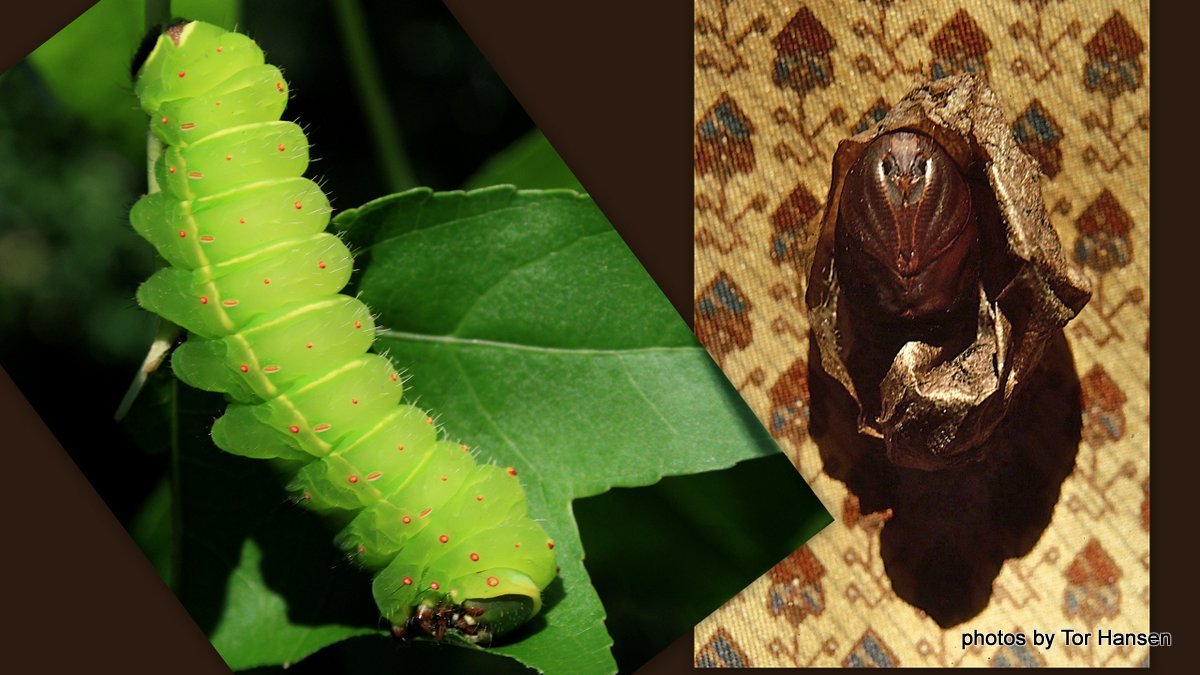
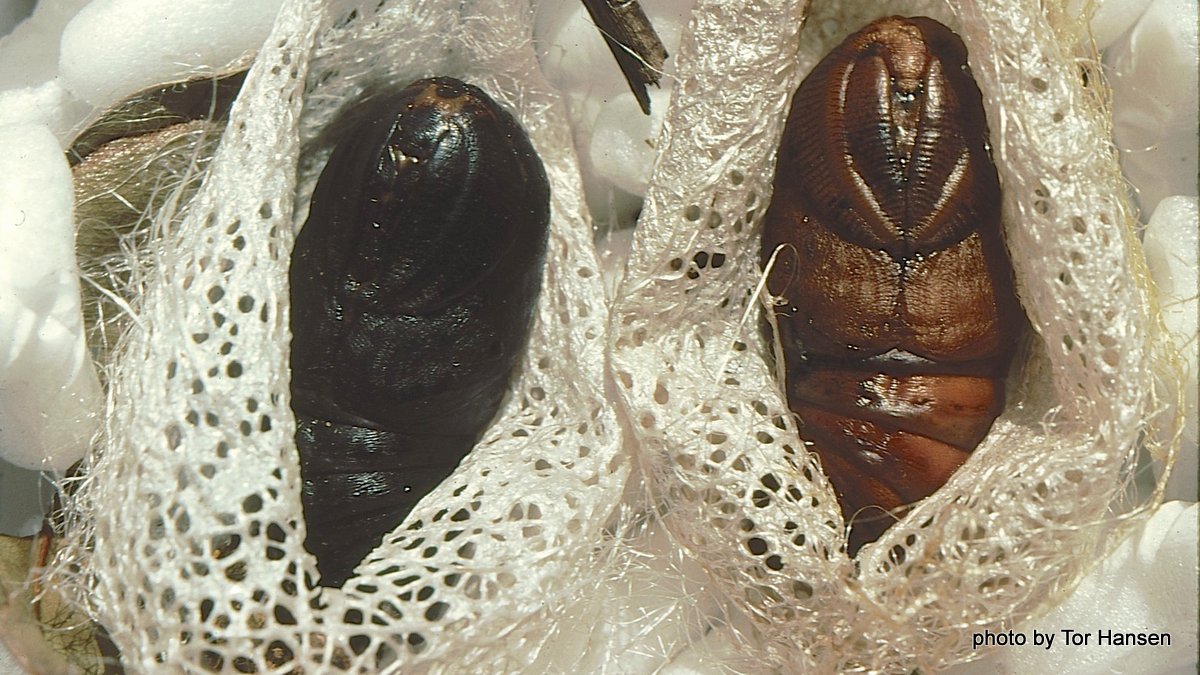
Knowing what silky swelling to look for, from my frequent visits to the North American Woodlands Hall in the American Museum of Natural History in New York City, sure enough, the russet brown cocoon did resemble a gall or unusual swelling often wrapped in leaves for cryptic concealment. The double cocoon includes an outer flimsy brown bag, and the inner golden fleecy amphora is complete with an adjustable exit escape window. This intrinsic complexity shows an incredible discerning mind at work. Engineered by the caterpillar whose strategy for survival exhibits a certain profound ingenuity as to what container would protect a tasty pupa from a hungry squirrel or aggressive woodpecker, and enduring through a long cold winter.
The cocoon was spun higher than a man's reach, so I could not tell if it was really alive or empty. Just the find reassured me that Cecropia may be alive and well in this Berkshire wilderness.
As a student of evolutionary biology, I conversed with conservation staff who work on Mount Greylock, who oversee and manage the wildlife of the Berkshire ranges, and found that Cecropia can be numerous, as they are seen flitting in numbers near nighttime light sources. Other silk moths also exhibit the same attraction to lights. We still wonder why. Some scientists say the affiliation to light bulbs may resemble moonlight, often present when their nocturnal flights may enhance mating. But these giants will mate regardless of light. Install a black light and a white sheet at the sylvan edges of an open meadow and you can witness the close up fluttering giants drawn to the ultraviolet lamp.
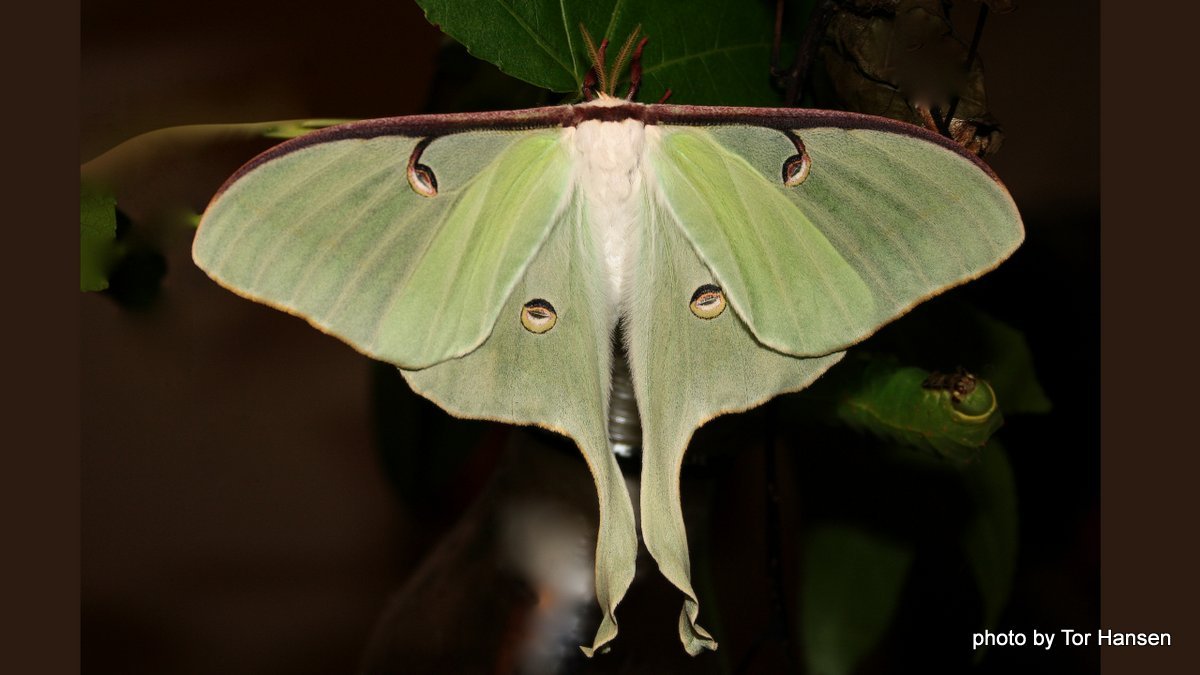
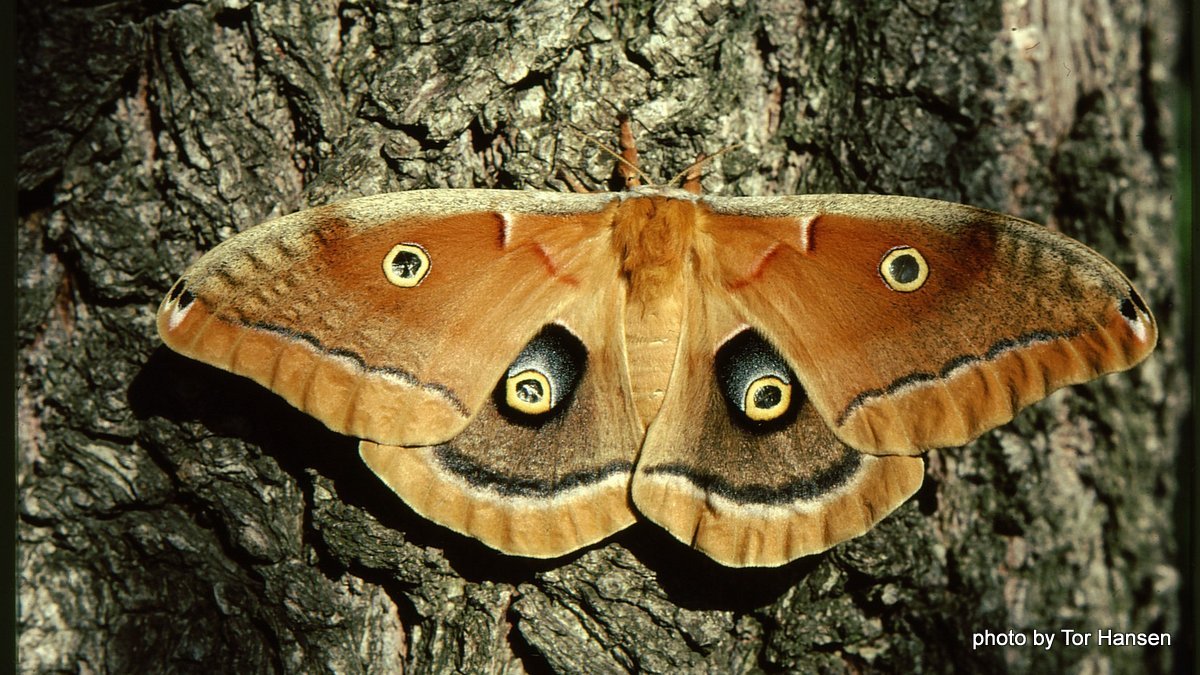
How do we ascertain scarcity and abundance of these opulent moths? Without question, they are among the most vivid of moths. There are many ways to read their elaborate colorful patterns. Fright posture comes to mind when viewing large false eyespots, as in Antheraea polyphemus. Appearing like imposing owl eyes or hawk eyes may deter a predator. The same eyespots may be another sign — stimuli evolved to attract mates that recognize the females' markings.
The hyaline windows inside the eyespots add to the mystique inspiring awe or larger than life advantage, or even "what kind of a creature is this?" People experience intrigue, amazement, and real respect for such alluring awesome inspiration.
As for the mesmerizing effect, while contemplating the awesome beauty of a luna moth, perched at rest with wings open, the luna can be perceived as a meditative prayer wheel that connotes peace and serenity. Perhaps the moth is indicative of a hidden Shangrila or earthly paradise! In the perspective of world religions, Shinto is an ancient Japanese religion based on the worship of nature, reverence for ancestors, and worship of departed heroes, mythological or human.
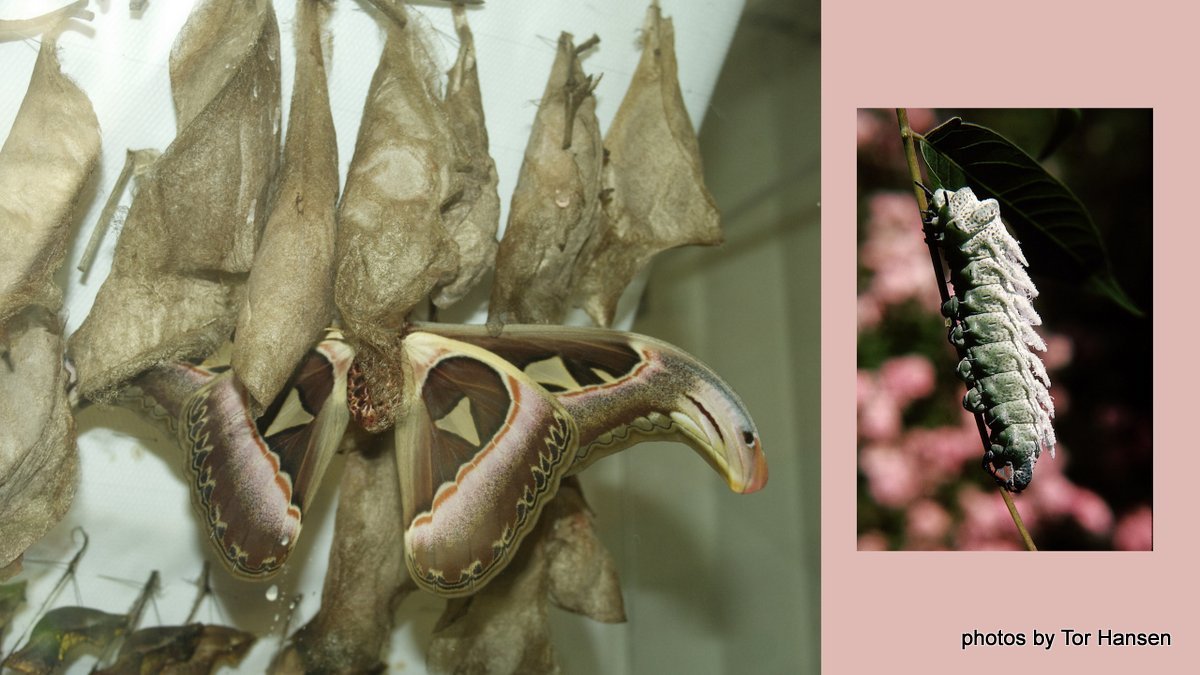
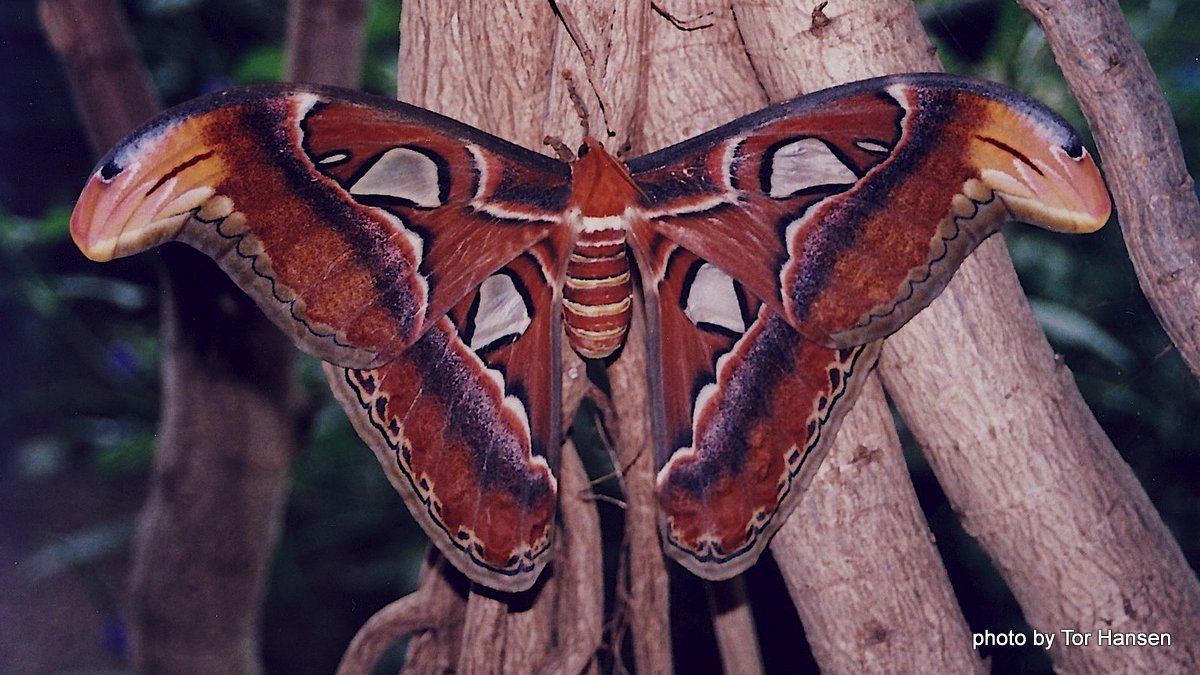
Still occurring in Japan's wilder habitats lives a relative of Actias luna, a Japanese distinct species with shorter tails called Actias artemis, possibly revered as sacred. Now we can follow literature to find a hat full of separate species and further divided into subspecies within genus Actias, as we probe the distribution and evolution throughout Indonesia's islands. Include the sensational Argema Moon moth from Madagascar and giants like Attacus atlas indeed a resplendent bio-gem. Browse the internet, such as Wikipedia, for silk moth diversity. Simply astonishing.
Are these colorful wing scales responsible for their survival? Wing scales serve like shingles on a Cape Cod bungalow and attach only at the top, are free to move and catch air and wind, really enhancing flight maneuvers. When searching for answers to mate selection in luna moths, I carried a female luna moth in a portable holding cage into the woods of Flat Rock Brook Nature Preserve in Englewood, N.J. I observed at night male lunas attracted to a calling female luna deliberately held inside a holding cage designed with a cutout window screen to allow easy access for the incoming male to mate with the captive female.
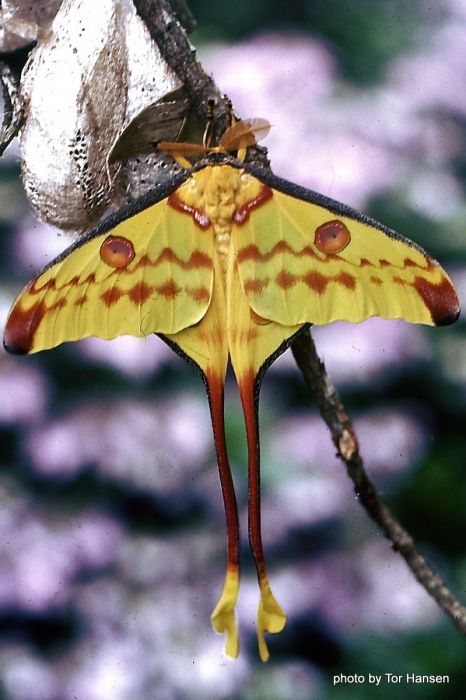
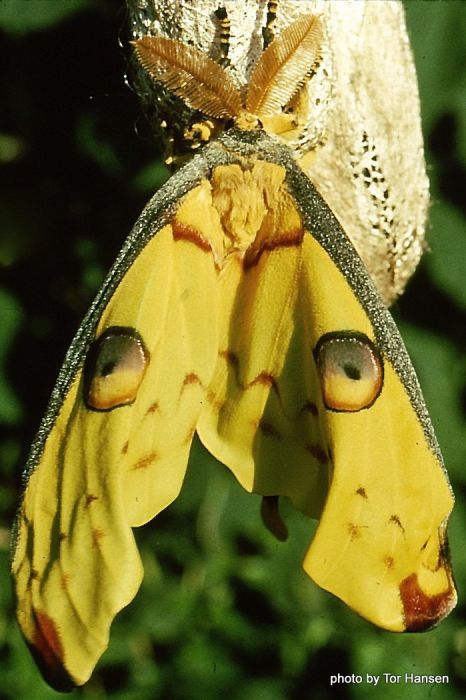
A Malagasy comet moth may use its long tail as a rudder in flight or to imitate a flower. Native to Madagascar, this moth was featured at Magic Wings in Deerfield.
Male lunas probed the surrounding grass where the cage was placed, and over and again the males dipped their long tails into the grasses as if to test and locate escaped pheromone molecules that would lead them to the enclosed female. Yes, it is very difficult to pinpoint invisible molecules. But perhaps the long tail wing scales have some sensory capacity to pick up the pheromone. Nonetheless, males found the enclosed female and the first inside mated.
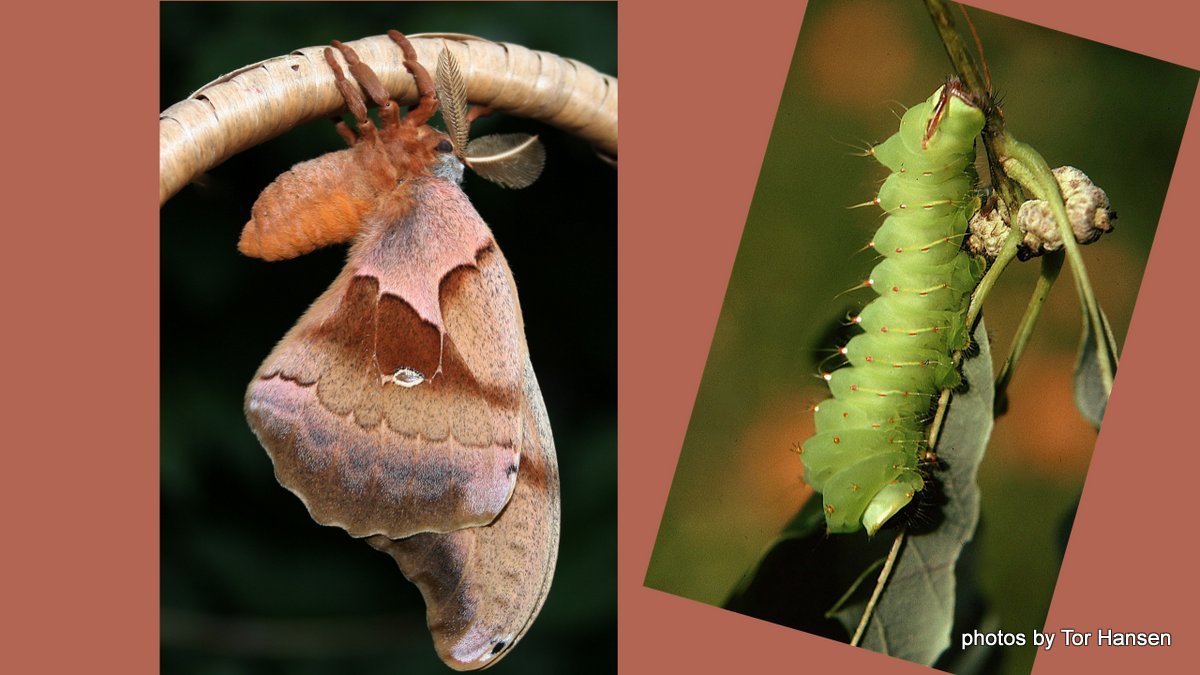
By emitting a pheromone (sex-attracting perfume) the stationary female luna attracted several suitors, that detected her molecular pheromone drift flowing in a steady stream through the woods, perhaps as far away as one mile, but usually much closer, since the immediate woods are punctuated with many river or black birches, indeed a localized population. Yet moths of various gene pools could produce healthier offspring due to different and more viable wild genes. Other species of giant silk moths have similar sex lives with variations on a theme, such as Promethea wherein the dark maroon males search the pheromone trail to the calling female in late afternoon hours very much crepuscular.
How can we go to get a clear perspective on breeding biology in moths and butterflies? Spend a few hours in Magic Wings, a superb butterfly house in South Deerfield on Route 5. Experienced curators and staff work hard to determine answers to hidden secrets of how butterflies and certain giant silk moths survive. Glimpse what assorted species are flying and watch for them to couple and mate. See them sipping sugar water from feeders and feel how important it is to preserve their native habitats.
Since moths by and large fly by night, nocturnal by instinct, observing them in flight is next to none. But let your nature inquire about their larval leaf preference. Peruse deeper questions about how they evolved into their present diversity and widespread distribution. And postulate how through advancing gene- pooling, they differentiate into manifold biodiversity via the marvels of continental drift.
Tor Hansen is a naturalist writer, photographer, and musician, in North County.
Tags: butterflies,