Merlins Abide at Spruces Park
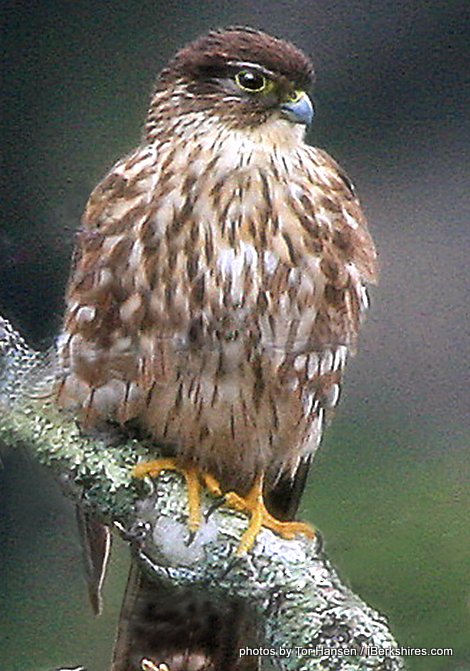
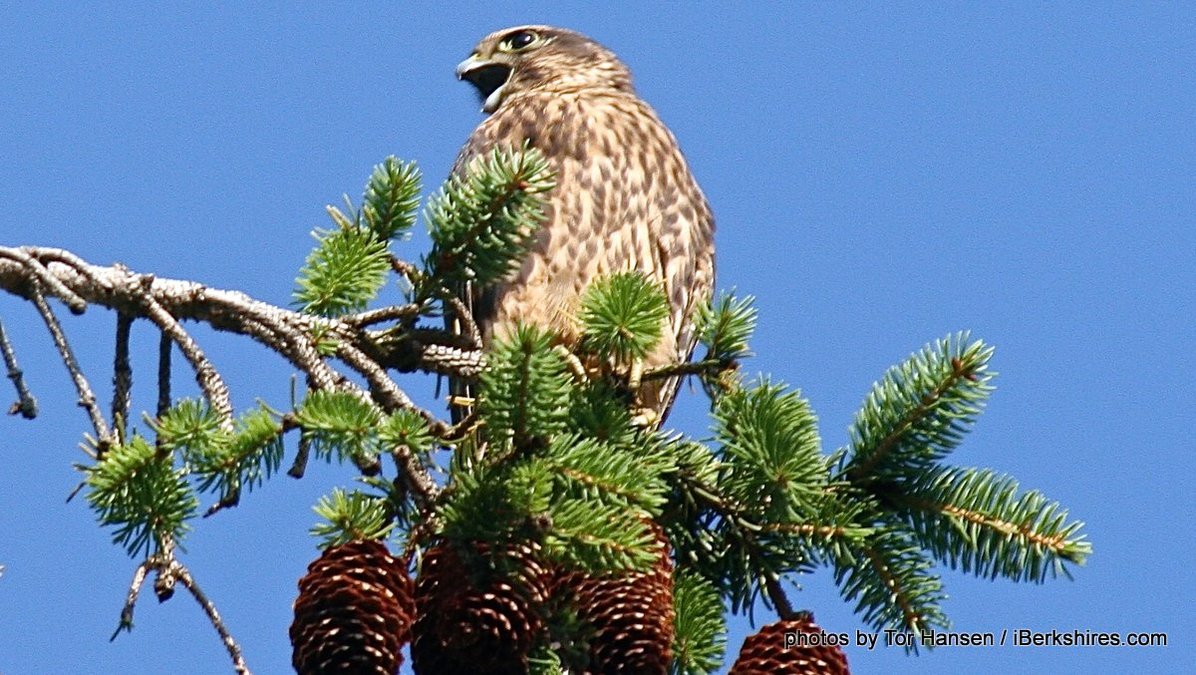
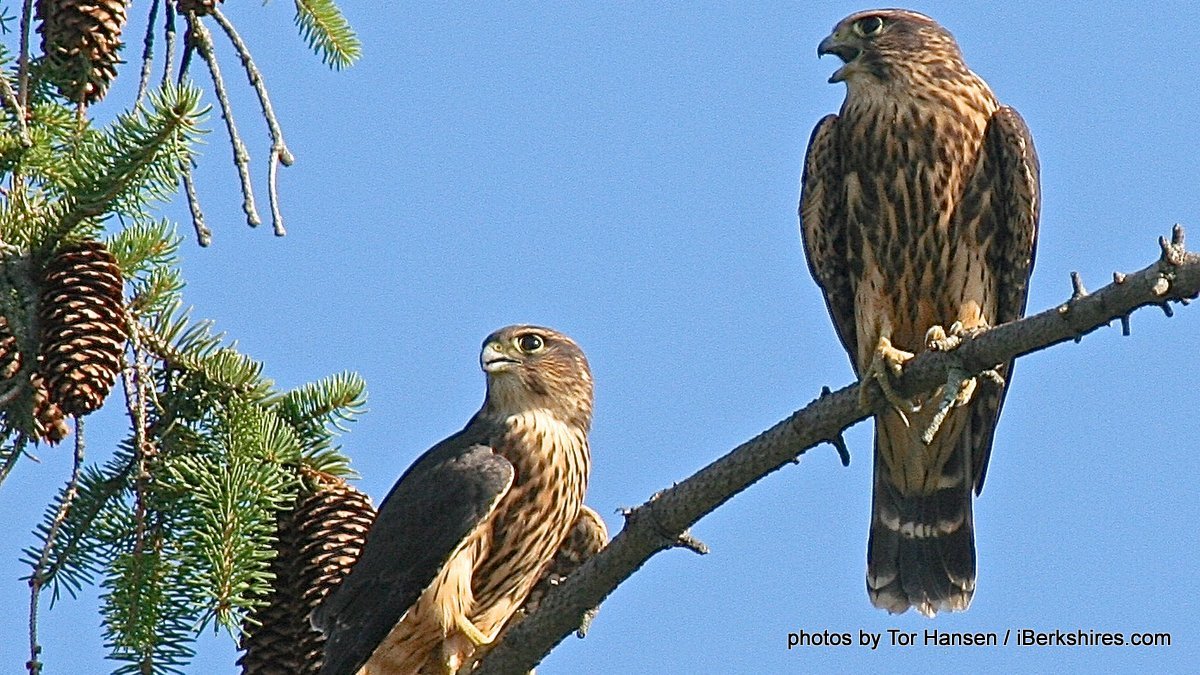
A closeup of a small merlin hawk.
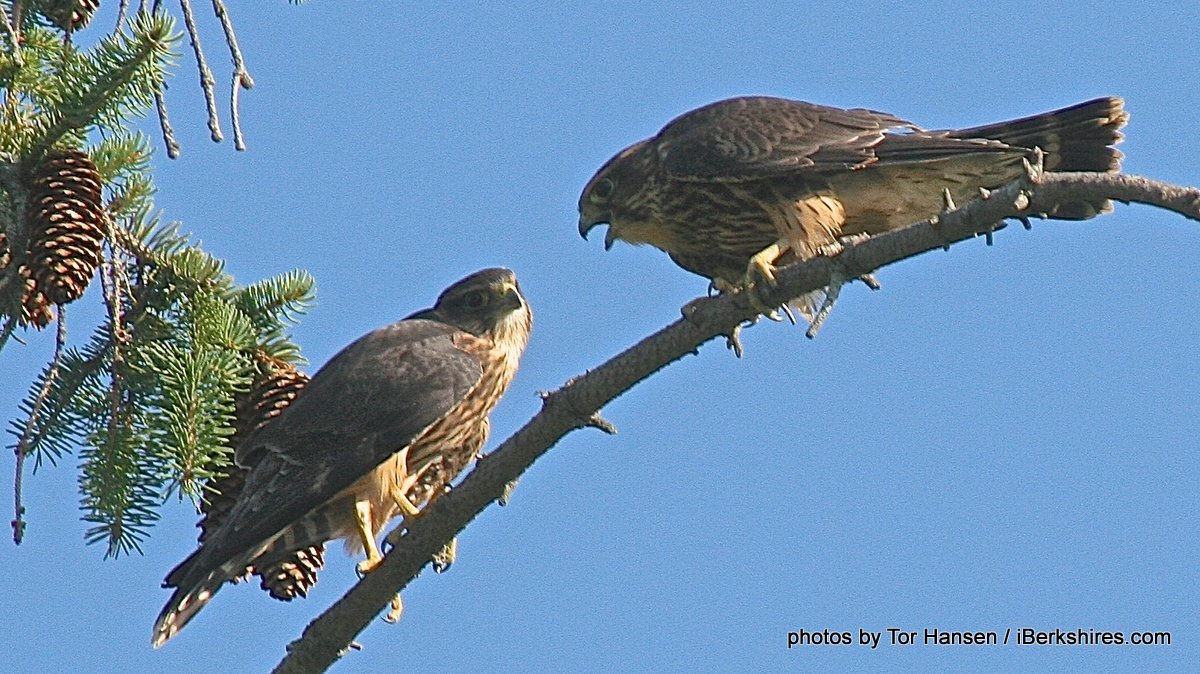
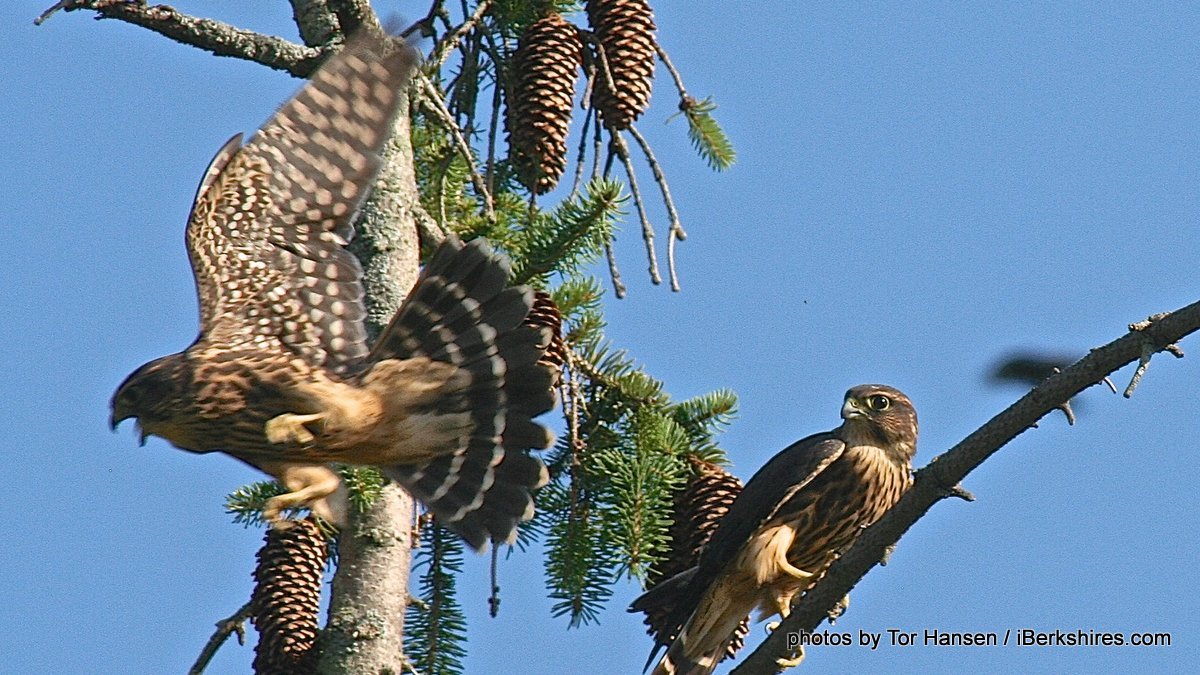
Also known as pigeon hawk, a family of merlin falcons occupies a significant niche in the open meadow known for its tall Norway spruce, seeded when these 38 acres was formerly a thriving mobile home park.
While I was surveying this moist meadow for butterfly diversity, both resident and migratory, walking the dirt roads between weedy quadrants, I heard a deliberate outcry from above, and looked up to behold some large hawk-like birds swiftly flying between the tall spruces that punctuate the grassy meadow like solemn sentinels.
A three-syllable rise and fall call emitted from one bird was heard now and again as I followed them to where they streaked across the flowerful meadow and roosted in the uppermost branches decked with thick sprigs and cones.
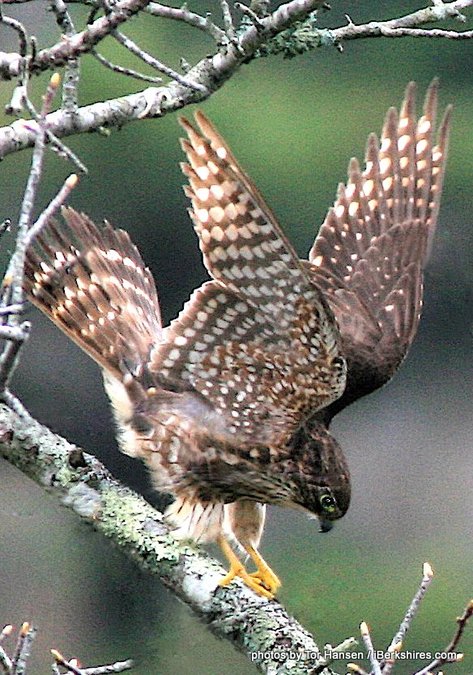
Noticeably smaller than a peregrine falcon, but amazingly agile in aerial maneuvering, Falco columbarius is a true falcon and feeds largely on birds, and likely rodent voles and mice. But in my brief survey, neither mice nor birds appear in any sizable numbers. Especially in the nesting season, spring and early summer, this absence may be explained by the overshadowing hunter roosting high above in the spruce. Goldfinches and assorted sparrows fly from meadow to cover in the apple trees.
Sexes are hard to tell apart; young fledglings reach adult size in just a few months and resemble their parent birds save a little broader streaks on breast and flank feathers.
Watching the stern adult birds encourage the youngsters to develop their instinctual hunting skills, that requires much prompting with a temptation to soar, flap and glide from tree to tree, I did not see a plunge to earth to seize a rodent nor avian prey. While I search for meadow mice afoot, still no mouse scurried out from the tall grasses, as if they may be absent. Mice make tunnels in the grasses and run their pathways undetected in silence.
In their role as agents of conservation, the falcons feed on mice and risk the contamination by ticks and carriers of Lyme disease and other pathogens, so if mice are in their diets, they are indeed to be recognized as heralds of disease prevention, thanks be to God!
However, official agencies like National Audubon claim observations of their diet include mostly birds and some insects, namely dragonflies. Merlins are natural predators of English sparrows, urban dwellers also known to oust and kill bluebird chicks from their nesting boxes. In fact, merlins are expanding their range worldwide, certainly thriving coast to coast and from most of Alaska to Florida, West Indies and Venezuela to Ecuador, and Eurasia.
Talking with people who recall the heyday of the Spruces Mobile Home Park, now overgrown with benign weedy neglect (among the favored phrases of lepidopterists) I learn of a homestead for more than 325 residents who were forced to relocate after the devastating rain from tropical storm Irene in 2011. The Hoosic River parallels the Spruces and it flooded its banks as heavy rains dumped 9 inches on the North Berkshires, causing residents to abandon the mobile homes.
Since the park officially closed on Feb. 29, 2016, weeds gone wild have grown up and produced an ideal potpourri of weeds and wildflowers. They thrive along with personal flower gardens now remnants as escaped dooryard favorites like Gallardia with their dark-eyed Susan, large flower heads banded maroon on yellow, and Rose of Sharon in profuse bloom so pink and white in furled trumpets.
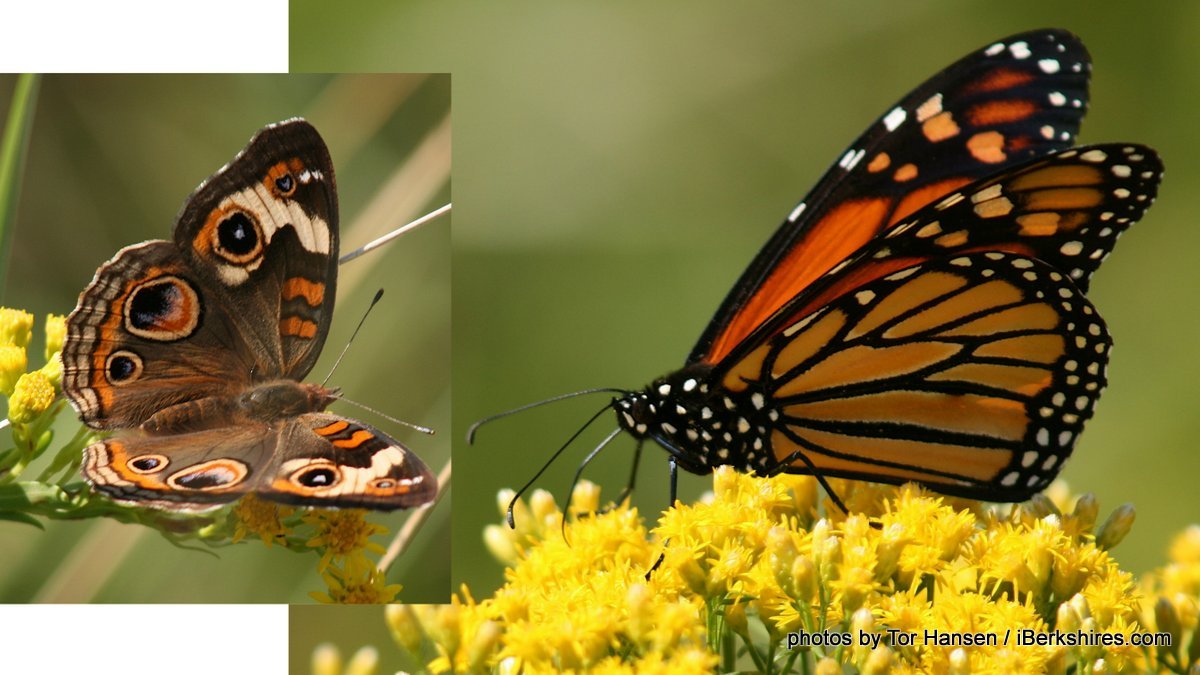
Now this September the meadow teams with blazing goldenrod, and insects utilizing its resources include myriad grasshoppers that vault away at one's approaching footsteps. An encouraging number of monarchs in recovery sip nectar at thistle and goldenrod so profuse.
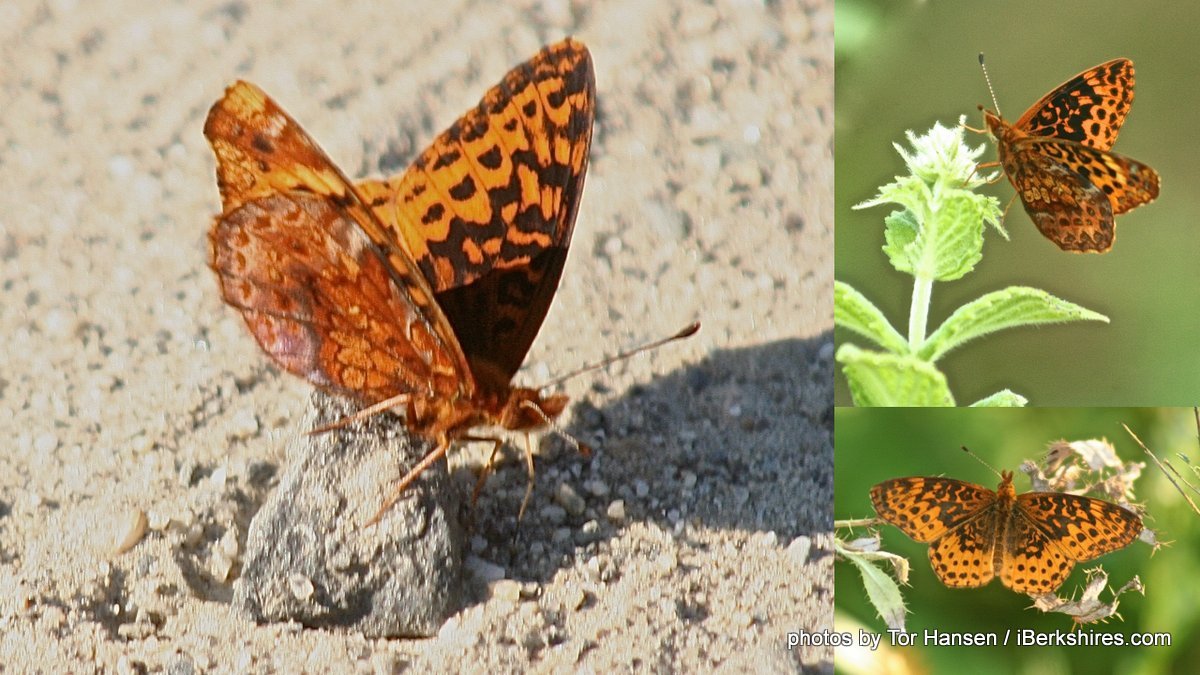
Another speedster is the larger great-spangled fritillary abounding in late spring and early summer. They are indeed also bio-gems in that their ventral hindwing spots gleam like pure silver spangles. And the smaller meadow fritillary dashes about in dizzying aerial acrobatics also in good numbers, now in their second brood. Even the tiny dusky-wing skippers dart out in astonishing energized zig-zags, often alighting on dark and dry curly dock leaves. Another name is wild oats, indeed when green is a source for American copper larvae.
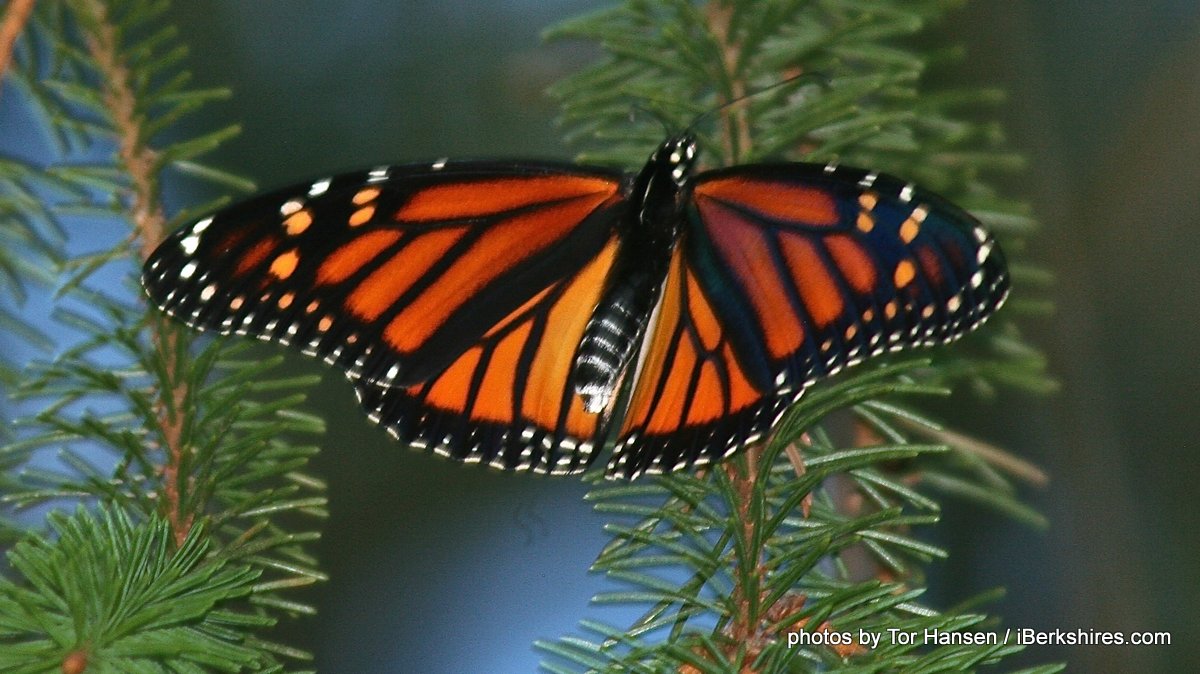
A monarch resting a spruce tree shows a white plug at the bottom of her abdomen showing she has mated.
Floral components in diverse array show assorted violets that support fritillary larvae, as well as some Joe Pye and milkweed that offer nectar ample enough for a handful of butterflies diligent enough to secure it. So integrated in floral species is this meadow, as if the Berkshire Garden Club had followed planting instructions to attract maximum butterfly diversity.
With fall come the daisy-like purple and lavender asters, known to attract buckeyes rarely seen here. I envision thoughtfully planting rows of spicebush and sassafras trees that can nurture spicebush and tiger swallowtail larvae, as well as Promethea moth larvae. And sweet gum trees here might survive the chilly winter, an ideal source for leaves to suffice both Cecropia and luna moth caterpillars.
In subsequent surveys of butterfly life at the Spruces, I see once and hopefully again a lone merlin perched high in a spruce tree. Before I could change my close up macro lens to 500mm telephoto zoom lens, I looked up, and the falcon was gone, likely flying up into the mountain refuge beyond. So evidently they do fear mankind. I felt gratitude that I had been so fortunate as to capture their portraits in a digital camera, and present viable images here thanks to the incredible iMac editing capability in my Apple computer, and despite the faults in this Canon EOS Rebel XT ... or is it me ... standing in the need of prayer?
Tor Hansen, a naturalist writer, photographer, and musician, is a recent addition to the North County community.
Tags: berkshires wild, birds, butterflies, Spruces, wildlife,