Williamstown Board Holds Executive Session on Town Garage Site
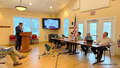
WILLIAMSTOWN, Mass. — The Select Board on Monday breezed through a short public agenda before adjourning to executive session to discuss the transfer of 59 Water St., the former town garage site.
The stated purpose of the closed-door session was that an open discussion of the site, "may have a detrimental effect on the negotiating position," of the board.
It just is not clear with whom the board is negotiating.
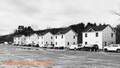
The town received one response to its request for proposals to develop the long-vacant lot. Williams College is proposing to relocate its facilities offices to the site that long was used as an unofficial parking lot before the town curtailed that use in 2024.
According to the RFP, the Select Board is the body that will evaluate the proposal and decide whether to proceed with a transfer to the college. That evaluation and decision-making process should be conducted in public.
To date, the board has not discussed the Williams offer in public session, let alone reached a decision on whether to negotiate with the college, the next step outlined in the RFP.
Asked about the planned executive session in advance of Monday's meeting, Chair Stephanie Boyd said the board cleared its plan in advance with town counsel to make sure the discussion would be in compliance with the Open Meeting Law.
"Our conversation in the Executive Session will be limited to discussing the value of the property that may be detrimental to our negotiating position if made in public," Boyd wrote in an email responding to an inquiry from iBerkshires.com.
The Massachusetts Attorney General's Open Meeting Law Guide explains how that office interprets the "real property" justification for executive sessions:
"While we generally defer to public bodies' assessment of whether the inclusion of such details would compromise the purpose for an executive session, a public body must be able to demonstrate a reasonable basis for that claim if challenged," the guide reads.
"Under this purpose, as with the collective bargaining and litigation purpose, an executive session may be held only where an open meeting may have a detrimental impact on the body's negotiating position with a third party."
Unless a decision already has been made on the Williams College proposal, it is hard to see who the "third party" in question is.
It also is unclear how such a discussion could be held on May 11 — nearly a month after the town received the only offer for the parcel in question — without discussing the offer itself.
There are only three data points to consider: the property's assessment for tax purposes ($254,200), the independent appraisal cited in Williams College's proposal ($350,000) and the college's actual offer to the town ($1 million).
It is hard to conceive of a discussion of the land's value that does not include at least two of those three numbers. One (the assessed value) was available to the Select Board before the RFP was issued. The other two come directly from the Williams proposal, which, again, has not been discussed — let alone accepted — by the Select Board.
And it is not clear how a discussion of land value plays into any future deliberation. The RFP lays out a number of criteria for a successful proposal, and maximizing the purchase price is not one of them. In fact, the RFP reads, in part:
"The Select Board, in its sole discretion, shall select the proposal which is determined to be the most advantageous proposal from a responsible and responsive proposer, taking into consideration price and the evaluation criteria set forth in this RFP. The Select Board shall not be required to select the proposal offering the highest price."
Boyd did not explain, either in her letter or in the public part of Monday's meeting, why now — after the RFP deadline has passed and an offer is on the table — is the time to talk about what the land is worth without regard to the Williams offer.
There is a time for the board to discuss a negotiating strategy for talks with a prospective buyer: after the site has been awarded and before a deal is closed. The RFP itself spells out that timeline explicitly on its third page:
RFP PROCESS
• Submission and review of proposals
• Request for additional information from proposers (may be waived by the Town)
• Interview of proposers (may be waived by the Town)
• Notice of Award
• Negotiation and execution of Letter of Intent with primary business terms
• Negotiation and execution of Land Development Agreement and Purchase and Sale
Agreement
• Closing on Sale
An agenda item for Monday's meeting headed "next agenda items" did not include a planned public discussion or decision on the 59 Water St. proposal for the June 8 Select Board meeting.
Tags: executive session, open meeeting, RFP, Williams College,