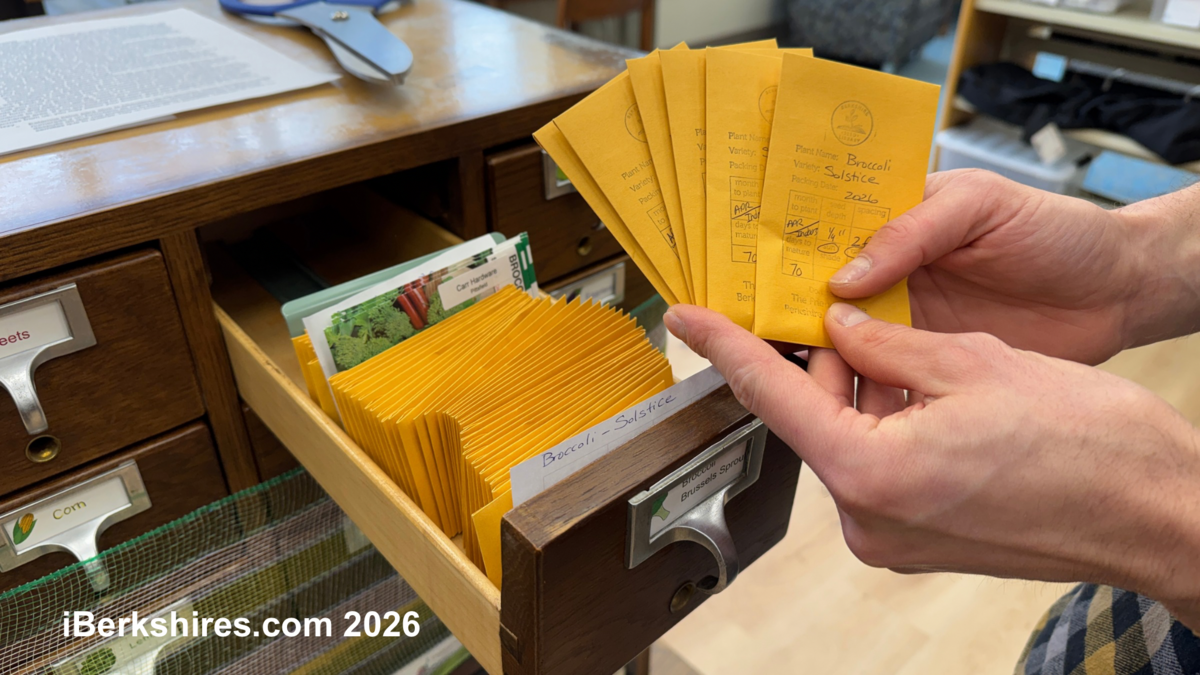
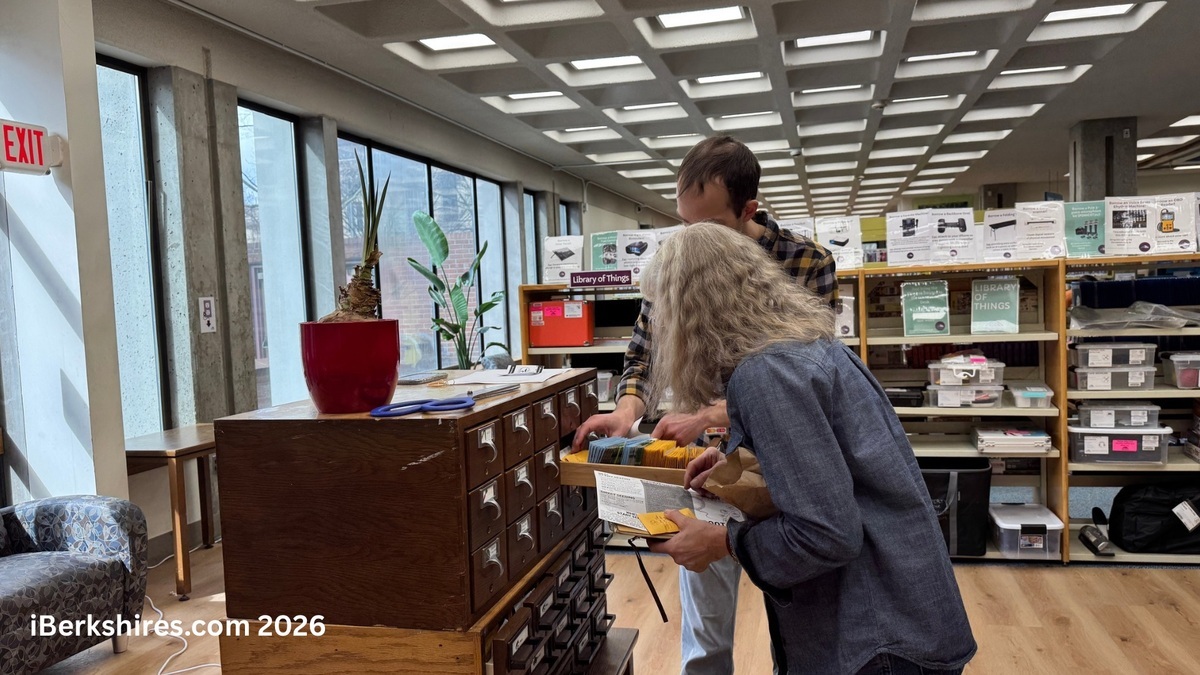
image description
Pittsfield library patrons can take out up to 10 seed packets. The library will also accept donations of unused seeds.
image description
The seed library is open through the summer.

Grow Your Garden With the Berkshire Athenaeum
By Breanna SteeleiBerkshires Staff
Print Story | Email Story

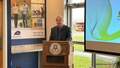
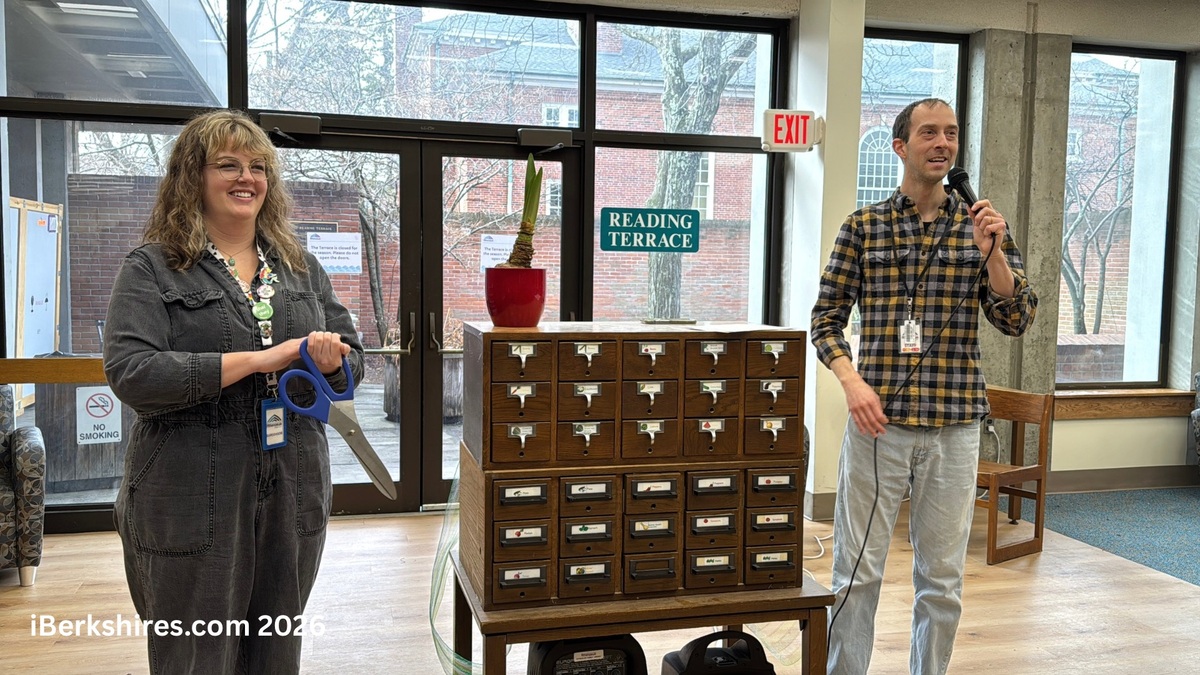
Berkshire Athenaeum staff Olivia Bowers and Tom Jorgenson cut the green ribbon on the seed library last Saturday.
PITTSFIELD, Mass. — The Berkshire Athenaeum's seed library is open for the season.
 
The seed library is funded by the volunteer organization Friends of the Berkshire Athenaeum, which raises funds for the library programming and needs.
 
Adult Services and Programming Librarian Tom Jorgenson said at the seed library's opening last week that it's a helpful resource for patrons and they also include many resources for if you are unsure how to plant your seeds. 
 
"It's to provide a resource for the community that might not otherwise be accessible or make sense as an investment, or for someone, it's an opportunity to try something new, to learn a new skill, without having to make a big investment in it. And so we provide not only the seeds, but the supplemental resources to help people try this out."
 
The library encourages swapping seeds, with users donating leftovers after the growing season to keep supplying the library. Donators can fill out a form at the desk saying what the seeds are and where they came from. 
 
"It's designed to be a source of healthy, sustainable food that kind of empowers the community to try different things, try growing different vegetables and flowers that they might not otherwise have access to," Jorgenson said. "What I've tried to do in the past couple years is really emphasize the community aspect of the seed library, and try to encourage people to share seeds back with us, donate things back to the library, or exchange seeds with each other in order to make the seed library more self-sustaining, make it more community driven, with resilient local varieties of seeds."
 
The library also receives seeds from local establishments and businesses.
 
"Some of them come from Carr Hardware and John's Ace Hardware. They donate some of their leftover seed packets at the end of the previous season for us. So we're super grateful for that. And then we fill in the bulk of the collection with seeds that we purchase from Fedco," he said.
 
Fedco is a member-cooperative garden supply store in Maine that is committed to sustainability and heritage plants.
 
The athenaeum has had a seed library since 2018 and last year checked out 2,300 packets. You must have a library card to take out seeds.
 
Recently, it has been trying to get more native seeds.
 
"What we've tried to do recently is expand into native wildflowers and grasses, because we know how important those are to healthy gardening and maintaining the health of our local ecosystem, and then also expanding the vegetable and herb selection into things that are either locally developed," Jorgenson said. "So for example, we have three varieties of tomato that were developed by Crabapple Farm locally that you can't really find in a seed catalog, but that have been developed specifically for Western Massachusetts."
 
Pittsfield resident Tyler Shedd was checking out a couple of seeds and said it was cool to be able to share seeds from other local residents.
 
"I guess seeds themselves, like an individual package, isn't all that expensive, but to grow sort of for a full garden, it can get pricey," he said. "And I think it's cool, especially, like, we've got a couple of the flower seeds that look like they were donated by the community and so it's from somebody else's garden locally. 
 
"A very sort of cool way of sharing, spreading, like summer color, fall color, whenever they, I don't know when they bloom, without having to go to the hardware store."
 
Library patrons can check out a total of 10 seed packets from now until the end of summer.

Tags: berkshire athenaeum,   gardening,   seeds,   
If you would like to contribute information on this article, contact us at info@iberkshires.com.

Pittsfield Man Creates Device to Clear Lakes of Algae Blooms

By Breanna SteeleiBerkshires Staff

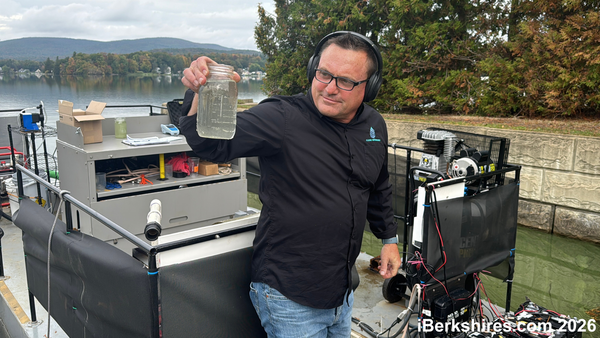
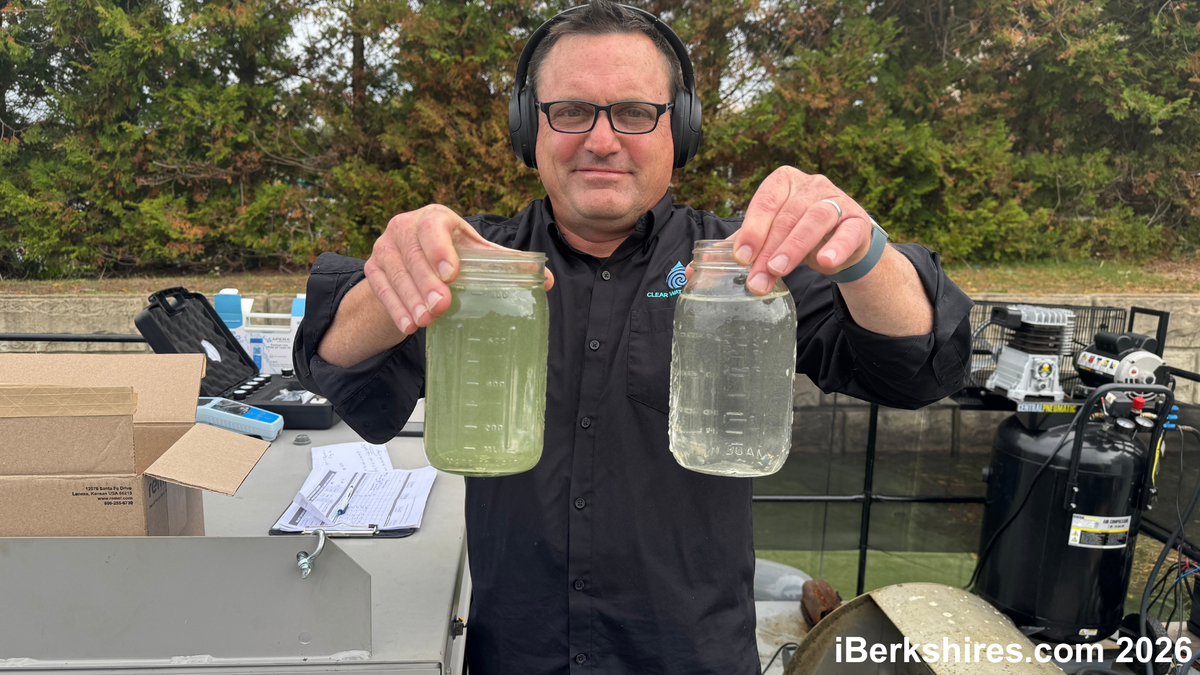
Marc Bellora holds a jar of lake water, left, to compare to water cleaned by his Aqua Clarifier Water System.

PITTSFIELD, Mass. — Marc Bellora has high hopes for a device he's created to treat lakes from harmful algae blooms.

His patented water clarifier can physically remove captured material rather than letting the nutrient-rich material settle back into the lake, which occurs when herbicides are used.

"It's a long-term lake management tool that can be used to reduce legacy nutrients in lakes and ponds over time," he explained. "We built the prototype, this is a prototype. It does approximately 65 to 70 gallons per minute. It's very environmentally friendly. Can be used with air only, or we can use a low-dose potable polyaluminum chloride (PACL) or chemical on board that can help improve results."

The water clarifier barge is based on well-proven technology for water treatment, he said. "It's a self-contained, portable, mobile unit that removes algae blooms, nitrogen, phosphorus, and the associated nitrogen and phosphorus within lakes."

Bellora founded Clear Waterways Group with business partner Mark Simon. They built a prototype mobile unit and are still working out the kinks. It's taken Bellora about five years to bring the project to fruition as he is also a full-time Realtor.

He says the repurposed barge they use has a device that uses air to filter the water to separate harmful bacteria or uses a chemical at low doses. They are testing both to see how well each does at cleaning the water.

"They would do the same thing here, except they would spray it, and it blocks all that stuff together," Bellora said of the use of herbicides. "But then it drops to the bottom. So now all the nutrients that are attached in that plot go to the bottom and contribute to the legacy nutrients only to fuel next year's bloom. Ours removes it."

He said just using air alone has removed 70 to 90 percent of harmful algae where he has been operating on the south end of Pontoosuc Lake.

"Essentially, we take in the bad stuff, we take in the lake water. We separate the good stuff from the bad stuff. Clean water goes back into the lake, and the bad stuff can either be composted, or it can be taken to the wastewater treatment plant, which is what we're doing here," he said. 

Bellora explained that tiny air bubbles attach to particles in the water, making them buoyant so they rise and can be removed. The unit can operate with air alone, or with a low dose of potable polyaluminum chloride.

PACL helps through flocculation: it gathers small particles into larger clumps that are easier for air bubbles to capture. He said this can help remove dissolved nutrients that air alone may not capture as effectively. 

Bellora said he was inspired to build something like this after noticing the lakes he enjoys being shut down because of algae blooms. 

The city issued a health advisory for Pontoosuc in August, warning residents not to swim or come in contact with the lake water because of an algae bloom. The cyanobacteria can cause skin irritations, vomiting and diarrhea and nerve or liver problems. 

Bellora previously worked for a company that used traditional dissolved air flotation (DAF) systems to treat water. In that role, he traveled around the country to work at paper mills and food-processing plants.

That experience gave him a practical understanding of DAF, and while flying between jobs, he would see green ponds and wonder whether the technology could be adapted to treat lakes. 

View Full Story

More Pittsfield Stories