Williamstown Residents Question Plan to Use Herbicide Near Green River
WILLIAMSTOWN, Mass. — Residents are asking the Conservation Commission to reconsider a 2023 decision that allowed the use of an herbicide that studies have linked to cancer, while its unclear if the group with permission to treat a parcel near the Green River will follow through on the plan.
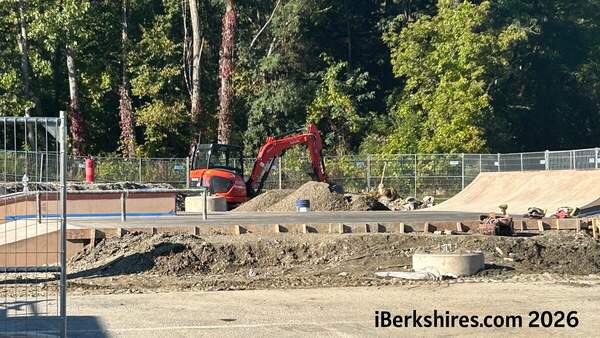
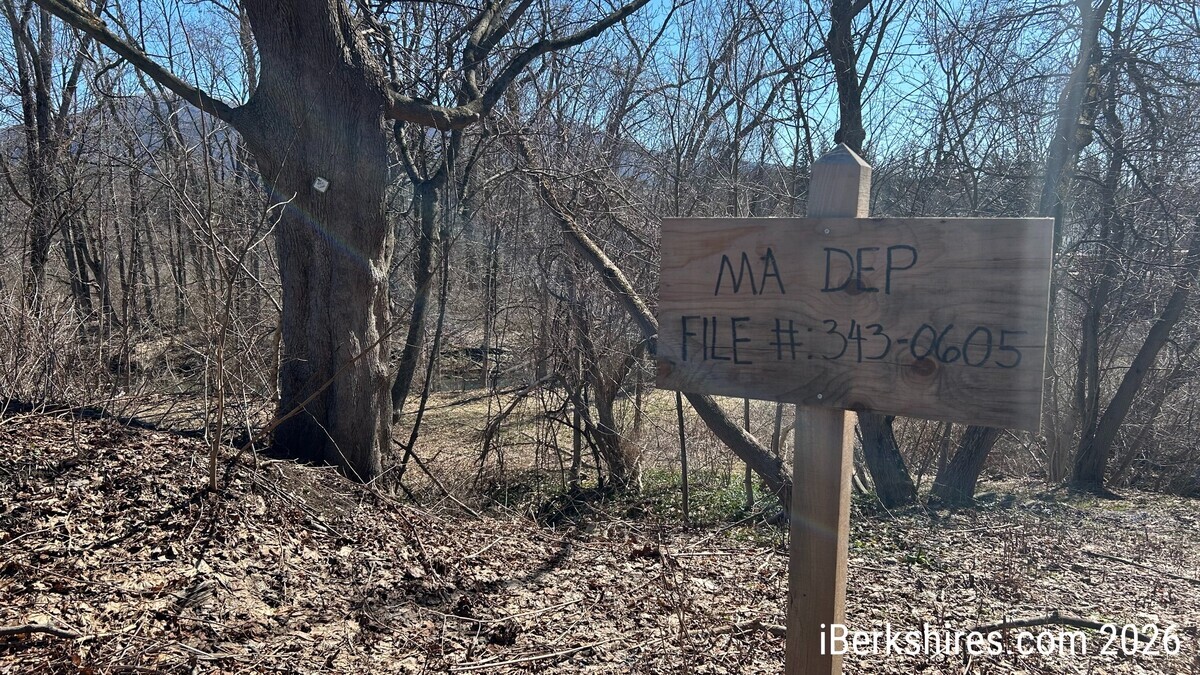
At issue is a 4.3-acre riverfront parcel owned by the Williamstown Rural Lands Foundation off Woodlawn Drive near the site of the town's new fire station.
In late 2023, Con Comm OK'd a management plan for the area that included, "a combination of forestry mowing, cut/paint and foliar spray herbicide application," to address the out-of-control growth of invasive exotic plants on the site.
But WRLF never recorded the commission's order of conditions with the Registry of Deeds, a step it would need to complete in order to implement the plan. The town's conservation agent told the commission at its March 12 meeting that because of budgetary concerns, Rural Lands had not embarked on the planned ecological restoration, but it might want to revive that plan.
The commission's order of conditions expires three years after it was issued in December 2023.
"There was a seasonal plan in that [2023] application of cutting at a certain time of year … and then herbicide application in certain times of year to line up with the seasonality of certain plant and animal communities," Community Development Director Andrew Groff told the Con Comm. "They'll have to amend some of that schedule moving forward.
"I think we'll see [Williamstown Rural Lands Foundation's Dan Gura] and his contractor in the spring for an amendment to that schedule later in the spring, maybe early summer, and, likely, an extension."
WRLF's director this week declined to say whether the organization will seek that extension.
Laura Bentz and Cindy Polinsky asked the commission to deny any application that involves the use of glyphosate, the active ingredient in the herbicide marketed as Roundup.
"I'm not sure if people are aware that the biggest study on the safety of glyphosate has just been retracted because it has finally come to public attention that the supposedly independent study on the safety of glyphosate was actually almost entirely authored by Monsanto scientists," Bentz said. "Monsanto was the manufacturer of glyphosate. Monsanto scientists provided the data to the 'independent' [demonstrating with an 'air quotes' gesture] contractors who published the study.
"The journal [Regulatory Toxicology and Pharmacology] has now retracted the study because, perhaps, the study wasn't as independent. If you just do the most basic research looking at average journals, there are lots of questions about glyphosate."
As far back as 2015, the International Agency for Research on Cancer concluded that there was, "strong" evidence for genotoxicity" associated with glyphosate. The federal government, however, disagrees.
Both Bentz and Polinsky offered the commission evidence in the form of scientific studies linking the common herbicide to adverse health impacts, including cancer. And Polinsky shared testimony about her own battle against cancer and her concern that permitting its use on the Green River parcel could create harm.
"I've lived in Williamstown for 17 years," Polinsky said. "In July of 2020, I was diagnosed with primary mediastinal B-cell lymphoma, Stage 4, which means the cancer had spread to the organs below my diaphragm. The kind of non-Hodgkins lymphoma that I have is super aggressive and very rare, especially in an older person.
"It's on the list of cancers covered by the class-action suit against Roundup, a product that uses glyphosate."
She told the commission about the impact of more than 600 hours of chemotherapy and the lingering effect on her health. And she told the body that glyphosate could have contributed to her cancer.
"When I was in the hospital, I asked my doctor what caused my cancer," Polinsky said. "He said, 'I don't know. We just try to cure you.' I said, 'Could it have been glyphosate my neighbor used or was in a nearby field or was in my food?' He said, 'Maybe.'
"I said, 'If I'm exposed after I'm cured this time, could I get lymphoma again?' 'Yes,' he responded. Honestly, I don't think my body can take any more treatment."
Polinsky told the commission she was concerned that anyone else might have to go through what she did. And, like Bentz, she said she recognized the importance of removing the invasives and helping native plants get established on the WRLF property.
"I'm just asking that we rethink this," Polinsky said. "Maybe we pull invasives together. It's a worthy project. I'd be happy to use the strength I have to at least organize volunteers. I'm not sure I have the strength to pull invasives."
iBerkshires.com reached out to Williamstown Rural Lands Foundation to ask whether its thoughts about the Woodlawn Drive site had changed since its 2023 notice of intent was presented to the Con Comm.
"Thank you for inquiring to us about habitat restoration on one of our landholdings," WRLF Executive Director Robin Sears wrote in an email on March 24. "We won't be proceeding with the project as planned at this time, and we do look forward to collaborating with members of the neighboring community to find a way to care for this special property.
"We have no further comment."
Sears then twice in subsequent emails declined to say whether the non-profit will seek an extension of the 2023 order of conditions, reiterating, "We have no further comment."
In other business at its March 12 meeting, the Con Comm gave the OK for two business developments in town: the conversion of 130 Water St. (Route 43), the former Mountain Goat store, for use by Green River Financial Services and a plan to redevelop the site of the former Four Acres Restaurant at 217 Main St. (Route 2), by Karampatsos and Associates, a financial planning firm.
Tags: conservation commission, herbicide, invasive species,