Governor Increases Home Heating Assistance Benefits for Massachusetts Households

Print Story | Email Story
BOSTON — As Massachusetts experiences one of its coldest winters in recent years, the Healey-Driscoll Administration is increasing Home Energy Assistance Program (HEAP) benefits for tens of thousands of Massachusetts residents who rely on the federally funded program to  help pay for home heating. 
 
Persistent below-average freezing temperatures have resulted in one of the coldest Massachusetts winters in recent history. As a result, 72 percent  of HEAP clients (approximately 54,000 households) have less than $100 remaining in heating benefitsfor the rest of the heating season, which runs from November through April. 
 
"We know heating costs are putting a strain on families, especially during a winter like this one. And costs are only increasing because of President Trump's war in Iran," said Governor Maura Healey. "Increasing these benefits will help make sure seniors, families with children and other residents can keep their homes warm during the coldest weeks of the year." 
 
During the 2024-2025 heating season, the HEAP program provided financial assistance to more than 159,000 Massachusetts households. The majority of households  served by HEAP- 54 percent- are seniors living on fixed incomes, and approximately 11 percent of participating households assisted by HEAP include children under the age of six. 
  
Currently, the maximum HEAP benefit for households using deliverable fuels such as oil, propane, and kerosene is $1,000, while the maximum benefit for households using  utilities  such as natural gas or electric is $850.  The Executive Office of Housing and Livable Communities (HLC) projects increasing the maximum deliverable fuel benefit from $1,000 to $1,400 and the maximum utility benefit from $850 to $925 in anticipation of receiving the final $15 million in federal funding from the U.S. Department of Health and Human Services (HHS) in the coming months. 
 
Historically, HHS provides the final 10 percent of Massachusetts' annual HEAP funding late in the winter season, allowing the state to adjust and often increase benefit levels based on demand. In prior years, the state has typically waited to increase benefits until this final funding allocation is received. 
 
In November 2025, at the start of this year's heating season and despite a federal government shutdown, the Healey-Driscoll Administration was able to leverage carryover HEAP funding to provide emergency heating assistance to households with the greatest need and initiated the winter utility shut-off moratorium weeks early to ensure residents would not lose heat during the coldest months. 

If you would like to contribute information on this article, contact us at info@iberkshires.com.

Community Meeting Addresses Prejudice in Pittsfield Schools

By Brittany PolitoiBerkshires Staff

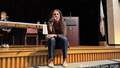
Johanna Lenski, a special education surrogate parent and advocate, says there's a 'deeply troubling' professional culture at Herberg that lets discriminatory actions and language slip by.

PITTSFIELD, Mass. — Around 60 community members gathered at Conte Community School on Monday night to discuss issues with prejudice in the district. 

The event was hosted by the Pittsfield Public Schools in partnership with the Berkshire NAACP and the Westside Legends. It began with breaking bread in the school's cafeteria, and caregivers then expressed fears about children's safety due to bullying, a lack of support for children who need it the most, and teachers using discriminatory and racist language. 

"One thing I've learned is that as we try to improve, things look really bad because we're being open about ways that we're trying to improve, and I think it's really important that we acknowledge that," interim Superintendent Latifah Phillips said, reflecting on her work in several other districts before coming to PPS last summer.  

"It is very easy to stay at the surface and try to look really good, and it may look like others are better than us, when they're really just doing a better job of just kind of maintaining the status quo and sweeping things under the carpet."

Brett Random, the executive director of Berkshire County Head Start, wrote on her personal Facebook page that her daughter reported her math teacher, "used extremely offensive language including both a racial slur (n-word) and a homophobic slur (f-word) and then reportedly tried to push other students to repeat those words later in the day when students were questioning her on her behavior."

The school department confirmed that an eighth-grade teacher at the middle school was placed on leave.  

The Berkshire Eagle, which first reported on the incident, identified the teacher as Rebecca Nitsche, and the teacher told the paper over the phone, "All I can tell you is it's not how it appears." Nitsche told the paper she repeated the words a student used while reporting the incident to another teacher because officials needed to know it happened. 

Johanna Lenski, speaking as a special education surrogate parent and parent advocate, on Monday said there is a "deeply troubling" professional culture at Herberg that has allowed discriminatory, racist, non-inclusive, and ableist treatment of students.

She said a Black transgender student was called a "piss poor, punk, puke of a kid," and repeatedly and intentionally misgendered by one of the school's teachers, and then wrongfully accused of physically assaulting that teacher, which resulted in a 10-day suspension. 

Another Herberg student with disabilities said the same staff member disclosed to an entire classroom that they lived in a group home and were in state Department of Children and Families' custody. When the teacher was asked to come to an individualized education program meeting for that student, Lenski said he "spent approximately 20 minutes attacking this child's character and portraying her as a problem, rather than a student in need of services and protection and support."

View Full Story

More Pittsfield Stories