MassWildLife: Winter wins for wildlife

Print Story | Email Story

With snowbanks towering over homes and bone-chilling winds sweeping across the state, it has been one of the snowiest and coldest winters since 2015. New England wildlife are well adapted to survive the winter, and here at MassWildlife, our staff have discovered that this frigid season can bring a few unexpected benefits!

Wildlife research

Every winter, biologists conduct pellet surveys for Massachusetts' only native rabbit, the New England cottontail. By analyzing DNA found in fecal pellets, biologists can determine whether the droppings were left by a New England cottontail or a non-native eastern cottontail. This information gives us insight into the presence and abundance of New England cottontails within their habitat in southeastern Massachusetts and southern Berkshire County. When temperatures are low, DNA in the pellets remains intact longer, making testing more reliable. Additionally, fresh snow on the ground makes it easier to spot these small brown pellets among the dense young forests and shrublands where the cottontails live.

MassWildlife biologists also take advantage of the winter months to inspect wood duck nest boxes, which are installed near ponds and wetlands to offer supplemental nest sites for cavity-nesting waterfowl. By checking these boxes in winter, staff can tell whether they were used by wood ducks or another species, like hooded mergansers, the previous spring to lay their eggs. The thickness and condition of eggshell fragments in the box can reveal whether the eggs hatched successfully or if they were lost to predators before fully developing. The widespread ice cover this winter allowed staff to safely access the sites and collect this important data more efficiently.

Habitat

Prolonged cold can deliver surprising benefits to our forests and habitats. Several invasive species in Massachusetts are vulnerable to sustained cold temperatures, including southern pine beetles. Their populations have been increasing on Cape Cod and the Islands for the past decade, making them one of the most destructive forest pests in the Northeast. This winter, temperatures remained cold enough for long enough to kill the majority of the overwintering population. Hemlock woolly adelgid—an aphid-like insect that attacks eastern hemlock trees—also saw a considerable decrease in population this winter. Despite being present in Massachusetts since the 1980s, New England winters have caused periodic adelgid population crashes and allowed hemlocks to persist in our forests.

MassWildlife conducts habitat management activities year-round, including during the winter. Many of our projects require selective tree removal to improve healthy open habitats that are home to declining wildlife. Tree removal work is carefully timed to minimize negative impacts to wildlife; we avoid bird and bat breeding seasons as well as locations with wet soils. A long, cold winter extends the amount of time available for projects that use heavy machinery because the ground remains frozen for longer.


Tags: MassWildlife,   
If you would like to contribute information on this article, contact us at info@iberkshires.com.

Community Meeting Addresses Prejudice in Pittsfield Schools

By Brittany PolitoiBerkshires Staff

Johanna Lenski, a special education surrogate parent and advocate, says there's a 'deeply troubling' professional culture at Herberg that lets discriminatory actions and language slip by.

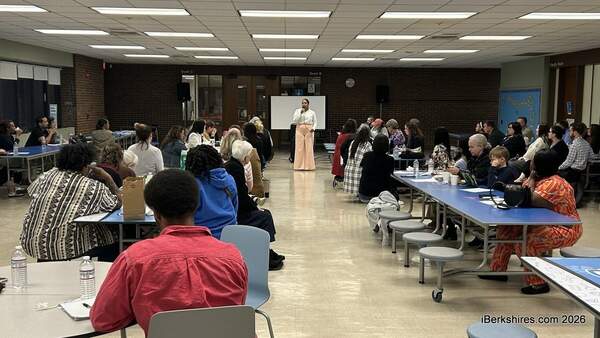
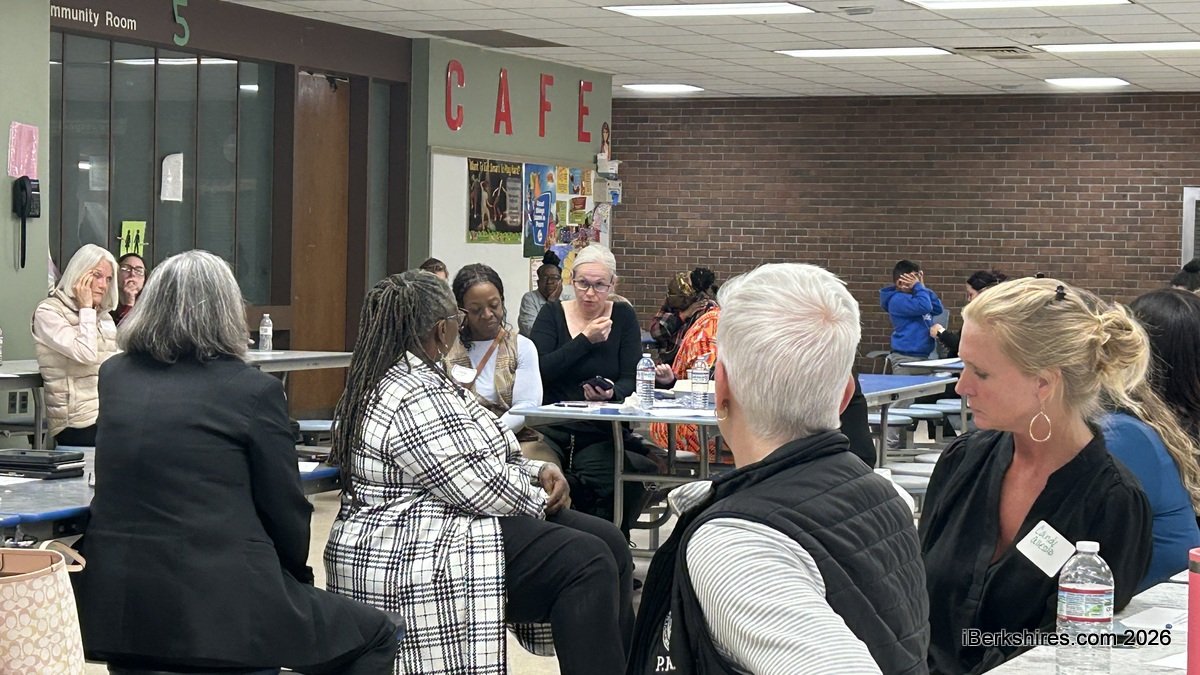
PITTSFIELD, Mass. — Around 60 community members gathered at Conte Community School on Monday night to discuss issues with prejudice in the district. 

The event was hosted by the Pittsfield Public Schools in partnership with the Berkshire NAACP and the Westside Legends. It began with breaking bread in the school's cafeteria, and caregivers then expressed fears about children's safety due to bullying, a lack of support for children who need it the most, and teachers using discriminatory and racist language. 

"One thing I've learned is that as we try to improve, things look really bad because we're being open about ways that we're trying to improve, and I think it's really important that we acknowledge that," interim Superintendent Latifah Phillips said, reflecting on her work in several other districts before coming to PPS last summer.  

"It is very easy to stay at the surface and try to look really good, and it may look like others are better than us, when they're really just doing a better job of just kind of maintaining the status quo and sweeping things under the carpet."

Brett Random, the executive director of Berkshire County Head Start, wrote on her personal Facebook page that her daughter reported her math teacher, "used extremely offensive language including both a racial slur (n-word) and a homophobic slur (f-word) and then reportedly tried to push other students to repeat those words later in the day when students were questioning her on her behavior."

The school department confirmed that an eighth-grade teacher at the middle school was placed on leave.  

The Berkshire Eagle, which first reported on the incident, identified the teacher as Rebecca Nitsche, and the teacher told the paper over the phone, "All I can tell you is it's not how it appears." Nitsche told the paper she repeated the words a student used while reporting the incident to another teacher because officials needed to know it happened. 

Johanna Lenski, speaking as a special education surrogate parent and parent advocate, on Monday said there is a "deeply troubling" professional culture at Herberg that has allowed discriminatory, racist, non-inclusive, and ableist treatment of students.

She said a Black transgender student was called a "piss poor, punk, puke of a kid," and repeatedly and intentionally misgendered by one of the school's teachers, and then wrongfully accused of physically assaulting that teacher, which resulted in a 10-day suspension. 

Another Herberg student with disabilities said the same staff member disclosed to an entire classroom that they lived in a group home and were in state Department of Children and Families' custody. When the teacher was asked to come to an individualized education program meeting for that student, Lenski said he "spent approximately 20 minutes attacking this child's character and portraying her as a problem, rather than a student in need of services and protection and support."

View Full Story

More Pittsfield Stories