MassWildlife: Get to know animal tracks
 |
Wild animals are experts at staying out of sight. Yet the winter snow and mud can reveal a detailed account of the comings and goings of even the most secretive animals. Whether you're wandering secluded forests and fields or taking a walk in your suburban neighborhood, watch for tracks to learn about wildlife in the area.
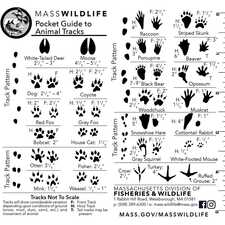
As with birdwatching, tree identification, or any other area of nature study, learning to identify tracks takes some practice. Start by getting familiar with common animal tracks. Use MassWildlife's animal track card as a guide to tracks you may encounter here in Massachusetts.
Identifying animal tracks is much easier if the conditions are right. Tracks left in snow that has partially melted can become distorted and are difficult to decipher. Loose or dry snow can also be a problem since it doesn't hold track details. Look for tracks in fresh snow that's not too deep or in mud for the most accurate print.
In addition to the tracks themselves, pay attention to the pattern oftracks on the ground. For example, deer, bobcats, house cats, and canines (dogs, coyotes, foxes) place their hind foot into—or nearly into—the track left by their foot to form a diagonal pattern and a narrow trail. Rabbits and gray squirrels gallop or hop, while members of the weasel family (otter, fisher, and mink) bound. Learning about distinctive track patterns (which you can find on the track card) can help with identification and help you gain a deeper understanding of the lives of these animals.
If you see:
- 4/4 - Four toes on front and four toes on hind feet = dog family, cat family, rabbit family or hare family
- 4/5 - Four toes on front and five toes on hind = rodents (mice, voles, chipmunks, squirrels, woodchucks, porcupine, muskrat)
- 5/5 - Five toes on front and five on hind = weasel family (mink, fisher, weasels, otter), skunk, bear, opossum, raccoon, shrew, beaver
- Two-toe track = deer & moose
You can use tracks along with other clues like bits of fur, scat, or signs of digging to get more information about what the animal was going. Watching for tracks and other evidence of wildlife activity can add some fun and a little bit of mystery to your next winter walk. Use the links below to find more ways to enjoy the outdoors this winter:
-
Learn where to look for bald eagles
Bald eagles are active in winter with courtship and nest building. Get tips for where to find them and how to observe without disturbing the eagles. -
Explore a Wildlife Management Area near you
MassWildlife manages over 235,000 acres of Wildlife Management Areas that provide habitat for wildlife and give people a place to explore natural landscapes (there are no maintained trails). WMAs are open to the public for hunting, fishing, wildlife watching, hiking, snowshoeing, cross-country skiing.
Tags: MassWildlife,