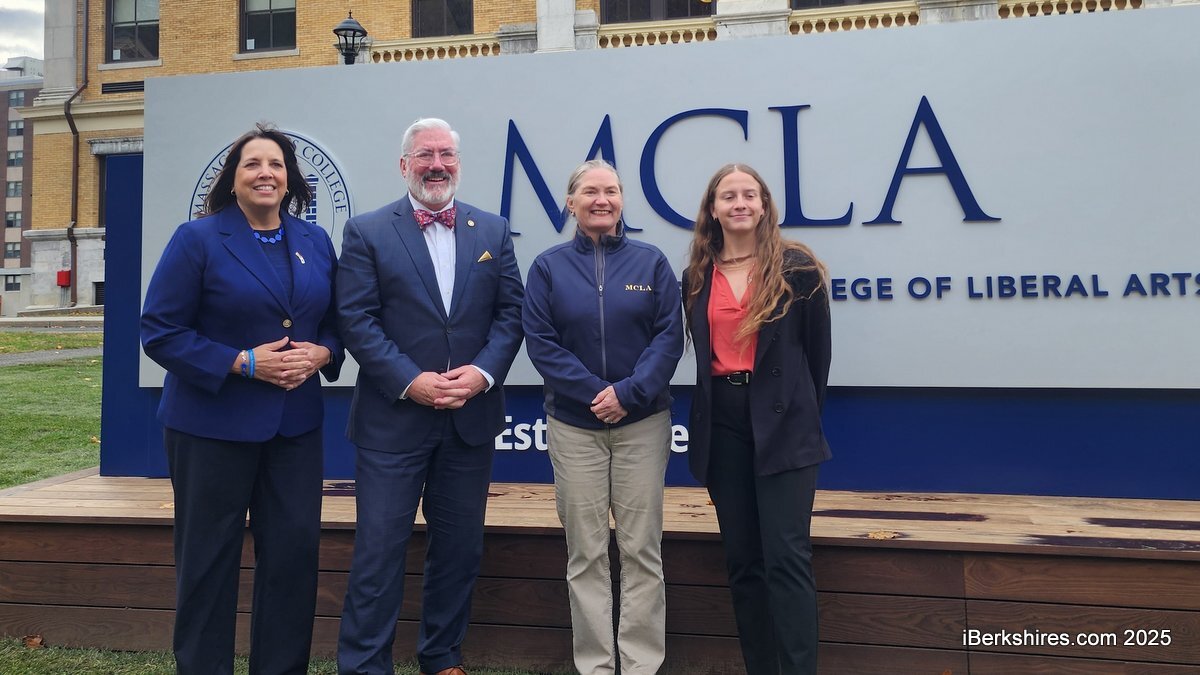
MCLA Shows Off Mark Hopkins' Needs to Lieutenant Governor

MCLA professor Maggie Clark says the outdated classrooms with their chalkboards aren't providing the technical support aspiring teachers need.
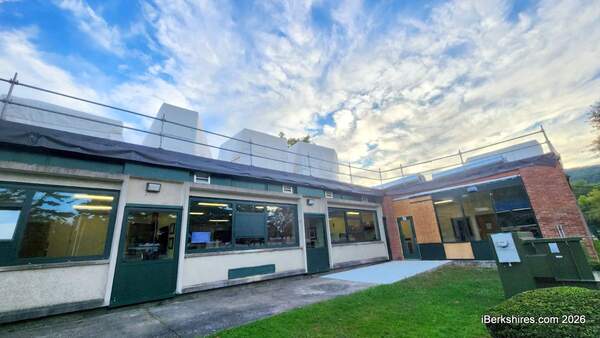
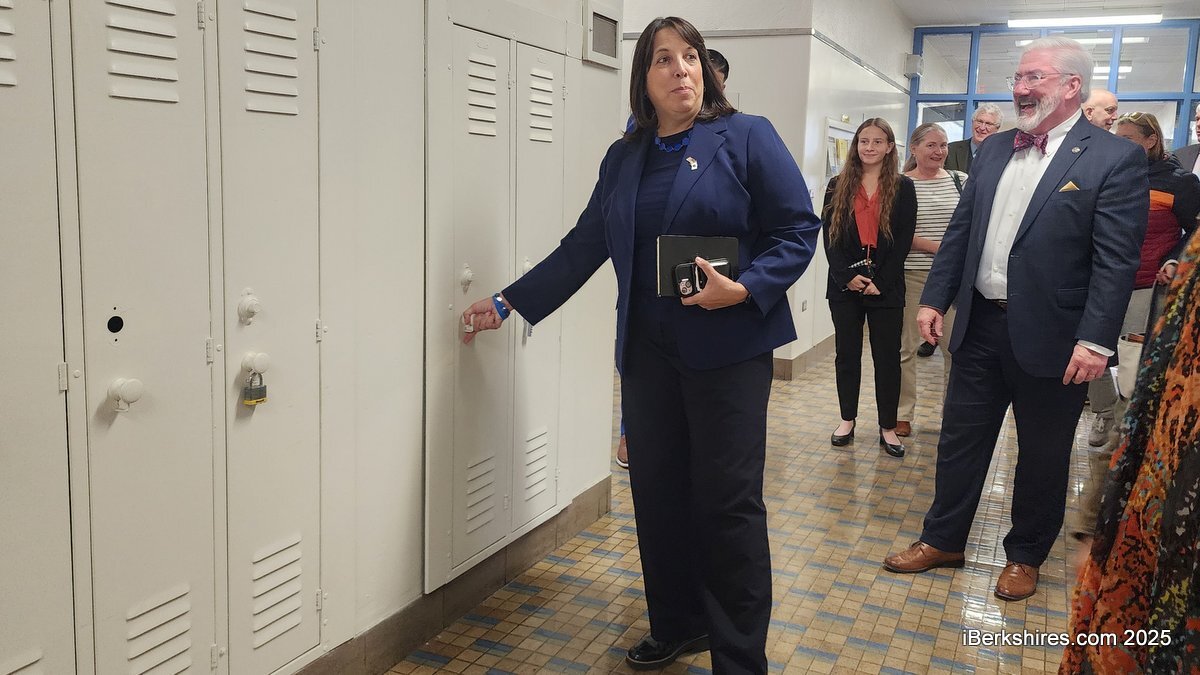
The last significant work on Mark Hopkins was done in the 1980s, and its last "sprucing up" was years ago.
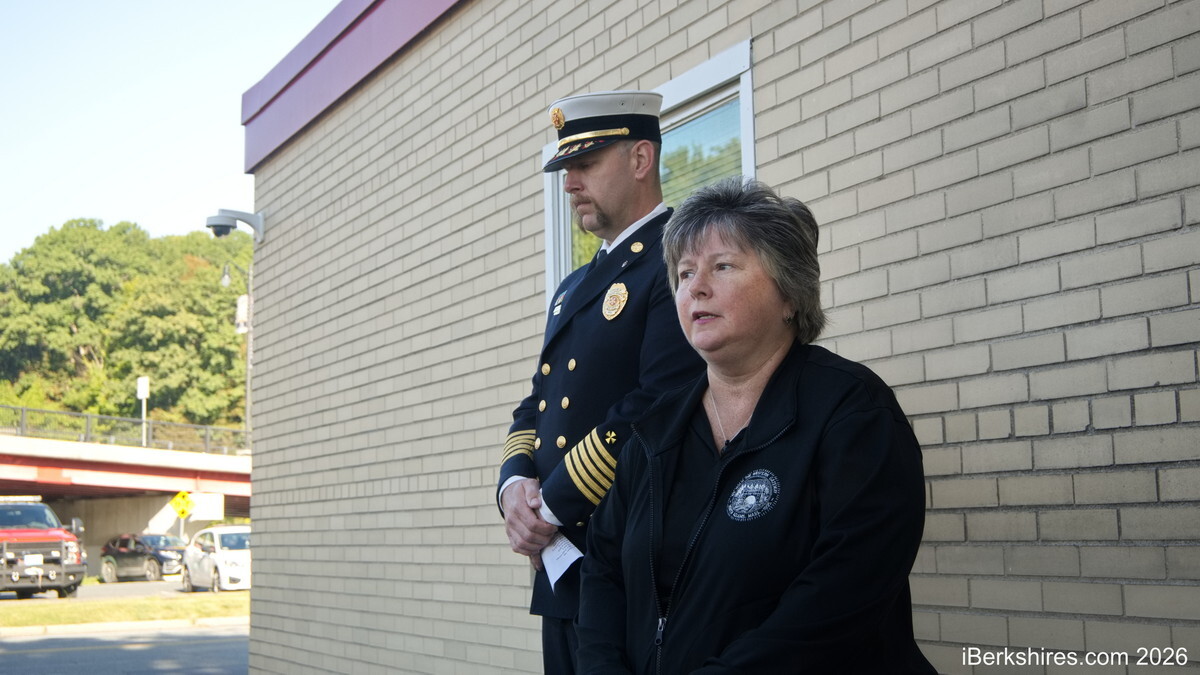
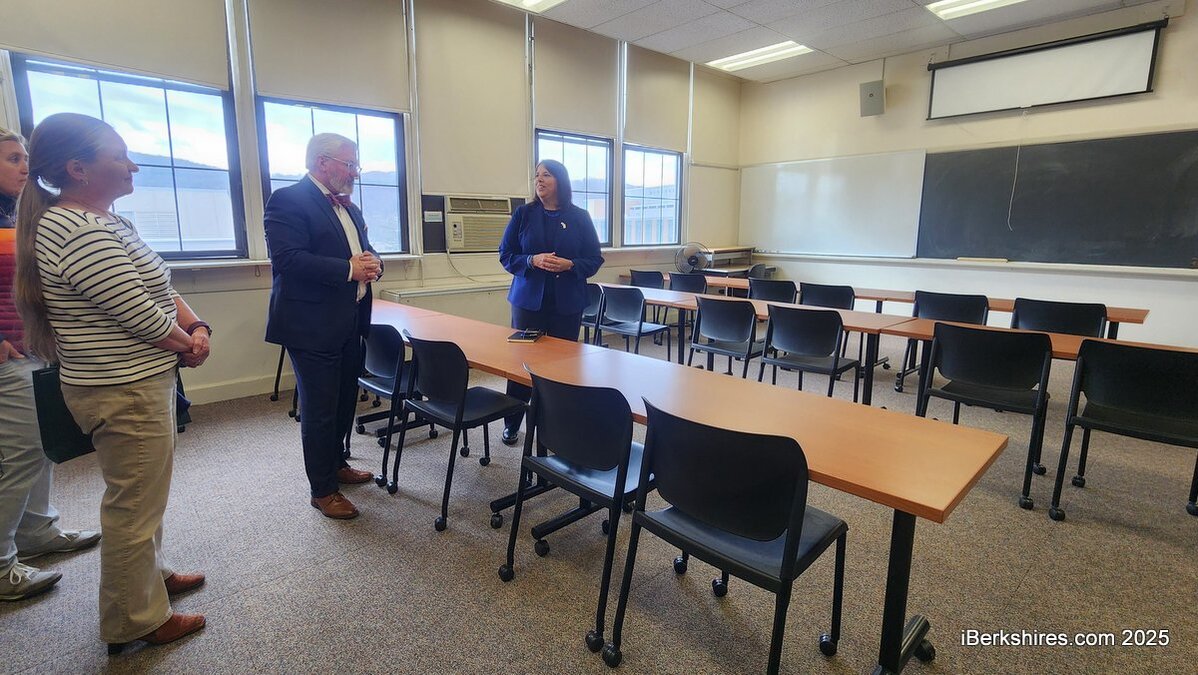
"The building has great bones," President Jamie Birge told Lt. Gov. Kim Driscoll, as they stood in a third-floor classroom on Friday afternoon. "The envelope needs to be worked on, sure, but it's stable, so it's usable — but it just isn't usable in this form."
The "new" Mark Hopkins School opened in 1940 on Church Street and later became a campus school for what was then North Adams State Teachers College. There haven't been children in the building in years: it's been used for office space and for classrooms since about 1990.
"I live in this building. Yeah, I teach the history of American education," said education professor Maggie Clark, joining officials as they laughed that the classroom was historical.
"Projecting forward, we're talking about assistive technology, working with students with disabilities to have this facility as our emblem for what our foundation is, is a challenge."
Board of Trustees Chair Buffy Lord said the classroom hadn't changed since she attended classes there in the 1990s.
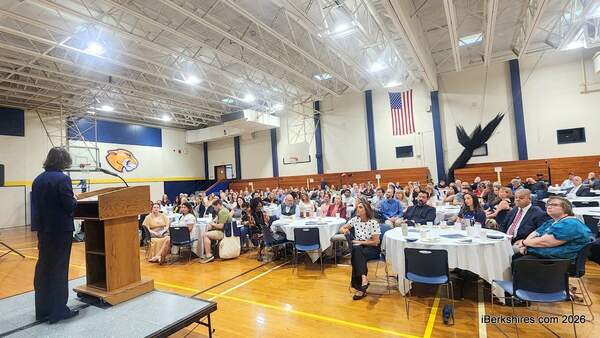
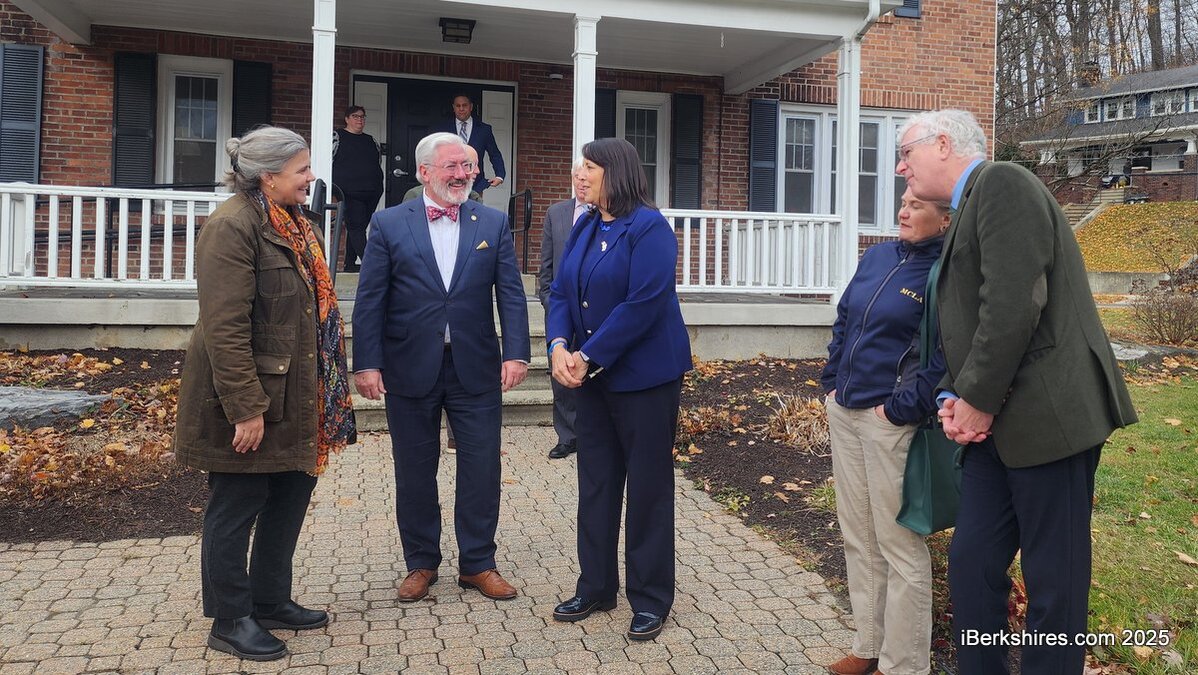
Driscoll was in the city to address the Western Mass Arts Economic Impact Summit in the morning and then had lunch with Birge and a visit to Mark Hopkins to see what the college's needs are.
She and Gov. Maura Healey are advocating for the BRIGHT Act (An Act to Build Resilient Infrastructure to Generate Higher Education Transformation), filed by the governor in January to use Fair Share amendment funds to pump up to $3 billion into the infrastructure of the state's higher-education system.
"It's also just a tremendous jobs bill, because we know when we're building buildings, it's contributing mightily to the local economy," Driscoll said. "So we're excited to partner with the Legislature and move that bill forward and hopefully get some projects in the ground for the start of '26."
The lieutenant governor said she really didn't need to see the building to understand that it was out of date. Students teachers graduating from the college won't be teaching in classrooms that look anything like this, she said.
"We're educating teachers to teach young people critical thinking skills in the building that's still using a chalkboard, like that's our goal," she said. "Thank you for letting me see it firsthand. I don't think we needed to be convinced, but it's great."
Birge said there was a proposal to the Division of Capital Management to renovate Mark Hopkins several years ago. That can be dusted off and updated, he said.
"We'll be ready when the state's ready to roll out the funding," said Birge, adding, "this is really an economic development and it means that if we have a better facility, we can bring in more students for education. It means we keep people here in Berkshire County. So it creates jobs. It sustains jobs. It replaces people who are retiring after a career that's very long with students who have the leading-edge information about education.
"So it creates so many dynamics, more than just, you know, we've got a construction."
Driscoll said renovations won't be any cheaper five or 10 years down the road. The BRIGHT Act will be a "tremendous jobs bill" and also tells students that "we value you," she said.
State Sen. Paul Mark said on Friday that the bill had been reported out of the Joint Committee on Bonding, Capital Expenditures and State Assets, of which he is vice chair, on Thursday. It is now on its way to Ways & Means.
One of promises by the administration was to lower costs for higher education, including free community college for eligible students.
"And that was important to us, that if you have the fire in the belly and the opportunity, that dollars aren't the reason why you don't go to school. But now let's make sure the setting works, so that you can do your best, and we can support all learners not having accessibility," said Driscoll, adding that includes creature comforts like proper heating and cooling.
"A result of the work that you and the government have done, MCLA has the lowest debt load of any public four-year institution," Birge told her. "So our students graduate, on average, with $13,000 in debt."
Driscoll thanked Birge for his efforts in bringing new opportunities to MCLA and connecting the community and the region.
"It's a real opportunity, not just to make sure more students are on campus, but more students are in the region, doing the jobs we need, from nursing to educators to so much more," she said. "That's really one of the benefits of a public higher ed system."
Tags: driscoll, MCLA,