Williamstown Housing Trust Releases Funds to Northern Berkshire Habitat
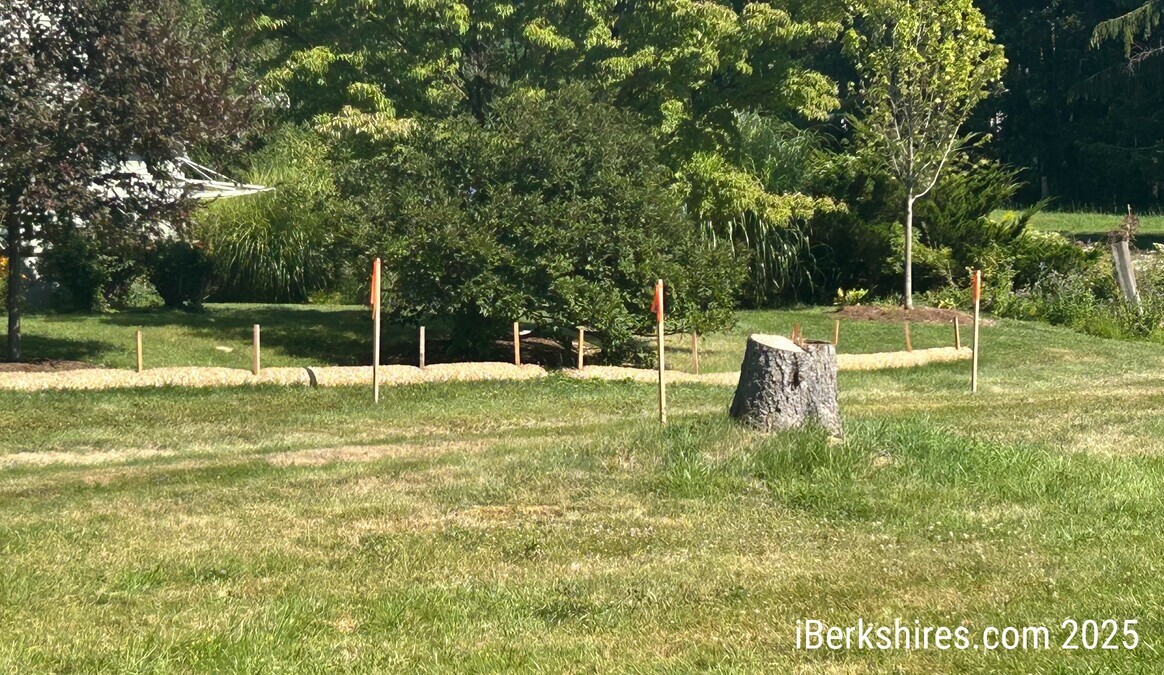
WILLIAMSTOWN, Mass. — The trustees of the town's Affordable Housing Trust on Wednesday committed to contributing $100,000 toward the construction of the first of four Habitat for Humanity homes off Summer Street.
Northern Berkshire Habitat for Humanity President Keith Davis again explained the reason why the local non-profit needs additional town support to kickstart a planned four-home subdivision on 1.75-acre lot the trustees purchased in 2015 for the purpose of building income-restricted housing.
The Trust board had planned to make a $120,000 allotment that would have gone toward the subdivision's road and the first home. But last month, at Northern Berkshire Habitat's request, the body reallocated that money entirely to offset the increased cost of infrastructure.
Davis reminded the body that Habitat's startup costs increased, in part, because of modifications to the site plan that came up during the permitting process. The net result was that what he expected to be a $200,000 infrastructure project ballooned in cost to $330,000.
That price tag will eat up the entire $120,000 contribution from the town and the seed money that NBHFH planned to use from the sale of last home it completed in town, at the corner of Cole Avenue and Maple Street.
The local non-profit's practice has been to use proceeds from a sale of a home to bankroll its next project. The money goes toward materials and tradespeople, like electricians, with expertise beyond the scope of Habitat for Humanity's volunteer labor force.
"The road was significantly more expensive than anticipated, and, as a result, there is more money needed to start House 1," trustees Chair Daniel Gura summed up. "It has to come from somewhere."
Davis agreed.
"We have to raise the money from somewhere, because we are not selling things at market value," he said. "We gear our program to people who make 30 to 80 percent of the area median income. After they qualify, we fix the mortgage at 30 percent of their income. If they make 80 percent [of AMI], we get more money back. If they make 30 percent, we get less money back.
"But they have a house. They have a chance to build generational wealth. They have stability in their family. It provides the homeowner with a lot of benefits."
In July, when Davis initially asked about the $100,000 outlay, board members asked Davis for cost estimates on how much each of the subsequent houses planned for the property.
Davis said that, based on industry standards, he expects the first Summer Street home to cost about 10 percent more than the second of two homes built at the corner of Cole and Maple, or $220,000.
"Beyond the first house, it's a total crapshoot," Davis said. "If anybody can tell me what will happen with tariffs and things like that, I'd love to know. Right now, the lumber we use in construction all has to be graded lumber. Even if the trees are harvested in the U.S., most of the wood is shipped across the border to Canada for manufacture into lumber, grading and stamping and shipped back to the U.S. This is something that is very unpredictable at this point."
Davis said a revised version of the stretch energy code in Massachusetts could drive up costs even more.
"It means we now have to hire an engineer to calculate all the room volumes for heating and ventilation and design the ventilation system and, then, we have to hire a grader who will come in at the beginning of the process, middle of the process and end of the process and make sure everything from design, meets actual," he said. "This was a cost I wasn't initially anticipating, hiring an engineer to do the HVAC system and the grader to evaluate it."
Davis said he hoped to have the general contractor on site by the end of the week to start building the road. And as soon as the road base is in, Northern Berkshire Habitat will be able to bring a concrete truck to the first building site to pour a foundation, hopefully by the end of September. Davis said he still hopes to have the first home's building envelope completed before the snow flies so his volunteers can work inside during the winter months.
Northern Berkshire Habitat for Humanity currently is accepting applications to be the first family to live in the Summer Street development. The deadline for applications is Sept. 30.
On Wednesday, the five members of the AHT board present for the meeting voted unanimously, with Gura abstaining, to release the $100,000.
But first, Gura opened the floor to ideas on how to avoid some of the risk of volatile cost escalation that Davis mentioned.
He pressed the representatives from the Habitat board in attendance to explore partnering with a home builder, who could work on erecting one house while Habitat volunteers build the home next door.
Gura suggested that doing so would enable the whole four-home development to be completed ahead of Habitat's planned pace of one home per year. That would get one more family housed in town a little quicker and lower the risk of increased material costs between the planned third and fourth years, he said.
"I think the way it can be successful is you'd need to find a builder who builds homes and they said. ‘These are our costs. I have to pay all my men and women. I can take out my profit number and bang it out in three months with my people. … And I need to break even,' " Gura said. "It becomes that company's volunteer thing that they do with their team."
He suggested that the Affordable Housing Trust could help supply the funds needed to get the commercial builder to the "break even" point.
Gura stressed that he did not know if such a builder could be found, particularly in a region without the kind of building activity seen in other parts of the country, but he asked the non-profit to at least ask local builders if it was a possibility.
Northern Berkshire Habitat's Mary Morrison said the non-profit had discussed hiring contractor in the past as a project manager but has not been able to find the funds to do so. She also pointed out that the Habitat for Humanity model has homeowners investing "sweat equity" by working on the volunteer crews that build the houses.
Gura noted that if two homes were built simultaneously — one by a contractor and one by volunteers — the families who were selected to live in both homes could work on one of them.
"They don't have to work on the house that they're going to live in," Gura said, a point with which Davis agreed.
Tags: affordable housing trust, habitat for humanity,