Williamstown Housing Trust Agrees on More Money for Subdivision Infrastructure
WILLIAMSTOWN, Mass. — The board of the town's Affordable Housing Trust on Wednesday decided to reallocate previously committed funds for a subdivision off Summer Street in order to keep the project on track.
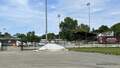
The trustees a couple of years ago pledged $120,000 in support of Northern Berkshire Habitat for Humanity's plan to put multiple single-family homes on a 1.75-acre parcel then owned by the trust.
That $120,000 was to have been split between the first two phases of the project: putting in the infrastructure to support the subdivision and building the first home of what is now a planned four-home development.
This week, Habitat President Keith Davis told the trustees that costs for the infrastructure, Phase 1, have escalated, largely as the result of features that were added to the project during the permitting process.
As a result, the nonprofit asked the trustees to allocate the entire $120,000 to Phase 1, instead of the $60,000 originally contemplated when NBHFH worked out the plan with then trust Chair Andrew Hogeland.
"At that time, we were talking about a road, water line and sewer line," Davis said. "That's where we came up with the $200,000 [in total infrastructure costs].
"I worked it out with Andy [Hogeland], and he said, 'We'll ask the Affordable Housing Trust to contribute $60,000 toward that amount.' That was before any of the engineering was done or anything else or we got any of the approvals."
Davis said the original cost estimates for the road, water line and sewer line have held up pretty well.
On the other hand, during permitting, it was required by the town that the project's rain garden be quickly established by installing sod — an additional $86,000 cost, Davis said. The town also required fencing around the rain garden and jurisdictional wetland on the property to satisfy the requests of abutters, a $4,000 expense.
A requirement that Habitat replace an existing drain pipe with one placed deeper to carry excess stormwater to the town's sewer system comes with a price tag of $13,500, and a berm required at the southern edge of the property to keep rainwater from reaching homes on North Hoosac Road will cost $9,000, Davis said.
There were other requirements, like a fire hydrant and water testing that were added to the project, bringing the cost for Phase 1 to $328,000, 64 percent more than the $200,000 anticipated, Davis said.
"So what we'd like to do is use the entire $120,000 for site work, and then we'll need additional funding for the house," Davis said. "Right now, if you were to grant the $120,000 for that, Habitat will still be contributing $209,000 [toward Phase 1] and giving all that to the town, basically, when it's done."
The town has a memorandum of understanding in place with Northern Berkshire Habitat to transfer ownership of the infrastructure like the rain garden, road and water line to the town rather than creating a homeowner's association for maintenance that would place an additional burden on the four low-income homeowners who eventually will live in the subdivision.
Trustee Robin Malloy challenged Davis' characterization of the non-profit "giving" the town the new road [if accepted by town meeting] and associated infrastructure because the town then would be responsible for plowing and upkeep.
With just four members of the seven-person board in attendance, Vice Chair Cheryl Shanks, who ran the meeting, asked whether the board could wait to make a decision on altering the existing funding agreement for the $120,000 until more members could participate.
Davis said the consequence likely would be to lose half a year in construction time. Right now, Habitat is hoping to have the road built in time to start the first house in the fall. If all goes according to plan, the nonprofit wants to have the slab down and the exterior of the house erected before the snow flies so volunteers can continue work on the interior over the winter.
"If we don't get started on that house by September, we don't get started on that house until spring," Davis said.
Ultimately, the four members present — Shanks, Malloy, Kayla Servin and Stephanie Boyd — agreed unanimously to reallocate the entire $120,000 toward Phase 1, but they stopped short of discussing a new financial commitment for Phase 2, the first house, until trustees Thomas Sheldon and Ruth Harrison have a chance to weigh in. Board Chair Daniel Gura, an employee of Habitat for Humanity International, has recused himself from decisions involving the Summer Street development.
Davis told the trustees that the local chapter of Habitat for Humanity likely will be asking for $100,000 toward the construction of the first home when the time comes.
Davis explained that with increased outlay in Phase 1 — a little more than $200,000 versus the $140,000 originally planned — the non-profit will need more startup contribution from the town to get the first home built, 40 percent more than the $60,000 planned under the original 50/50 split of the $120,000 grant.
Since sales proceeds from each of the four houses will fund the next project — a model Habitat has followed in the past — the nonprofit likely would be asking for smaller contributions from the trust for subsequent builds. Northern Berkshire Habitat plans to finish one house per year at the site.
Eventually, Davis said, he expects to ask for $370,000 from the trust in support of a $1.42 million project (26 percent), in addition to the contribution of land the trust already has made.
"That's $120,000 for site work, $100,000 for the first house, $50,000 each for houses two, three and four," Davis said. "I'm not really worried about houses two, three and four right now, because I can't predict the future.
"So $370,000, and the total cost of the project will be $1.42 million. That's today's prices. I don't know what will happen to the cost of construction materials."
Boyd contributed that by her reckoning, that works out to $92,000 per house. The cost of infrastructure alone ($328,000) is about $82,000 per house, Boyd noted.
Malloy during the meeting expressed a concern about future requests from the town ($250,000 on top of the $120,000 already committed) could hamper the trustees' ability to explore other housing initiatives in town.
At the end of the May (the last month available to the board without Treasurer Harrison in attendance), the trust had just more than $360,000 in its account. That number will be reduced by the $120,000, which has not yet been dispersed, and increased by the $64,000 in Community Preservation Act funds allocated to the trust at May's annual town meeting.
Tags: affordable housing, affordable housing trust, habitat for humanity,