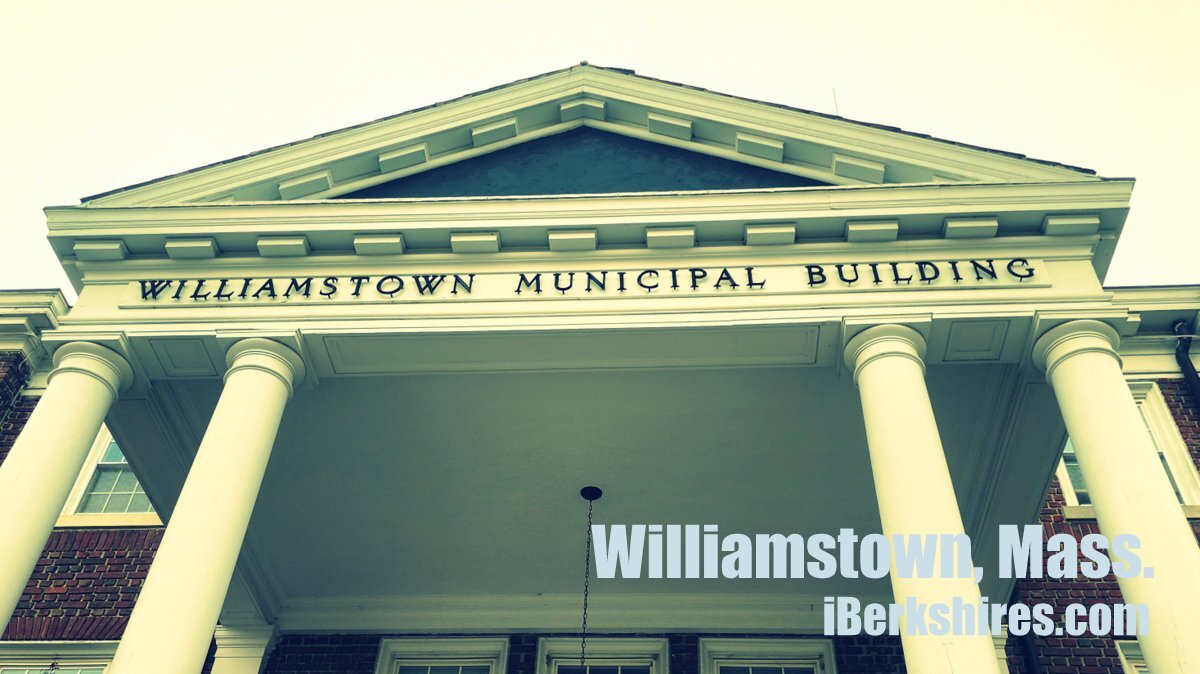
Williamstown Select Board Discusses Plans of Action
WILLIAMSTOWN, Mass. — The Select Board on Monday discussed the its priorities for the 2024-25 session and projects on which individual members of the board want to focus in the year ahead.
As a starting point for the conversation, Chair Stephanie Boyd pointed the panel to the comprehensive plan adopted in November 2023 by the Planning Board.
"The comprehensive plan, overall, is managed by the Planning Board, but a lot of the initiatives involve more than just the Planning Board to work on," Boyd said. "Some are outside the work of the Planning Board."
Boyd included in the packet for Monday's meeting the plan's implementation matrix, a spreadsheet of about 110 action items pulled from the 70-page document.
"This is a tool for us to use or not as we see fit," she said.
Shana Dixon noted that the comprehensive plan, titled "Envisioning Williamstown 2035," is just one tool at the board's disposal.
"The CARES Report," Dixon said. "I wanted to see how it aligns with this plan. We received that report and haven't touched base on anything that's in there. … I just feel like there's something in there that can work with what we have in front of us.
"I think we should look at the CARES Report again. I don't want them to put all that hard work in for us not to utilize it."
The CARES Report is the outcome of a multi-year, social worker-led study of the needs of town residents, including an emphasis on how traditionally marginalized members of the community can feel a greater sense of safety and inclusion in town.
Boyd, who chaired the Planning Board and co-chaired its Comprehensive Plan Steering Committee, said that the CARES Report, published in September 2023, and its preliminary data were consulted in the development of the comprehensive plan, a successor to the master plan, required by the commonwealth for any town with a Planning Board.
"We have tried to incorporate it," Boyd said of the CARES (Community Assessment Research) study. "The comprehensive plan, for the most part, is focused on the physical parts of the town, where the CARES report is just as important but different."
Jeffrey Johnson backed up Boyd's assertion.
"I've seen where certain aspects of the CARES study are in [the comprehensive plan]," Johnson said. "But, as [Town Planner Andrew Groff] said, this is a living document. If there's something we want to change [in the comp plan], we can change it."
Dixon urged all her colleagues to again read through the Williamstown CARES Final Report and use it as a guidepost for any initiatives they undertake.
Board members identified several areas where they would like the body to devote time and energy in the year ahead.
Johnson pointed to item 1.9 on the implementation matrix, which recommends the town, "Collaborate with Williams College and other major employers to explore new opportunities for employer-assisted housing."
Johnson directed the board to information on a project in Middlebury, Vt., where the town, college and a developer are working to create hundreds of units of mixed-income housing, implying that Williamstown could look into forming a similar partnership with Williams College.
"It absolutely was in line with helping the college to get their workforce to live closer to town," Johnson said, alluding to goals of both liberal arts colleges. "It's time for this town to get over the NIMBY stuff that's going on. It's garbage. We still have housing issues we want to address. This is something I threw out that I wanted everyone to look at at some point."
Boyd, who is filling the Select Board's seat on the board of the town's Affordable Housing Trust, said she had a couple of ideas to bring to the table when that board was to hold a scheduled brainstorming session on Wednesday.
Peter Beck, who, like Dixon, joined the board after the May town election, suggested the town could purchase affordability deed restrictions on existing homes, similar to a model employed in resort areas of Eastern Mass where market forces are making homes unaffordable for working families.
"At the last meeting, we signed an affordability deed restriction for Habitat for Humanity," Beck said. "Those kinds of restrictions are not limited to site-built homes by Habitat. You can put an affordability deed restriction on any property, just like you can put a conservation deed restriction on farm land.
"We need growth, but we can also make sure the housing stock that exists remains affordable."
It was suggested that the town's Community Preservation Act funds could be a source to fund such a deed restriction initiative.
"Or maybe we chase [this idea] down and it's a dead end," Beck said. "But the idea is we've got to chase these things down."
Beck also referenced item 7.2 in the comprehensive plan implementation matrix: "Plant native trees and plants and improve current land management practices on municipally owned lands to reflect sustainable management best practices."
He said that action item aligns with an idea that Select Board member Matt Neely mentioned to Beck prior to the meeting.
"My idea was what are some things we could do in addition to just having a larger July 4 celebration [to honor the 250th anniversary of the Declaration of Independence in 2026]," Neely said. "Since we were having a discussion about all these trees being cut down, it occurred to me, we could plant 250 trees. That could be a fun theme to organize people around.
"It's not a one-day event."
Neely's main point of emphasis for the 2025-26 term is looking at steps the town can take to foster economic development, a conversation he previously told his colleagues he was having with other members of the community outside of formal town meetings.
"I was given by [Town Manager Robert Menicocci], all the reports from previous decades of economic development groups," Neely said. "I started with the 2015 report, and I'm working backward. I think I'm in the 1980s now.
"There certainly are a lot of ideas, and it's a question of how we can make anything substantial happen for the good of the town."
Neely shared with his colleagues that Menicocci, who was on vacation on Monday, is working on a request for proposals for development of the long-vacant old town garage site on Water Street. Beck noted that once the Williamstown Fire Department relocates to its new home on Main Street, the current fire house will be another Water Street location that could, potentially, see development.
Much of Monday's meeting was spent talking about the future — from the big-picture priorities to encouraging a year-round fund-raising strategy to fund next year's Independence Day celebration to strategies for managing public comment at board meetings.
In the nearer term, the Select Board agreed in principle to a policy Boyd suggested to allow members to be compensated for travel and expenses associated with training and advocacy opportunities related to their elected office.
Boyd suggested the board adopt a rule that members could be compensated for up to $200 per event and up to $500 in a calendar year for events like conferences held by the Massachusetts Municipal Association. Any member could submit receipts and a request for reimbursement directly to the chair for compensation out of an existing $20,000 Select Board line item under the policy if adopted.
Compensation beyond those caps would be possible with the agreement of the full board.
All five members agreed that the rule made sense, and Boyd said she would have it reviewed by Menicocci and, perhaps, town counsel, before bringing it back to the body for adoption at a future meeting.
Tags: affordable housing, master planning,