Region 1 Science Fair Showcases Middle School Students' Projects
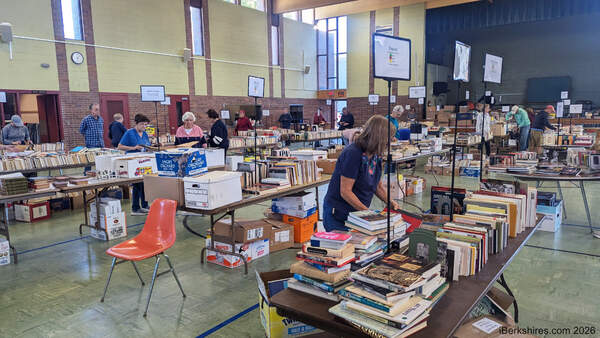
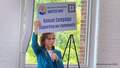
NORTH ADAMS, Mass. — Middle school students from around Region 1 displayed their science projects at Massachusetts College of Liberal Arts on Wednesday.
More than 50 projects showcased a wide range of topics students were interested to test and learn from, including how energy drinks affect your heart rate, wind energy efficiency, water filtering, and more.
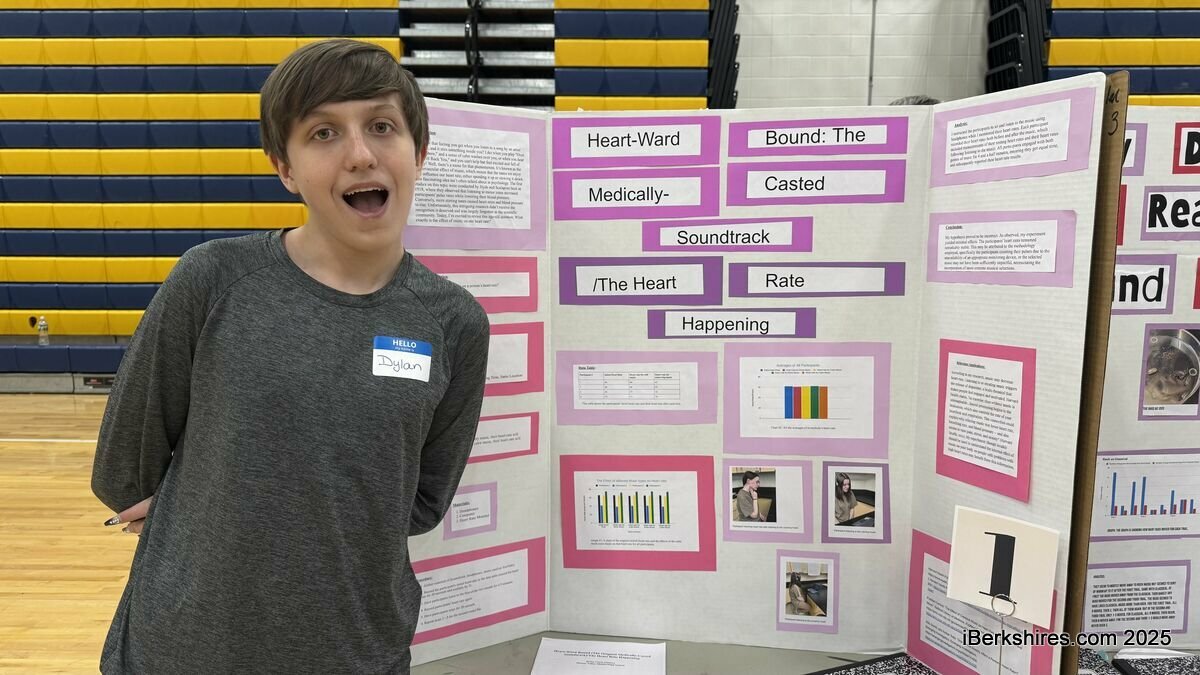
Hoosac Valley Middle School eighth-grader Dylan Clark-Slattery showed how music may affect a person's heart rate. He said he wanted to test this solution after his grandfather survived a heart attack.
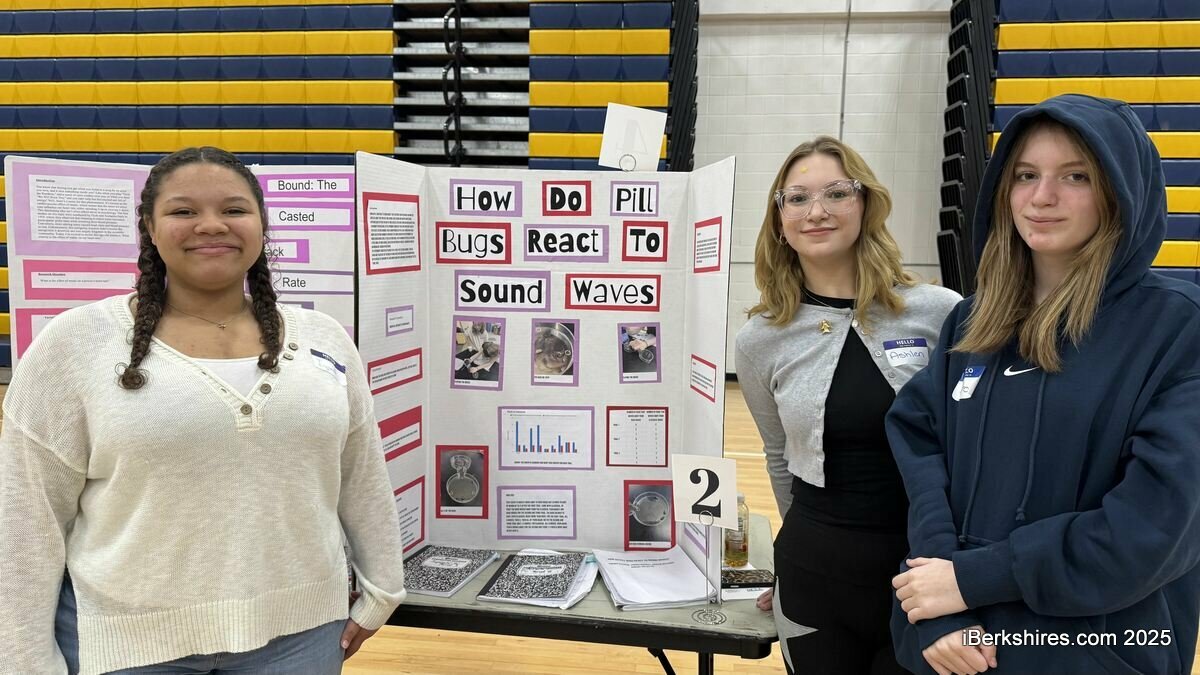
Ashlen Delecroix, Aurora Stevens and Iyanah Russel, also from Hoosac Valley, did their project on how pill bugs react to different sound waves. They originally thought pill bugs would react well to rock music but found classical more inviting.
"We expected them to move closer to rock because they live in more like populated areas with louder sounds and so we expected them to move closer to louder sounds," Ashlen said.
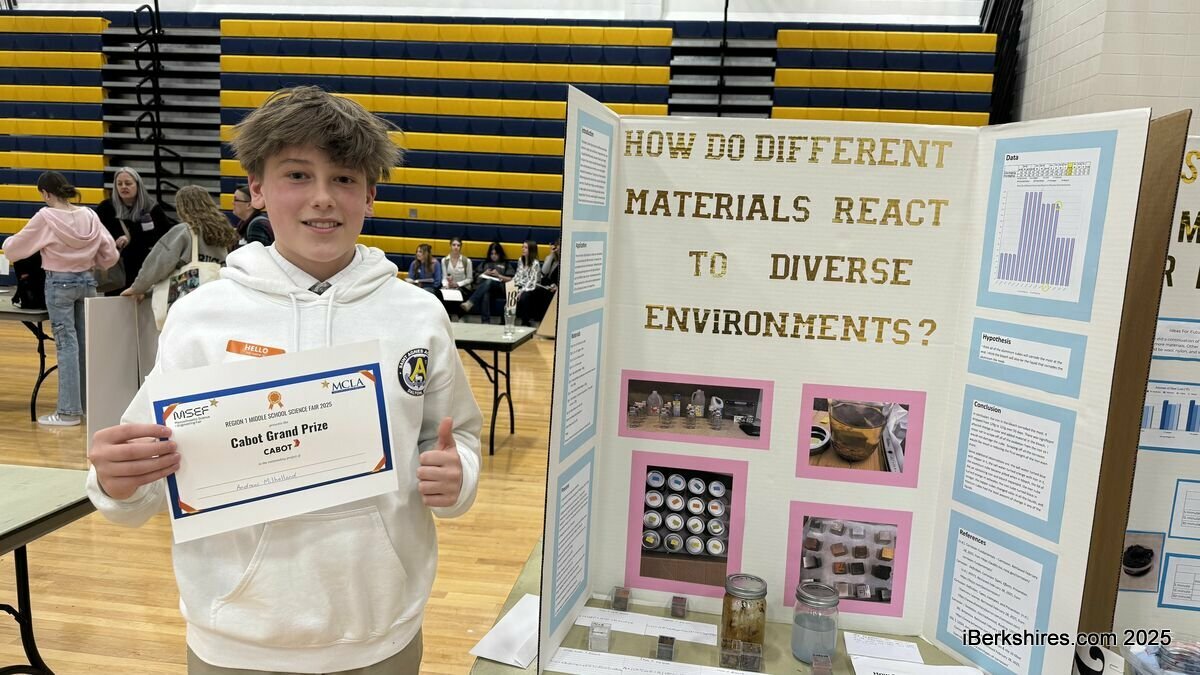
St. Agnes' Academy seventh-grader Andrew Milholland was awarded the Cabot Grand Prize. He did his project on how different materials like aluminum, copper, iron, and titanium react when they hit water, salt water, vinegar and bleach.
"The reason I did this project is to figure out what materials to use when working with pools because pools have bleach and salt water and kitchens have vinegar and water and that's the main reason I did it to see what materials to use when working with those things," Andrew said.
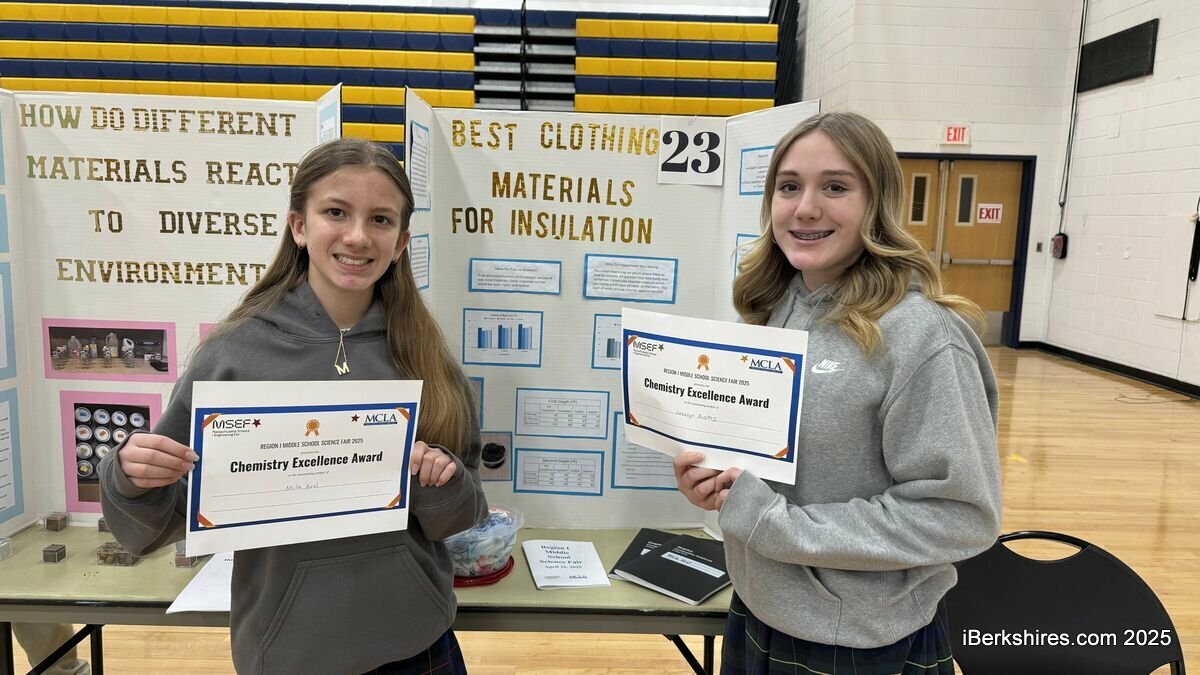
Mila Krol and Josslyn Rustay, also from St. Agnes in Dalton, tested three materials to see which works best for insulation since they both love to ski. They took home the Chemistry Excellence Award.
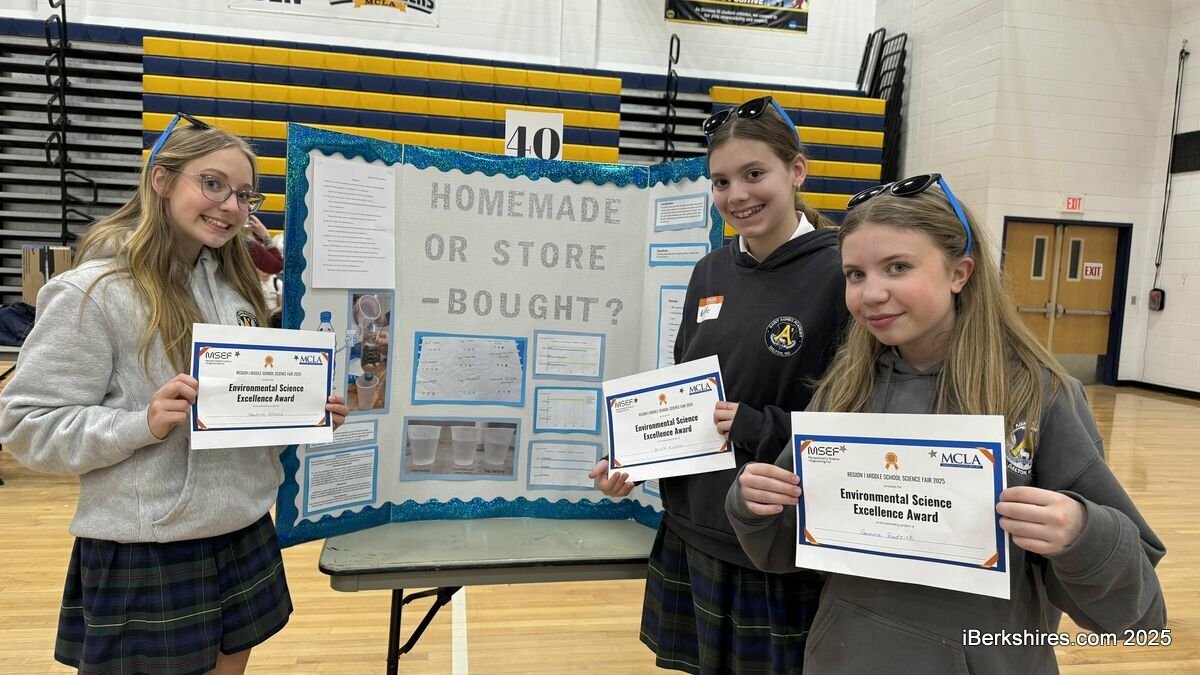
More from St. Agnes: Gemma Radzick, Brielle Kirchner and Beatrice Allessio did their project on the best water filtration: store bought or homemade. They took home the Environmental Science Excellence Award.
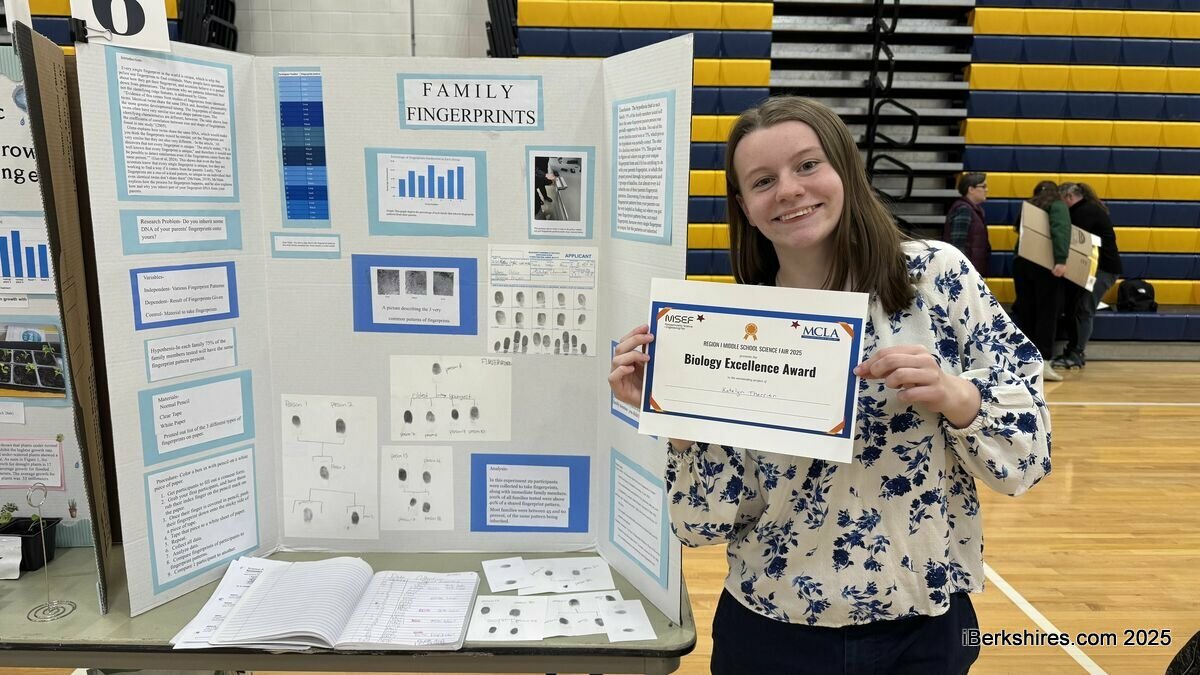
Hoosac's Katelyn Therrien did her project on family fingerprints, stemming from her love of animals and how they express different patterns.
"I always love animals and watching cop shows and so my thought was like, 'OK, so every animal like giraffes and zebras they all have unique patterns, so everyone says that humans do, so where do we get our fingerprints from?'" she said.
Other participating schools were Drury Middle/High School, Greenfield Middle School, Hopkins Academy, John F. Kennedy Middle School, Pioneer Valley Chinese Immersion Charter School, Saint Michael's Academy, and Academy Hill School.
Students received feedback on their projects from judges from MCLA, General Dynamics, Boyd Biomedical, Berkshire Museum, and Fuss & O'Neil.
The top scoring projects are eligible to enter the statewide Massachusetts Science and Engineering Fair as well as the International Science and Engineering Fair.
Results
Cabot Grand Prize Award
"How do different materials react to diverse environments?" Andrew Milholland, St. Agnes' Academy
First Place
Environmental Science Excellence: "Homemade or Store bought?" Gemma Radzick, Brielle Kirchner, Beatrice Allessio, St. Agnes
Chemistry Excellence Award: "Best Clothing Materials for Insulation" Josslyn Rustay and Mila Krol, St. Agnes
Lemelson Early Inventors: "Does milk plastic stand up to other biodegradable straws?" Ava Rossi, Layla Pulley and Emilynn Jackson, Hoosac Valley Middle High School
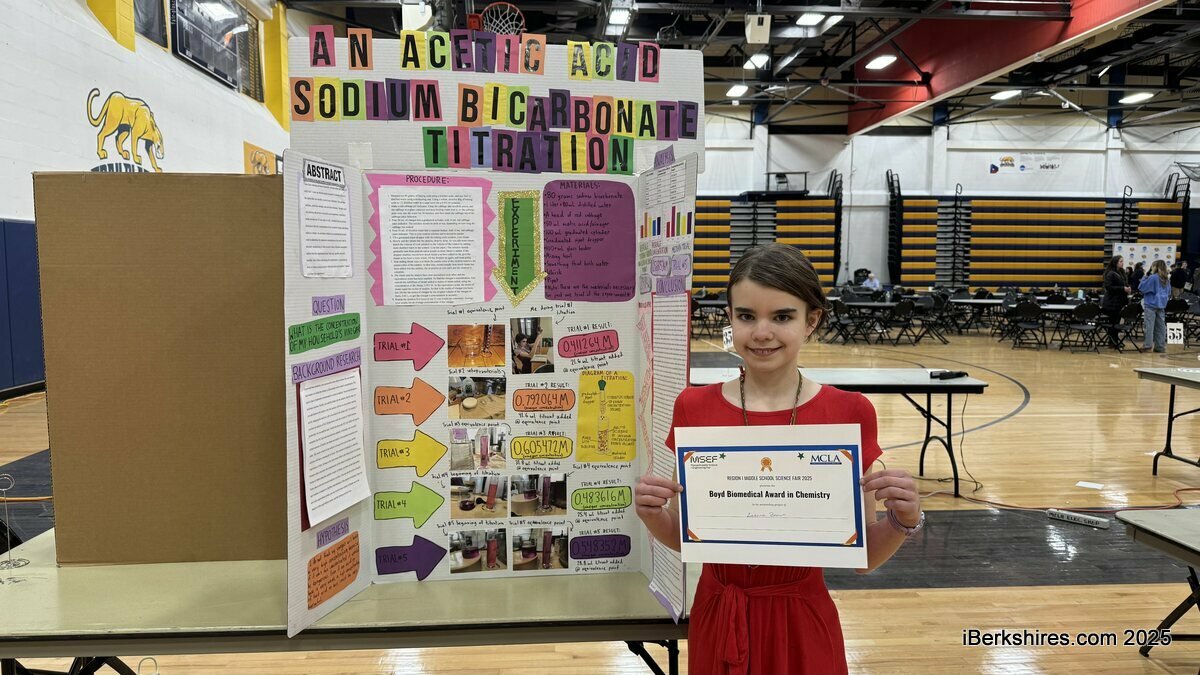
Boyd Biomedical Award: "Vinegar and Baking Soda Titration" Zoanna Brown, John F. Kennedy Middle School in Northampton
Fuss & O'Neill Chemistry Award: "Baking Muffins With Four Flours: Finding Variations" Clara Kelsey, Greenfield Middle School
Second Place
Biology Excellence: "Family Fingerprints" Katelyn Therrien, Hoosac Valley Middle
Engineering Excellence: "Manipulating Rocket Designs to land utilizing physics" Astrid Knyt and Ella Maier, Pioneer Valley Chinese Immersion Charter School
Fuss & O'Neill Biology Award: "Growing Plants in Microgravity" Emma Bankert, Regina You, Pioneer Valley Chinese Immersion Charter School
Behavioral Science: "A Study on The Effect of Physical Activity on Visual and Auditory Reaction Time (VRTS vs. ARTS)" Jack Binnall, Aarav Nandakumar, Academy Hill School in Springfield
Excellence Awards
Physics Excellence Award: "Wind Turbine Efficiency" Stephen Sims and Dashiell Rendulic, Pioneer Valley Chinese Immersion Charter School
Third Place
"Is your Dominant hand more sensitive than your non dominant hand" Ella Ely, St. Agnes
"Does an added material affect the size and rate of growth of a mung bean" Jacoby Scovil, St. Agnes
"Analyzing the effect of road color on Earth's albedo" Emily Hanselman, St. Michael's Academy in Springfield
"Sole shine" Mason Barbieri and Darnell Clayton, Hopkins Academy in Hadley
"How do energy drinks affect certain parts of your body?" Maija Raymond, Addison Whitmore, Mallory Sullivan, St. Agnes
"The effect of precipitation change on growing plants" Janessa Jangrow, Hoosac Valley
"RC Cars:" Chase Chretien, Riley Barnes, Hoosac Valley
"Wind Energy Efficiency" Sullivan Duquette and Thomas Kuzdeba, St. Agnes
"Samantha's Soda Science Fair Project" Samantha Rider, Greenfield Middle
Tags: science fair,