Mount Greylock Regional School Committee Moves Draft Budget Forward
WILLIAMSTOWN, Mass. — The Mount Greylock Regional School Committee Thursday agreed to move ahead with the draft budget largely intact from the version the panel reviewed at its Feb. 13 meeting.
If moved forward by the full committee after its March 13 public hearing and, ultimately, approved by voters in each member town, the fiscal year 2026 spending plan would continue a recent trend of spending down the district's reserves and still translate to assessment increases of nearly 8 percent for Williamstown and 7 percent for Lanesborough from the fiscal year that ends on June 30.
"Between now and March 13, there will be areas where we're refining utilities and things like that, trying to scrape a few pennies away," interim Superintendent Joseph Bergeron said. "But none of those are going to materially change the appropriations to the towns or the intent of the budget at all."
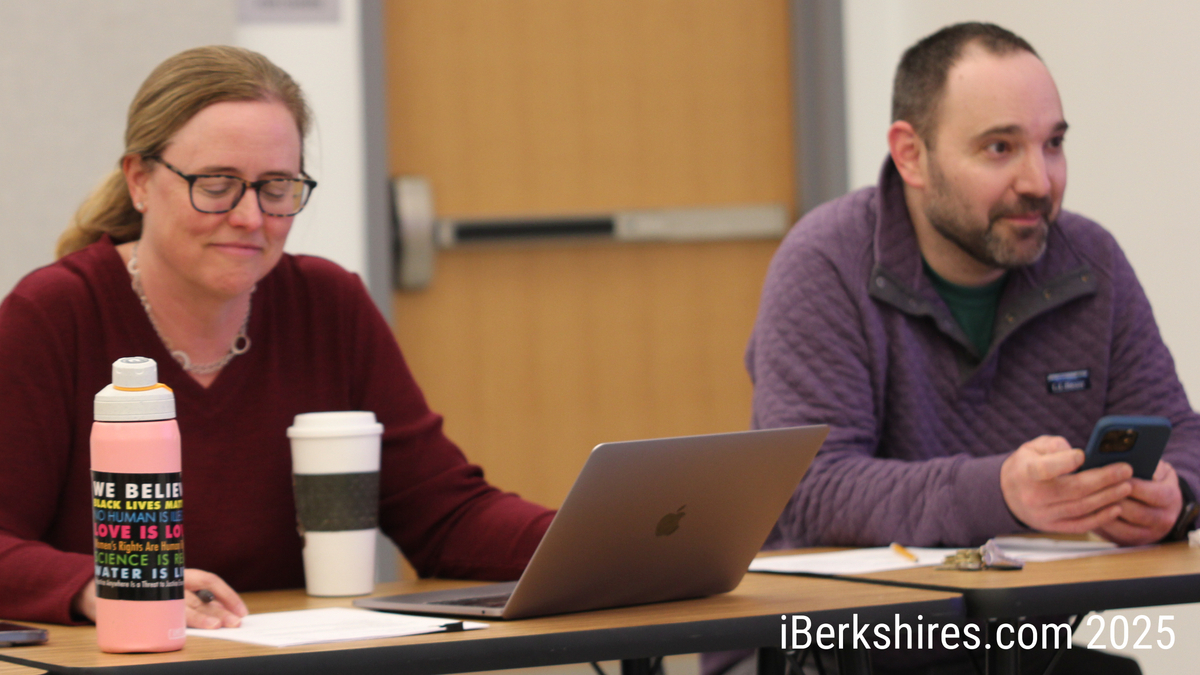
Four members of the seven-person committee attended the special in-person meeting at the middle-high school, framed as a budget workshop.
Most of the discussion revolved around the revenue side of the ledger and, specifically, spending from the district's three reserve accounts that offsets the operating and capital expenses and lowers the amount the towns need to raise from property taxes each year.
Those accounts are "excess and deficiency," School Choice and tuition.
E&D is the equivalent of a town's free cash; it is the repository for any overages in revenue or money resulting from underspending on a given budget line item in any fiscal year. School Choice is the revenue the district receives from a state program that allows families to send their students to a neighboring school district and which reimburses the "receiving" district at a rate of about $5,000 per child. Mount Greylock receives tuition payments at a negotiated rate from several towns, principally New Ashford, which has neither an elementary school nor a middle-high school, and Hancock, which sends its students to Mount Greylock Regional School for grades 7 through 12.
Bergeron walked the four committee members and four members of the public who attended through the recent history of the district's "revolver" accounts, starting with the period leading up to the bonding for the middle-high school building project.
Given the importance that lending agencies place on a school district's E&D balance when calculating a bond rate, the district worked to get that account as close as possible to the 5 percent of operating budget cap allowed by state law, Bergeron said.
"We completed long-term borrowing in 2023," he said. "When that was done, we no longer had a reason to keep ourselves as close to 5 percent as possible. That opened the floodgates to our town Finance Committees reasonably saying, ‘Use that money, and if you need more, come back to us.
"That was the conversation we went through. It's very practical."
The spending plan that Bergeron has presented to the School Committee continues to spend down those reserves. While the district receives about $500,000 per year in School Choice, for example, the FY26 budget includes a $540,000 pull from the School Choice revolver. The district anticipates about $640,000 in tuition revenue in FY26, Bergeron said, but the budget includes $855,000 in tuition revenue spending.
E&D, which contributed $665,000 to the FY25 budget, is actually down a little from that level, with a $440,000 pull in FY26, according to the current plan.
But the end result is that the budget would result in a balance of about $750,000 in all three revolvers at the end of the 2025-26 school year. In FY21, when higher reserves benefited the district's borrowing position, it had about $3.7 million in reserves.
"The question is where are we comfortable ending FY26 with?" Bergeron said. "It's the only real topic we had left."
Julia Bowen, Curtis Elfenbein, Carolyn Greene and Steven Miller of the seven-person School Committee attended the meeting and agreed, in the end, that they can live with the $750,000 projected ending reserve balance.
At first, Greene said that she preferred to see the number at $2 million to give the district more of a cushion against unforeseen costs that come up during the year. The School Committee is authorized to appropriate funds from School Choice and tuition at any time; the Excess and Deficiency funds could be released during the year by vote of a special town meeting if the need arose.
Bergeron said he did not need as much money as Greene suggested in order to feel comfortable going into a fiscal year.
"I think $1 million is a number that, to me, feels like it's justifiable," Bergeron said. "If, in any one year, we were to incur more than $1 million in unanticipated expenses, sending our towns back to special town meetings [for increases to the tax levy] would be necessary."
"We could say three-quarters of a million this year and try to get back to a million over the next two years," Greene offered.
Bergeron indicated that is a possible strategy and suggested there may be increased state aid on the horizon to help stabilize local school budgets.
"If we have a year next year where we're not adding positions and seeing a 16 percent increase [in health insurance cost] that becomes a reasonable target … $750,000 for the end of next year but needing to know we're going to bring that back up," he said. "I feel as though there's so much energy going into state level advocacy for education, I wouldn't be surprised if there wasn't money that materialized … where we could say E&D ends up being not hit as hard as we thought."
Bergeron mentioned during the meeting that one of the ways Excess and Deficiency has been generated in the past is when the state budget – which is finalized after the district sends its assessment to the towns – sees an increase in Chapter 70 aid from what the district expects.
Tags: budget, school committee,