HooRWA to Host Annual Meeting and Talk on Forest Conservation
Print Story | Email Story
WILLIAMSTOWN, Mass. — The Hoosic River Watershed Association (HooRWA) will hold its annual meeting on Tuesday, Feb. 11, at 7 p.m. at Williams College's Wege Auditorium. 
 
The event, sponsored by the Williams College Environmental Studies Program and the Zilkha Center for the Environment, will include a review of HooRWA's 2024 activities and board elections.
 
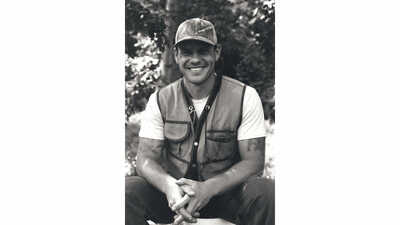
Following the meeting, at 7:15 p.m., Vermont forester and author Ethan Tapper will deliver a talk titled "What Does It Mean to Love a Forest?" Drawing from his bestselling book, "How to Love a Forest: The Bittersweet Work of Tending a Changing World," Tapper will discuss how humans can play an active role in healing ecosystems. His presentation will explore the challenges of environmental stewardship and the need for pragmatic conservation efforts. A Q&A session will follow.
 
The event is free and open to the public.
 
Wege Auditorium is on the ground floor of the Williams College Chemistry building in the Unified Science Center and is most easily accessed by entering the Morley Scientific Laboratory through the atrium, going up the ramp or the stairs. turning right, and going straight along the corridor almost to the end. Wege Auditorium is TCL Room 123, on the right just before the end of that corridor.
If you would like to contribute information on this article, contact us at info@iberkshires.com.

Letter: Williamstown Should Adopt Ban on Sewage Sludge Land Application

Letter to the Editor

To the editor:

This year, Williamstown Town Meeting will be considering whether to adopt a new bylaw that would prohibit the land application of sewage sludge or sewage sludge-derived products (biosolids). The ban would apply to land application of sludge and biosolids to farmland as a soil amendment or to home gardens where store bought compost may contain biosolids. The intent of this bylaw is to protect farmland, water sources, food crops and ultimately animals and people from PFAS contaminants.

PFAS are per- and polyfluoroalkyl substances, a group of "forever chemicals," and are linked to health issues like cancer, liver damage and immune system dysfunction. They enter wastewater systems through residential, commercial and industrial sources. Conventional treatment processes are largely ineffective at removing them. As a result, PFAS pass through treatment systems into surface waters or accumulate in sewage sludge/biosolids.

Most states and the federal law have been slow to regulate this activity. The EPA's January 2025 Draft Sewage Sludge Risk Assessment identified human health risks associated with land-applied biosolids containing as little as 1 part per billion of PFAS and yet federal law does not yet impose limits on PFAS in biosolids.

A growing number of states are adopting a range of regulatory and monitoring strategies. Maine is the only state so far to impose an outright ban on land application of biosolids from wastewater treatment plants, while Connecticut has banned the sale of biosolids containing PFAS for land application. In New York State, at least two communities, Thurston and Cameron, have banned the land application of biosolids.

At this time, we don't know of any farms in Williamstown that currently use biosolids. But we also don't know the future of the farms in our community. Biosolids can also be found in some commercially bagged compost. While this bylaw would not ban the sale of these products, we hope it will raise awareness and encourage our residents and local vendors to find biosolid-free products for use.

Let's keep our lands safe for our children and future generations. Williamstown's Select Board, Agricultural Commission, and the Board of Health recommend adoption of this article. We hope you will support this article on May 19, 7 p.m. at the town meeting at Williamstown Elementary School.

Stephanie Boyd
Sharon Wyrrick

Williamstown, Mass. 


View Full Story

More Williamstown Stories