Adams Taxpayers Will See Rates Drop, Bills Increase
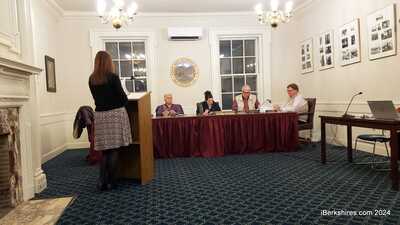 |
| Assessor Paula Grover presents tax shift options to the Board of Selectmen on Wednesday. |
ADAMS, Mass. — The tax bill for an average single-family home is expected to increase by $242 for fiscal 2025.
The Board of Selectmen voted 3-1 Wednesday for split tax classification with a shift of 30 percent shift to the commercial side. Selectman Joseph Nowak voted against the split rate and Richard Blanchard was absent.
This sets the residential tax rate for the coming year to $17.01 per $1,000 valuation, a 53 cent decrease. The debt for the Hoosac Valley High School is $1.02 of the rate.
The average single-family home is valued at $239,000, up $21,000 from last year. This would make the average bill $4,065.39.
The commercial, industrial and personal property rate will be $23.41 per $1,000 valuation, down from $24.23.
There is no "average" commercial business, but Assessor Paula Grover said she uses singular enterprise to demonstrate the figures.
This business has gained $50,000 in value over last year, meaning a $508 increase on its tax bill.
Grover said the total assessments for both residential and commercial had risen over the past year.
Nowak said he was voting against the tax rate because residents are being stretched and the town needs to cut back.
Selectwoman Christine Hoyt responded that they were voting on the classification.
If the board had voted for a single tax rate, it would have been $18.01 per $1,000 for residential and commercial, she pointed out, which would have meant a $486 increase on the bill for the average single-family home.
Grover explained that residential assessments are reviewed by the state and factor in sales.
"We're still seeing houses being sold for quite a bit over what they're assessed at," she said. "There are certain formulas we have to go by."
The town's commercial sector did not have as many sales so that had less of an impact on assessments.
Tax rates have dropped the last three years after reaching a high of $20.89 for residential in 2021 because of higher valuations.
The town's total valuation is $811,554,340 and the levy, or the amount to raise through taxation, $13,612,055.
New growth was $4,721,896, down significantly from last year, which saw a jump of $15 million when the Millhouses went from the payment-in-lieu-of-taxes program to being on the tax roll.
Residential and open space had the highest growth at $2.4 million, personal property at $1.7 million and commercial industrial at $591,400.
Grover took several questions related to residential growth and sales. She said the seven "new" residential properties were a mix of new homes, properties that were split and possibly multi-families returned to single.
Nowak asked if she thought the town had hit a high watermark in overassessed sales and where thought the trend was going. Grover said about 22 properties were listed as open on Realtor.com.
"This is high. We're still having houses going $100,000 over our assessment," she said, but thinks the number of sales is getting closer to average compared to a dropoff at the beginning of the pandemic.
Hoyt thought Adams still looks affordable compared to neighboring communities.
Nowak and Hoyt both asked about shifting to quarterly taxes rather than the current semiannual.
"I think it may be more accommodating for people," said Nowak.
Hoyt said 289 of the state's 351 communities do quarterly billing. Fifty do semiannual, including 15 in Berkshire County. She suggested the town could go in with one or more of these communities on a technical assistance grant.
"I would like to see that coming out of the assessor's office and tax collector's office," Hoyt said.
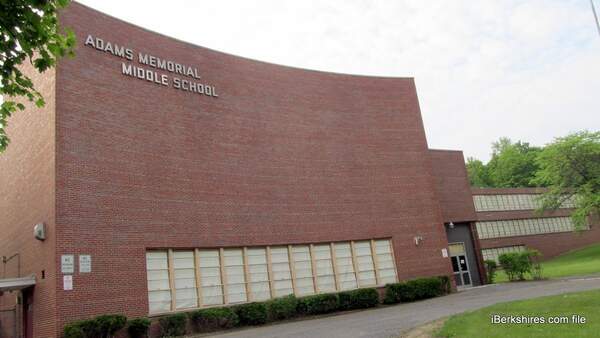
In other business, the board authorized the chair or town administrator to a sign a lease with Berkshire Gas for temporary use of land at the Memorial School during construction, pending review by town counsel.
• Set a meeting for Tuesday, Oct. 22, to begin discussions on the process for replacing Town Administrator Jay Green, who has taken the town manager post in Lenox.
• Ratified the appointments of Barry Garton and Rita Clarke as per diem van drivers for the Council on Aging.
Executive Assistant Bri Hantman is holding information sessions for licenseholders on Monday, Oct. 28, from 10 to noon and 2 to 4. Applications are available now and must be returned by Dec. 31.
Town Clerk Haley Meczywor reminded voters that early voting starts Oct. 19 at Town Hall. Her office has mailed out 1,600 ballots and already received 40 percent back. She also has extra booklets from the secretary of state explaining the ballot questions.
The general election is Nov. 5 at Memorial School. Meczywor said the 2020 election had a 72 percent turnout and she's hoping to hit 80 percent this year.
Note: the original version of this article did not note the absence of a selectman and so gave the wrong vote total.
Tags: fiscal 2025, tax classification,