Dalton Special Town Meeting Set Wednesday
DALTON, Mass. — A special town meeting will be held at Nessacus Regional Middle School this Wednesday, Oct. 9, at 7 p.m. to vote on four articles.
The first article requests that voters approve decreasing the fiscal year debt exclusion line item by $48,668.
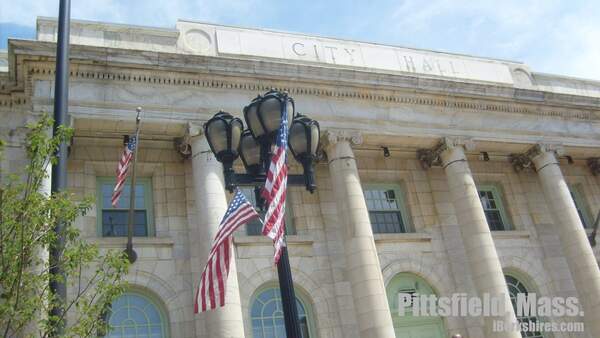
Article 2 requests the transfer of $350,000 from capital stabilization to cover the cost of the final engineering and construction of the heating, air conditioning, and ventilation system for the Town Hall's main floor and the police station in its basement.
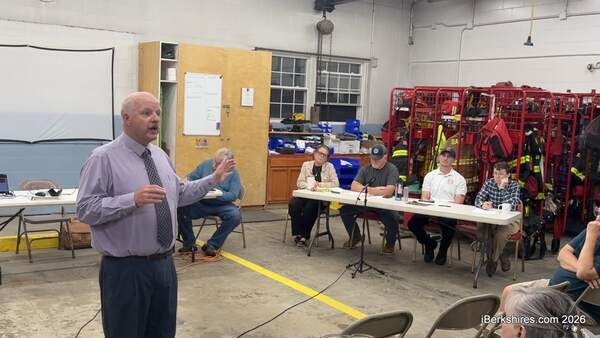
"We don't have an actual preliminary cost for this [yet.] We're still waiting for some assessments and some information from the engineers," said Finance Committee chair William Drosehn.
Drosehn and Town Manager Thomas Hutcheson used the projected cost of previous HVAC projects at the town garage and Town Hall as a reference to calculate the amount for the town meeting.
The town garage project's original estimate was $25,000. It has three air handlers, which circulate conditioned air throughout the building.
This estimate "was a pleasant surprise," Hutcheson said.
In addition, the town has a $50,000 cost estimate for installing three HVAC systems on the third floor of Town Hall. This project is more extensive than the main floor and basement project because it requires the town to redo the electrical and add extra insulation, Hutcheson said.
This project also requires the insulation of three air handlers, Drosehn said.
"This being something to get us through we certainly don't expect to spend that much, but we want to avoid having to come back and re-authorize something," Hutcheson said.
"So, [Drosehn] and I [are coming to you] with a number that is very high, and specifically saying that we'd like you to have the understanding that that is going to come down, we hope, when we get the not-to-exceed estimate from the engineer," he said.
The not-to-exceed estimate will also be high as well because the town gave the engineer a contract not too long ago, Hutcheson said.
"We're asking an awful lot to even come up with a not-to-exceed figure, which is one of the reasons we don't have it tonight," he said.
"There seems also to have been some miscommunication. The engineer is going to try to move heaven and earth to get us a not-to-exceed number for the actual town meeting."
It is unclear how many air handlers will need to be installed in the basement and first floor of Town Hall, but based on the number of rooms and square footage the HVAC system needs to cover, there would likely need a minimum of 12 or 13, Drosehn said.
The town will also need to allocate funds to address other vent issues in that area, he said.
The Finance Committee can recommend the $350,000 until they have a more accurate figure, hopefully, by town meeting, during which the town can vote to amend, Drosehn said.
The town currently has a little more than a million in capital stabilization, he said.
Town Accountant Sandra Albano asked why the town is not borrowing instead of using its capital stabilization.
By borrowing, the town can spit the cost up over several years by paying the debt, she said.
"My concern when it comes to that is that we're kind of looking at some sort of a safety facility. So, then my fear is that we're going to be taxing our debt load," Drosehn said.
Albano disagreed, adding that with that situation, the town would have to go to a debt exclusion anyway.
"Whatever we have left for our debt authorization, it'll have to be debt excluded for that particular kind of thing that you're talking about anyhow," Albano said.
"And our debt is very minor right now. We haven't been really using a lot of debts."
The last time the town borrowed was in FY23 and the rates were 5 percent, she said. The town would not have the rates until they go to borrow in the middle of May.
"I think we would be able probably to through our free cash like we've been doing, we would replenish [the capital stabilization] in a couple of years," Drosehn said.
Finance Committee Vice Chair Scott Beaulac said he would like to know the interest rates, but this information was not available at the time of the meeting.
"I wanted to discuss the borrowing aspect, that I feel like if we approve the capital stabilization, then we're not taking into consideration the borrowing. It seemed like something, at least, to look into a little bit further, particularly the borrowing rate," Beaulac said.
"Our holding rates are probably really good right now with money on hand. So, the more money we take out we have, it just seems like there is a play there that could be beneficial. And it seems like it could be something the townspeople could be interested in."
Hutcheson said he has not seen many capital requests recently, partly because the town is using the rest of its American Rescue Plan Act funds. So, many things that would ordinarily be capital stabilization projects are being funded that way.
"The more you have in your reserves, the better bond rating you get. So, when you do have to go out to bond, it's better," Albano said.
"I think our bond, we closed like $150,000 of bond authorizations this past year."
The town would borrow in June for the money to pay for this project and whatever is spent by May is what would get bonded, she said.
"I don't know if people are more likely to vote for a capital stabilization, transfer or borrowing," Hutcheson said.
"Quite frankly, I feel it's kind of small in the big picture for $300,000 when our budget is as big as it is," Drosehn said.
"I'm more inclined to stay with the capital stabilization, but that's me, and it's not everyone else. Just only because it's, I feel, it would be more expeditious to get the job done."
It also seems more fiscally responsible it the town works to replenish the stabilization account rather than taking the money out, he said.
Article 3 will be a vote to raise and appropriate, transfer from available fund, or provide a sum of $15,000 to hire a conservation agent.
The Conservation Commission has been unable to meet because its chair stepped down, and nobody has stepped up to take over.
The work done by the commission chair is extensive and would otherwise be done by a conservation agent, which involves going around and identifying where wetland plants might be affected by homeowner or business activity.
Select Board Chair Robert W. Bishop Jr. served as the commission chair for about 24 years and confirmed that it is a lot of work.
"It adds a lot to the position," he said during last week’s Select Board meeting.
The chair would have to stay up to date on the laws and constantly has to go out, check on things, and needs to know a lot of information on soil and hydrology. The commission should have a professional person do that, Bishop said.
"It would be better for the town to have someone who was dedicated to that kind of information, discernment, and production than relying on volunteers, especially now when no one's willing to take on the chair role because it involves those duties," Hutcheson said during the Finance Committee meeting.
Finance Committee members questioned the amount, believing it was too low.
Hutcheson said he found a number of compensation schemes for conservation agents. The figure is based on an estimated hourly rate of around $30 to $43 for 8 to 10 hours per week.
The town had been lucky to have a volunteer with that skill set who was willing to take on those duties for several years, Drosehn said.
The final article surrounds amending the town's licensing bylaws to comply with new regulations set by the Cannabis Control Commission to make it easier for people harmed by marijuana prohibition and enforcement to enter the industry.
The bylaw change would allow only social equity applicants to get licenses to sell cannabis in town for the next three years.
"[This solution] allows us to forgo a complicated, bureaucratic solution that would be ongoing to social equity in allowing cannabis operations in town," Hutcheson said during the Select Board meeting.
The cost of opening a cannabis dispensary is $1.5 million, which has made it difficult for those disproportionately impacted by the war on drugs to enter the industry.
The Cannabis Control Commission established regulations and programs to help legacy market participants enter the industry.
Municipalities have three options, one of which is to adopt the commission's model bylaw.
The Massachusetts Municipal Association and Massachusetts Municipal Lawyers Association have characterized this model as having an "unrealistic timeline " and containing "questions regarding conflicting governance, various ambiguities and burdensome requirements for cities and towns."
Another option would be creating a local process for approving equity applicants on a one-on-one basis and approving non-equity applications only after an equity business has been established.
The option to only accept applicants from the legacy market, is the simplest option, especially considering the town does not receive many applications to sell cannabis, Hutcheson said.
"Over my three years here, I've received only two phone calls asking about the possibility, neither one followed up. So I don't anticipate this being a big deal," he said during the Select Board meeting.
"However, due to the Cannabis Control Commission's regulations, we do need to take action on it. This seems to be the simplest and best action to take."
Background on the regulations here.
Tags: special town meeting,