Mark and Pignatelli Talk Legisative Actions in Becket
BECKET, Mass. — Members say this legislative session has seen financial successes and moves towards housing stability.
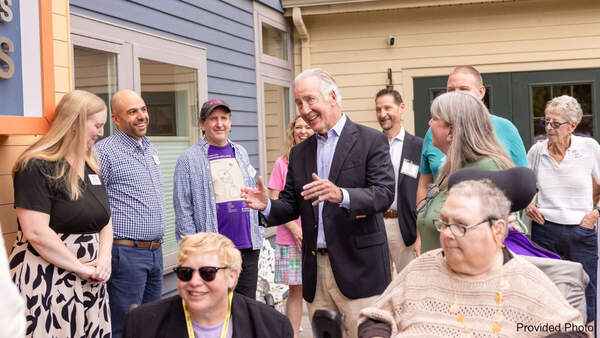
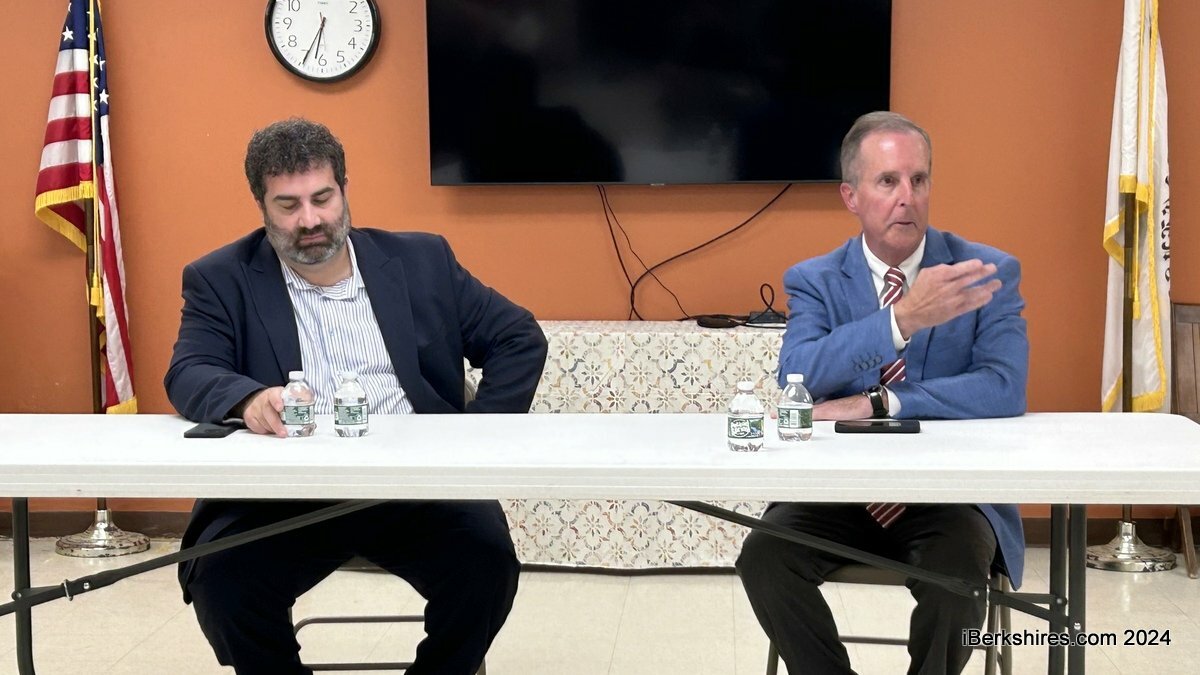
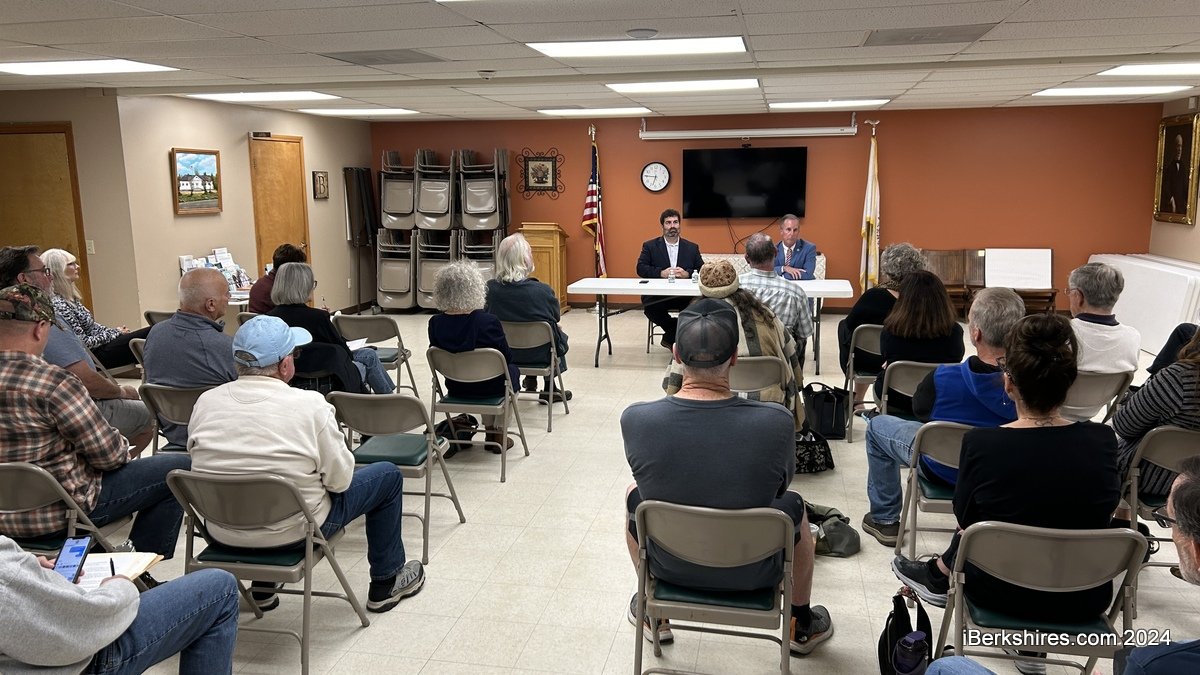
State Sen. Paul Mark and Rep. William "Smitty" Pignatelli attracted a sizable crowd to Town Hall on Monday for a legislative update. The current session began in January 2023 and will conclude on Dec. 31.
"I'd like to say that the Berkshire delegation works pretty well together," said Pignatelli, dean of the Berkshire delegation who is stepping down after 22 years in the State House.
"We have our disagreements, which any mature adults should be able to have disagreements and still get along with each other, and I think we've done that very well."
Mark said there have been great relationships within the predominantly Democratic Legislature and the Democratic and Republican governors.
"And I think everybody has focused when it comes to financial management, on making sure that the state is in the best position as it can be for the longest term possible."
He reported that Massachusetts is lucky to have about $9 billion saved and "as we track revenue right now, we're in a stable place." At the end of July, Gov. Maura Healey signed a $57.78 billion budget for fiscal year 2025.
The state is currently about 0.04 percent under budget expectations. Pignatelli pointed out that expectations were exceeded on a monthly basis during the COVID-19 pandemic for more than a year.
He sees the state as "very fiscally responsible."
"Our revenues have been holding steady. We're not breaking records by any stretch of the imagination but we have some challenges," Pignatelli said, explaining that despite the record amount of local aid, and money for rural schools and roads, expenses have dramatically increased.
In August, Healey signed a $5.1 Affordable Homes Act to build or save 65,000 homes through authorizations and 49 policy initiatives. In June, the House passed a $6.5 billion housing bond bill and the Senate passed a $5.4 billion version.
Pignatelli said housing insecurity and shortages are paramount in Berkshire County and encouraged communities to develop shovel-ready plans because "we're not going to hand out money from concepts or ideas, we're going to fund projects."
"Housing costs have gotten ridiculous during COVID," he said.
"I mean, in my hometown of Lenox, and I'm sure it's no different over here, cash deals, bidding wars, squeezing out our workforce, which is preventing people from filling positions. We have, in my opinion, actually, no public transportation. That's legitimate."
The representative is an advocate for homeownership, explaining that with some assistance on down payments, owning a home may cost less per month than renting and builds equity. He sits on Lenox's Affordable Housing Trust, which established a first-time homebuyers program that awards grants of up to $20,000.
"I'd love to see more mixed-use housing so we don't have just low-income people living over here and market-rate housing over there," Pignatelli added.
"Let's blend them together. Let's smash that stigma of where people live and let them have some pride of ownership and even if it's a mix of ownership and rentals, I don't see any reason why those can't co-exist as well."
He added that all of the money will get "sucked into Boston if we're not careful" and that the region needs to get ahead of advocating for its share.
Mark pointed out that there is programming for rural communities in the legislation. He emphasized the importance of having money available for projects like septic tanks and wells in smaller communities.
"When I brought the chair of Housing out and she came to Chester, and she came to Great Barrington, she represents East Boston and Revere, we taught her about septics," he said.
"So, I mean, that's a big thing."
One of the policy initiatives in the AHA allows accessory dwelling units under 900 square feet by right on single-family lots, estimating that between 8,000 and 10,000 ADUs will be built across the state over the next five years due to the passage of the law.
Pignatelli said this is a great opportunity to give people safe, secure, and clean housing — possibly alongside their immediate family.
A group of people came to the event with a petition to recall Bill H.4885, an act to address firearm violence through reform and modernizing firearm laws. The group was displeased with language they believe made it into the final verbiage that bans out-of-state youth hunters and competition shooters and requires citizens to have Firearms Identification Card for primitive firearms, among other items.
A representative of the group said he is "part of many people that are pulling together a petition to try to recall this bill and actually truly make sensible changes to address violence instead of banning youth hunters."
Mark explained that he would not sign it because he voted for the bill. The two have had an ongoing dialogue about this legislation and he pointed out that there were things like acquiring liability insurance for every gun owner that were on the table and did not make it in.
He has heard representatives from other areas say they would vote for a bill to confiscate and melt all guns and that they don't believe in the Second Amendment, or the right to keep and bear arms.
Pignatelli questioned if it was the final legislation they were looking at, believing that it was amended to allow youth hunters with adult supervision.
"I think there's some disincentives to be committing any crime with a gun, and if you, yourself are doing nothing wrong, I truly believe you've got nothing to worry about with that law," he said.
Tags: legislative update, legislators, Mark, Pignatelli,