Guest Column: Full Steam Ahead: Bringing Back the Northern Tier Passenger Railroad
 |
You only need a glance outside to see a problem all too familiar to Berkshire county: closing businesses, a shrinking population, and a stunning lack of regional investment.
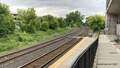
But 70 years ago, this wasn't an issue. On the North Adams-Boston passenger rail line before the '60s, Berkshires residents could easily go to Boston and back in a day, and the region benefited from economic influx. But as cars supplanted trains, the Northern Tier was terminated, and now only freight trains regularly use the line.
We now have a wonderful opportunity to bring back passenger rail: Bill S.2054, sponsored by state Sen. Jo Comerford (D-Hampshire, Franklin, and Worcester), was passed to study the potential for restoring rail from Boston to North Adams. In the final phase of MassDOT's study, the project is acquiring increased support and momentum. The rail's value cannot be understated: it would serve the Berkshire region, the state, and the environment by reducing traffic congestion, fostering economic growth, and cutting carbon emissions. The best part? All of us can take action to push the project forward.
Importantly, the Northern Tier would combat the inequity in infrastructure investment between eastern and western Massachusetts. For decades, the state has poured money into Boston-area projects. Perhaps the most infamous example is the Big Dig, a car infrastructure investment subject to endless delays, problems, and scandals, sucking up $24.3 billion. Considering the economic stagnation in Western Massachusetts, the disparity couldn't come at a worse time: Berkshire County was the only county in Massachusetts to report an overall population loss in the latest census.
The Northern Tier could rectify that imbalance. During the construction phase alone, 4,000 jobs and $2.3 billion of economic output would be created. After that, the existence of passenger rail would encourage Bostonians to live farther outside the city. Overall, this could lead to a population increase and greater investment in communities nearby stops. In addition to reducing carbon emissions, adding rail travel options could help reduce traffic congestion and noise pollution along Route 2 and the MassPike.
The most viable plan would take under three hours from North Adams to Shelburne Falls, Greenfield, Athol, Gardner, Fitchburg, Porter, and North Station, and would cost just under $1.6 billion.
A common critique of the Northern Tier Rail Restoration is its price tag. However, the project would take advantage of the expansion of federal and state funds, namely through $80 billion the Department of Transportation has to allocate to transportation projects. Moreover, compared to similar rail projects (like the $4 billion planned southern Massachusetts East-West line), the Northern Tier would be remarkably cheap.
One advantage? There's no need to lay new tracks. Aside from certain track upgrades, the major construction for the Northern Tier would be stations and crossings, thus its remarkably short construction phase of two to four years. In comparison, the Hartford line, running from Hartford, Conn., to Springfield spans barely 30 miles, yet cost $750 million.
In contrast, the Northern Tier would stretch over 140 miles for just over double the price.
So what can we do? A key obstacle to the Northern Tier passing through MassDOT is its estimated ridership and projected economic and environmental benefits. All of these metrics are undercounted in the most recent study.
Crucially, many drivers don't use the route that MassDOT assumes in its models as the alternative to the rail line, Route 2. due to its congestion and windy roads. In fact, even as far west as Greenfield, navigation services will recommend drivers take I-90, increasing the vehicle miles traveled and the ensuing carbon footprint.
Seeking to capture the discrepancy, a student-led Northern Tier research team from Williams College has developed and distributed a driving survey, which has already shown more than half of Williams students take the interstate to Boston. Taking the survey is an excellent way to contribute, as all data (which is anonymous) will be sent to MassDOT to factor into their benefit-cost analysis. This link takes you to the 60-second survey.
Another way to help is to spread the word. Talk to local family, friends, and community members, raising awareness of the project's benefits for our region. Attend MassDOT online meetings, and send state legislators and local officials a short letter or email letting them know you support the Northern Tier Passenger Rail Project. If you feel especially motivated, the Williams Northern Tier Research team, in collaboration with the Center for Learning in Action (CLiA), would welcome support.
Living far from the powerbrokers in Boston, it's easy to feel powerless to make positive change for our greater community. But with your support, the Northern Tier Rail can become reality, bringing investment back to Berkshire County, making the world greener, and improving the lives of generations of western Massachusetts residents to come.
Thomas Huckans, class of 2026, is a political science and astronomy major at Williams College, originally from Bloomsburg, Pa.
Survey: This survey records driving patterns from Berkshire county to Boston, specifically route and time. It also captures interest in the restoration of the Northern Tier Passenger Rail. Filling out this survey is a massive help for the cause, and all responses are greatly appreciated. Use this link.
Tags: passenger rail,